


Robbs coming back to rob you, that’s Robbs jetty for those who weren’t born long enough ago to recall the smell of rotting hides at Cockburn. Those born even longer ago will recall the endless strife of the Western Australia state-run meatworks that were a bastion of union bastardry.
Why are they coming back? Well, the Federal government has committed Australia to borrowing billions of dollars off countries that are not handicapping themselves with mad Green left anti-fossil fuel regulations (think China and the Middle East) to invest in the Future Made in Australia program.
This is Prime Minister Anthony Albanese’s replica of the US Inflation Reduction Act which, while having nothing to do with reducing inflation, is all about pump priming industries that are not viable without government subsidies (think windfarms, electric cars and solar panel manufacturing).
Apparently whatever President Biden can do, Prime Minister Albanese can do better, except we won’t be just competing against subsidised Chinese and American solar panels, we will be taking on Chinese car manufacturing and the likes of Tesla to become a powerhouse of green manufacturing.
I’m putting in my order now for the Holden SS ElectricMan panel van or will they call it the ElectricPerson panel van as times have changed?
The Future Made in Australia Act is a classic case of back to the future. It tries to restore deeply discredited industry policy where government attempted to run everything from airlines to meat processing facilities.
Invariably they all lost money as the unions cashed in and the private competition crashed out.
With billions at stake, the feeding frenzy will be on for young and old as every corporate raiding rent seeker with a good green idea that is unviable without government support lines up to get a slice of Albo’s pie.
One rumour going round is that the Minister for Agriculture, Murray Watt, has been told by the Treasurer to wait for the new slush fund to become available and use it to buy the governments way out of the mess they are in with their policy to end to the live export trade.
Apparently, there will be so much money sloshing around the new fund they can forget the old idea of throwing a few dollars at upgrading existing private processors and instead fund its very own green clean carbon neutral abattoir with the capacity to replace the entire live sheep trade.
Even better, they can situate it in one of the marginal seats they need to hold to retain government.
Now think about the logic. Which Labor-held seat needs a job creation scheme to replace jobs that have been lost because of the Government’s renewables policies that have ended up pushing up the cost of energy?
Answer: The seat of Brand that starts about where the old Robbs Jetty was and runs south, picking up all the workers lost when the BP refinery and the Kwinana nickel refinery closed.
Win win! A new government run meat processing works to replace the meat processing works that was closed by the WA coalition government back in 1993. Some farmers will recall they also closed the equally inefficient Westrail Midland workshops.
Interestingly, the current WA government has rebooted railcar manufacturing with its program to spend a billion dollars building 246 MetroNet railcars right next door to the old Midland workshop site.
Just ignore the fact that these cars will be vastly underutilised as who takes the train anywhere other than to the footy, or the fact that they could have been purchased for half the amount of money from any of the global railcar manufacturers. But who cares as it’s Made in Australia and it’s helping Save the Planet.
Back to Robbing you. It seems the grand plan is all coming together. The Midland Workshops are back in business and Robbs Jetty II is on the drawing board in Canberra.
A short history of Robbs Jetty in WA
As regular readers know, I am a bit of a history tragic and will wherever possible try to wind in some facts and figures of the past to add some context to my opinion articles.
Most older farmers will recall Robbs Jetty but as for the younger generation, they will not have a clue about the important role this meat processing facility played in our sheep and cattle industry.
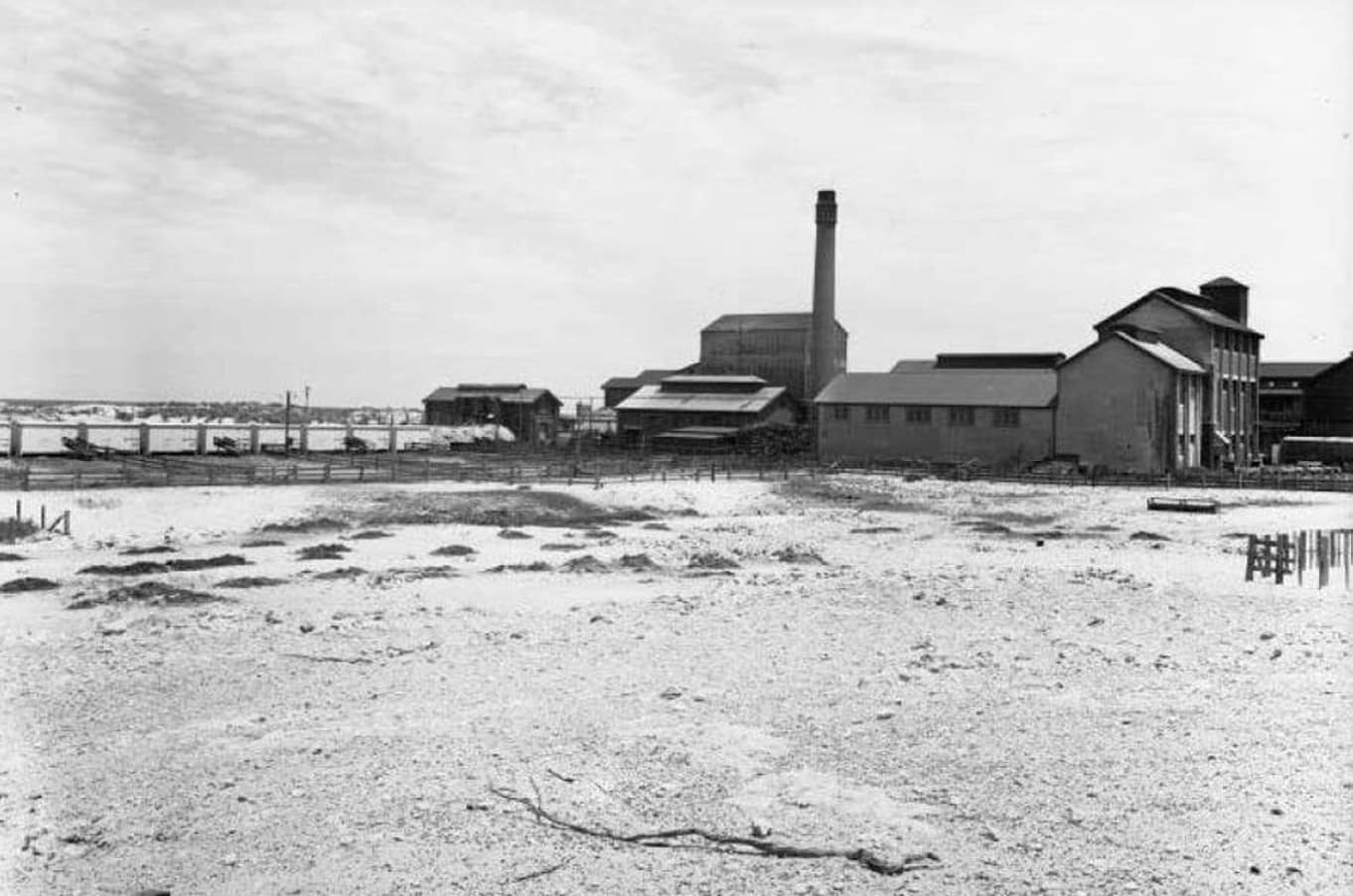
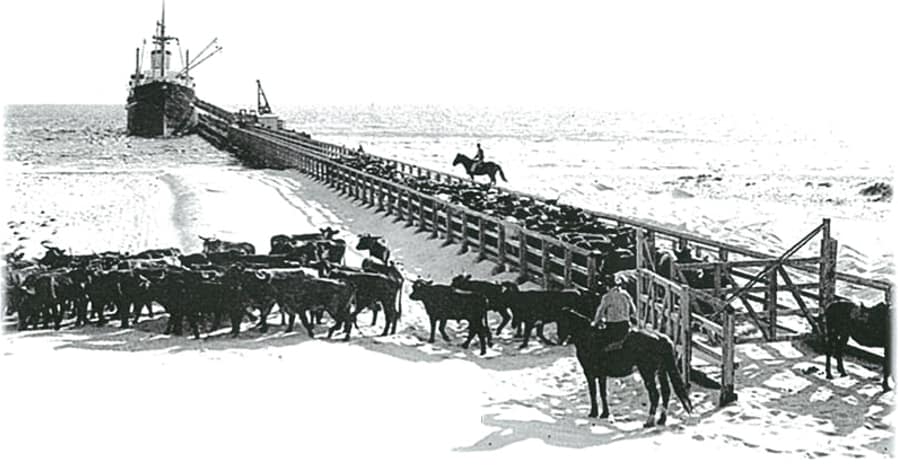
Robbs Jetty no longer exists but it was a jetty just south of Fremantle which became WA’s major abattoir and tanning hub. It is deeply linked to a couple of family names that we are all familiar with that have their roots in the history of the state.
Following the carving up of the Kimberley into cattle stations, two firms had emerged as Kimberley cattle baron rivals: Forrest, Emanuel & Co based in the West Kimberley, and Connor, Doherty & Durack operating out of the East.
They were regularly referred to by southern farmers as the ‘cattle czars’, ‘beef buccaneers’, or just plain ‘meat monopolists’ (some things never change).
As steamships became more reliable and cheaper in the 1890s, the cattle kings started to ship them south in huge quantities, swimming them ashore at the site of Robbs Jetty before Fremantle Harbour was built.
The Canning Stock Route never really took off even through it was used between 1910-1954 (Tourism hint for the opposition parties: rebuild the wells and run an annual drove as an international tourist marketing project.)
Back to the history. In late 1896, the cattle being produced in the Kimberley districts began to show signs of tick-disease and tuberculosis, so the Government placed an embargo on East Kimberley cattle for fear of public contamination and illness.
Quarantine yards were added to the basic holding facilities at Robbs Jetty, and meat inspectors were employed to check each animal that stepped off a boat. (Biosecurity! We took it seriously back then. when is DPIRD running a Foot and Mouth response exercise or have they lost interest in biosecurity?)
With the tentative lapse of this embargo in 1899 came the era of the private abattoir at Robbs Jetty. One after another, the cattle kings leapt from being just pastoralists to becoming full-scale monopolists with control over every part of the meat industry in WA (sound familiar?).
Connor, Doherty, and Durack built the first slaughterhouse at Robbs Jetty. In January 1899, Forrest, Emanuel & Co soon followed.
All the new slaughterhouses and factories benefited from proximity to the jetty, the Government quarantine yards, private saleyards, and most importantly, the newly built railway line that extended from Fremantle and then out along the jetty.
Not surprisingly, the pressure to build this line came from residents unhappy with the practice of walking wild Kimberley cattle through the streets of Fremantle down to the holding yards at Cockburn.
Visitors did not call WA the wild west for nothing.
By 1908 the meat baron duopoly of two big processors had caused such a sharp rise in the cost of meat to the public that a Royal Commission was called to investigate their control over the market. (I told you some things never change, 116 years later and we have the ACCC enquiry into Coles and Woolworths.)
After several months of interviewing butchers, drovers, businessmen, the meat barons, politicians, and consumers, the major recommendation of the Royal Commission was to establish a public abattoir in the metropolitan area and to buy out the private slaughterhouses.
Agri socialism was alive and well back then in the DNA of farmers, you can see where the subsequent push to set up state-backed marketing authorities came from.
In 1909 the Public Abattoir Act came into effect, giving the Government the right to close all private abattoirs as they saw fit.
In 1911 John Scaddan’s Labor government was elected in a landslide and the new premier began to bring several industries under state control. The meat monopolists at Robbs Jetty were the first to go. Scaddan’s government were vehemently anti-Kimberley beef and set up the new public abattoirs at Midland and North Fremantle.
During the war all private abattoirs were closed, and the Government focused on South Fremantle as the base for all slaughtering in the metropolitan area, marking the beginning of the era of government involvement in the agricultural sector with the various milk, meat and potato marketing Acts.
As a sop to the Kimberley cattle barons, the government set up the Wyndham Meatworks (1919 to 1985) and later the Air Beef Scheme (1949 to 1965).
All these operations were linked to Western Australia’s meat industry efforts to have adequate facility to be involved in meat export, but they all eventually failed. The Robbs Jetty abattoir was closed in 1994; the jetty itself had previously been dismantled in the 1960s.
Today the chimney is the only remaining part of the large complex of buildings other than the memory of the smell of the tanning sheds that one can still pick up on a windless day.

