

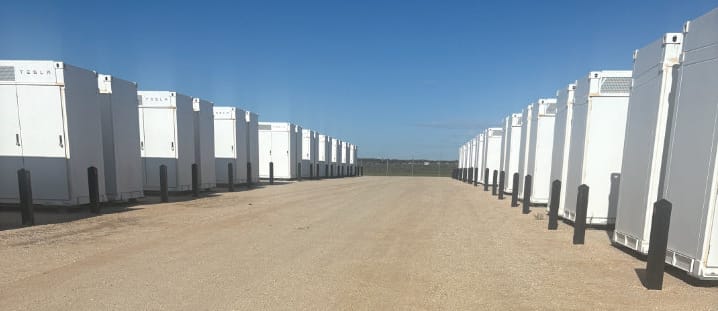
Energy Minister Penny Sharpe has cut the ribbon on Australia’s first eight-hour battery near Balranald, with RWE’s Limondale storage system promising steadier power, local jobs and money back into the community.
A property on the outskirts of Balranald is now home to a national first.
NSW Minister for Climate Change and Energy Penny Sharpe officially opened the Limondale Battery Energy Storage System last Thursday, cutting the ribbon on what has been billed as Australia’s first eight-hour battery.
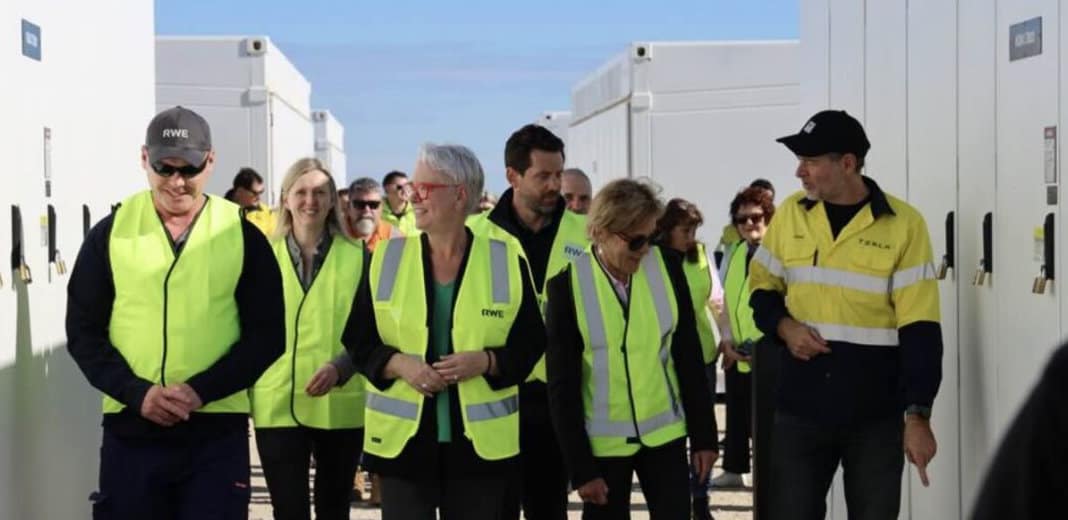
She was joined on the day by Independent Member for Murray Helen Dalton, Balranald Shire Mayor Louie Zaffina, past recipients of the project’s community grants, and a range of industry and government stakeholders who gathered at the site to mark the milestone.
Developed by RWE Renewables Australia with support from Tesla, the battery sits beside the company’s existing 314-megawatt Limondale Solar Farm and plugs into the same grid connection.
The arrangement means the power generated next door can be stored on site through the day and released on demand after dark, using infrastructure that is already in the ground.
It was the first project in the state awarded a Long-Term Energy Service Agreement for long-duration storage under the NSW Electricity Infrastructure Roadmap, the framework the government is relying on to keep the lights on as ageing coal stations bow out.
The battery has a total storage capacity of at least 400 megawatt hours and can run for more than eight hours at a stretch, making it the longest-duration battery operating in the country.
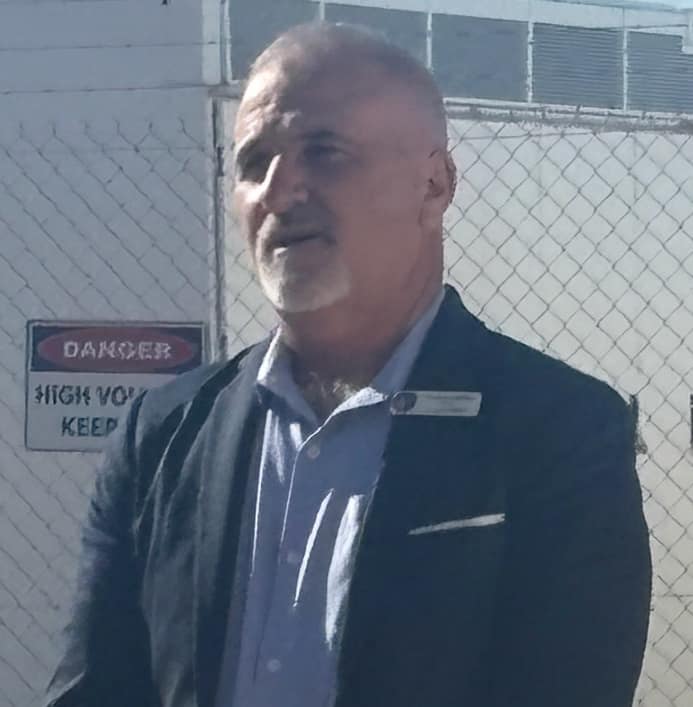
That endurance, representatives conducting a tour of the site said, is the whole point.
Where most grid batteries are built to fire for one to four hours, an eight-hour battery can ride through longer stretches of low wind and sun, acting almost like a steady block of baseload power that can be called on when renewable generation drops away.
In practice, it charges on cheap, abundant solar through the middle of the day and discharges into the evening peak, when demand and prices climb.
Just as importantly, the battery helps hold the grid itself steady.
Its inverters can respond within milliseconds to tiny swings in voltage and frequency, providing a stabilising ‘system strength’ service around the clock, a job traditionally done by coal and gas generators, but one those plants cannot do when they are switched off.
That matters in a region like the far west, which produces a great deal of generation but sits a long way from the major centres of demand.
For RWE, the opening was the end of a long road.
The company has described starting down the path in 2021 with a small development team, at a time when an eight-hour battery was a hard sell, most of the market was looking at far shorter storage, and long-duration capacity was assumed to mean pumped hydro rather than batteries.
The turning point came when the team put Limondale forward into the state’s first long-duration storage tender, backing the then-unconventional view that a battery could do the job, and do it faster than the heavy civil works a hydro scheme would demand.
Limondale went on to be the standout project to win in that opening round, a result the company has called an important first step toward its Australian growth plans, and proof that challenging conventional thinking can pay off.
RWE has credited stable policy and investment settings, maintained through a change of government, with giving industry the confidence to commit to a project of this scale.
Some of the most striking detail is in the engineering.
The battery is made up of 144 Tesla Megapacks, each weighing around 40 tonnes.
Rather than pour the large concrete pads such weight would normally require, crews screwed steel piles roughly 2.4 metres into the ground and set each Megapack on top.
The method cut out enormous volumes of concrete and, crucially in a dry country, water, the same approach used on the neighbouring solar farm, and one the company says is becoming more common across the industry as it proves cost-competitive.
The packs are kept cool by a sealed glycol-and-water system, similar to the cooling in a performance car, which lets the battery run at full output even in 50-degree heat, the kind of conditions that force coal and gas generators to wind back.
On safety, representatives who led a site tour said the system is designed for the worst case; in the rare event of a fault, a pack is built to vent and burn out safely over a few hours rather than be doused with water, with an emergency response plan developed alongside fire authorities.
Across Tesla’s wider operating fleet, they said, only a single pack had caught fire in roughly a decade, with emissions monitored and found to disperse quickly.
The plant runs at about 99.7 per cent availability.
The project is also pitched as a long-term contributor to the district.
The solar farm already puts $40,000 a year into a local community fund, and the battery is set to add a further $40,000 a year for the life of the project, on top of sponsorships and scholarship programs.
Several past grant recipients were among those at the opening.
Ongoing maintenance will be shared between a Tesla crew and RWE staff, with most of those roles understood to be filled locally, a point the company was keen to stress as the kind of skilled, ongoing work these projects can anchor in a host community.
Ms Sharpe said the milestone showed the state’s energy plan taking shape.
“It’s exciting to cut the ribbon on this Australian-first battery, which will get more renewable energy into the grid, placing downward pressure on bills,” Ms Sharpe said.
“Batteries like this one mean we don’t waste an electron of solar and can power the state with renewables.”
RWE Renewables Australia chief executive Daniel Belton said the project was a major step for long-duration storage in Australia.
“We are incredibly proud to deliver the Limondale BESS,” Mr Belton said.
“It represents a major step forward for long-duration energy storage and contributes to a more reliable, resilient and sustainable energy system.”
Mr Belton thanked the RWE team, the project’s partners, including Tesla, Beon Energy Solutions, Lumea and Transgrid, the NSW Government, and the landholders who hosted the project.
With the cost of solar continuing to fall and the grid steadily decentralising, RWE expects more storage of this kind to follow.
For now, the far west can claim a piece of energy history sitting quietly in the saltbush outside Balranald.
See all the photos in the issue.
This article appeared in The Riverine Grazier, 17 June 2026.

