


Australian Rural & Regional News asked some further questions of David Archer, founder of MaxSil and agronomist, and Oscar Ledlin, Co-founder of Sustainable Concrete Group. The interview is set out below, after the release.
MaxSil, Media Release, 15 April 2026
Australian farmers are facing a fertiliser emergency. With urea prices more than doubling and limited stock available for April seeding, crops are at risk, and growers are racing to find solutions. Studies show that 10–40 per cent of surface-applied urea can be lost to volatilisation before crops can access it, and only 5–30 per cent of applied phosphorus is available at application (GRDC; CSIRO).
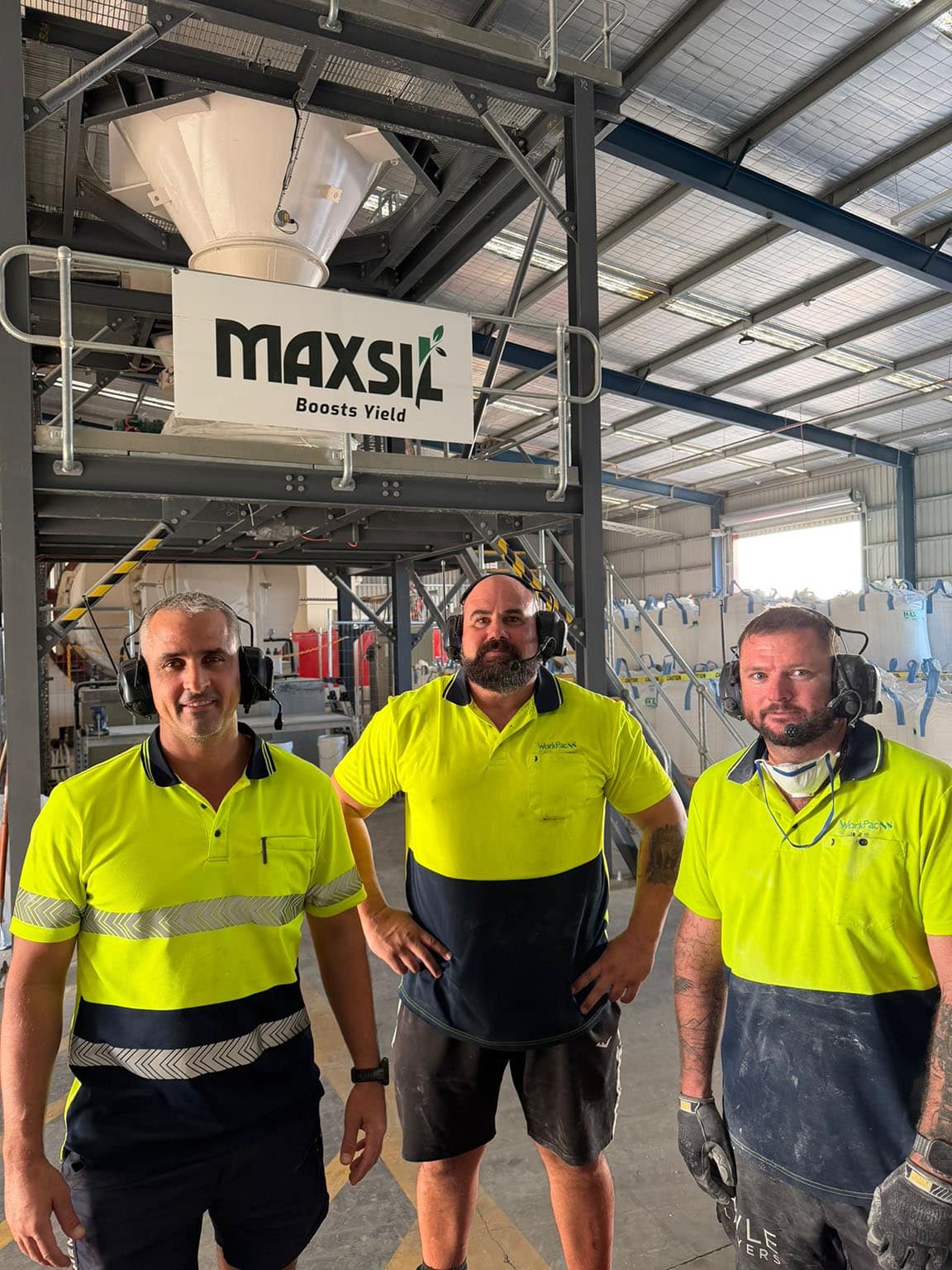
Photo: MaxSil.
Farmers urgently need ways to make every kilogram of fertiliser count. MaxSil, a patented Australian-made silicon fertiliser, offers an evidence-based solution. Field trials indicate silicon improves plant uptake of nitrogen, phosphorus and potassium (NPK) by enhancing root architecture and soil pH balance – helping farmers do more with the fertiliser they already have.
One of MaxSil’s distinct advantages is its ability to unlock phosphorus that already exists in the soil. Australian soils contain an average of 980 kilograms of phosphorus per hectare — phosphorus that is chemically bound and unavailable to plants. At typical application rates of around 50 kilograms per hectare per season, that represents the equivalent of nearly 20 seasons’ worth of fertiliser already in the ground, going to waste. MaxSil’s plant-available silicon activates and accelerates phosphorus uptake through plant roots, meaning farmers can reduce how much new phosphorus they need to apply. Naturally occurring silica in soil cannot do this — it is derived from quartz (crystalline silica) and is not plant-available.
Manufactured in Queensland from recycled glass bottles supplied by Bincoin, MaxSil converts waste glass destined for landfill into ultra-fine silica, creating a circular economy product: waste glass – silicon fertiliser – improved soil – stronger crops – reduced reliance on imported fertiliser.
Field trials show MaxSil contains 36 times more plant-available silicon than competing products. In some trials, crops treated with MaxSil alongside half the standard fertiliser input achieved equivalent or higher yields than full-fertiliser programs, providing immediate potential to stretch existing supplies.
David Archer, founder of MaxSil and agronomist, said, “With fertiliser supply constrained, farmers can’t afford to waste inputs. MaxSil is designed to make every kilogram of fertiliser count, right now, during the critical seeding window.”
Australia remains heavily dependent on imported fertiliser, with 90 per cent of inputs sourced offshore (Climate analyst report, March 2026). The Fertiliser Supply Working Group, established by the Federal Government in April 2026, is exploring domestic solutions. MaxSil is positioning itself as a practical, evidence-based tool that could reduce import reliance while supporting productivity this season.
Oscar Ledlin, Co-Founder, Sustainable Concrete Group, MaxSil’s parent company, said, “Recycled glass. Local jobs. Better yields. MaxSil is a circular economy solution that helps farmers get the most out of every kilogram of fertiliser.”
MaxSil is available in powder and granule formulations, sold in bulk and 20kg bags, and distributed nationally through most agricultural resellers or direct through MaxSil. The product is patented in seven countries and manufactured in a 4,000 square metre facility in Brendale, north Brisbane.
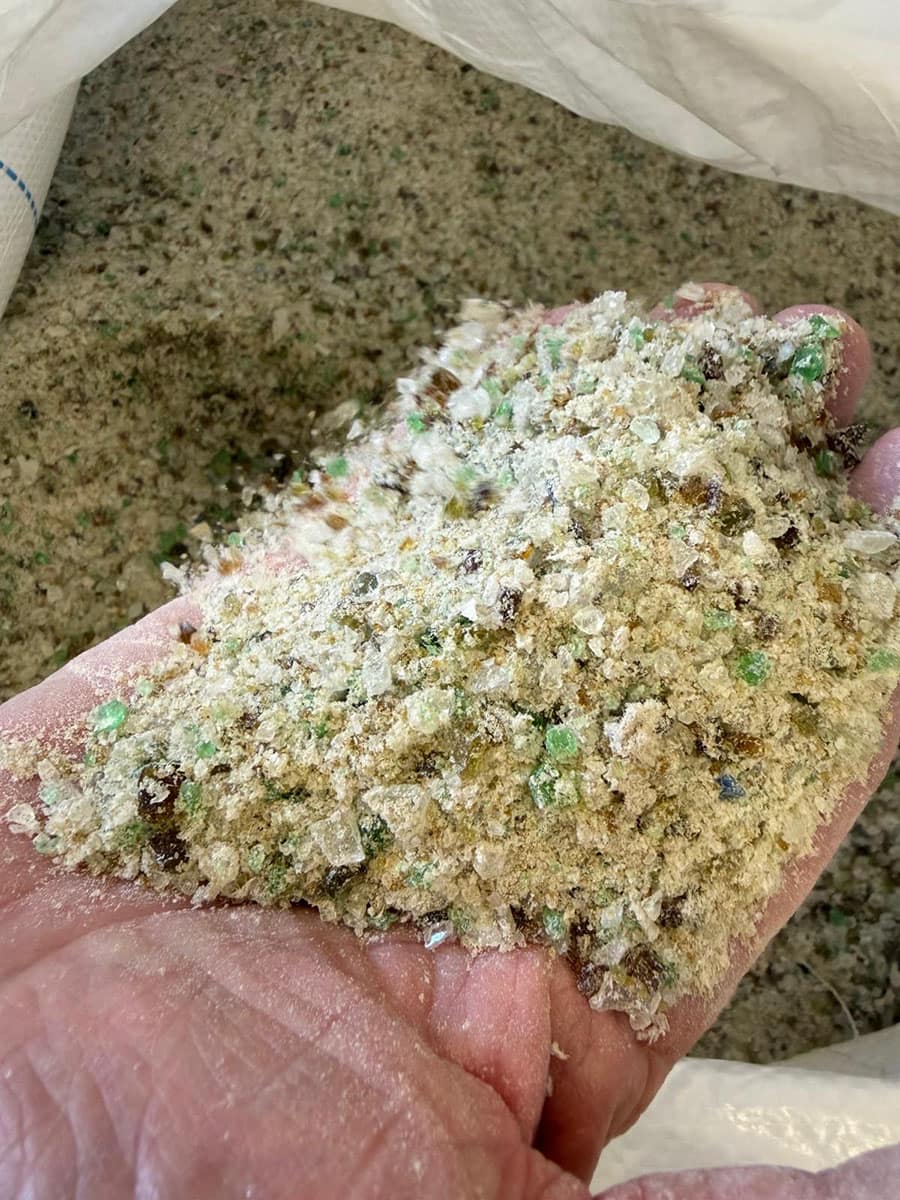
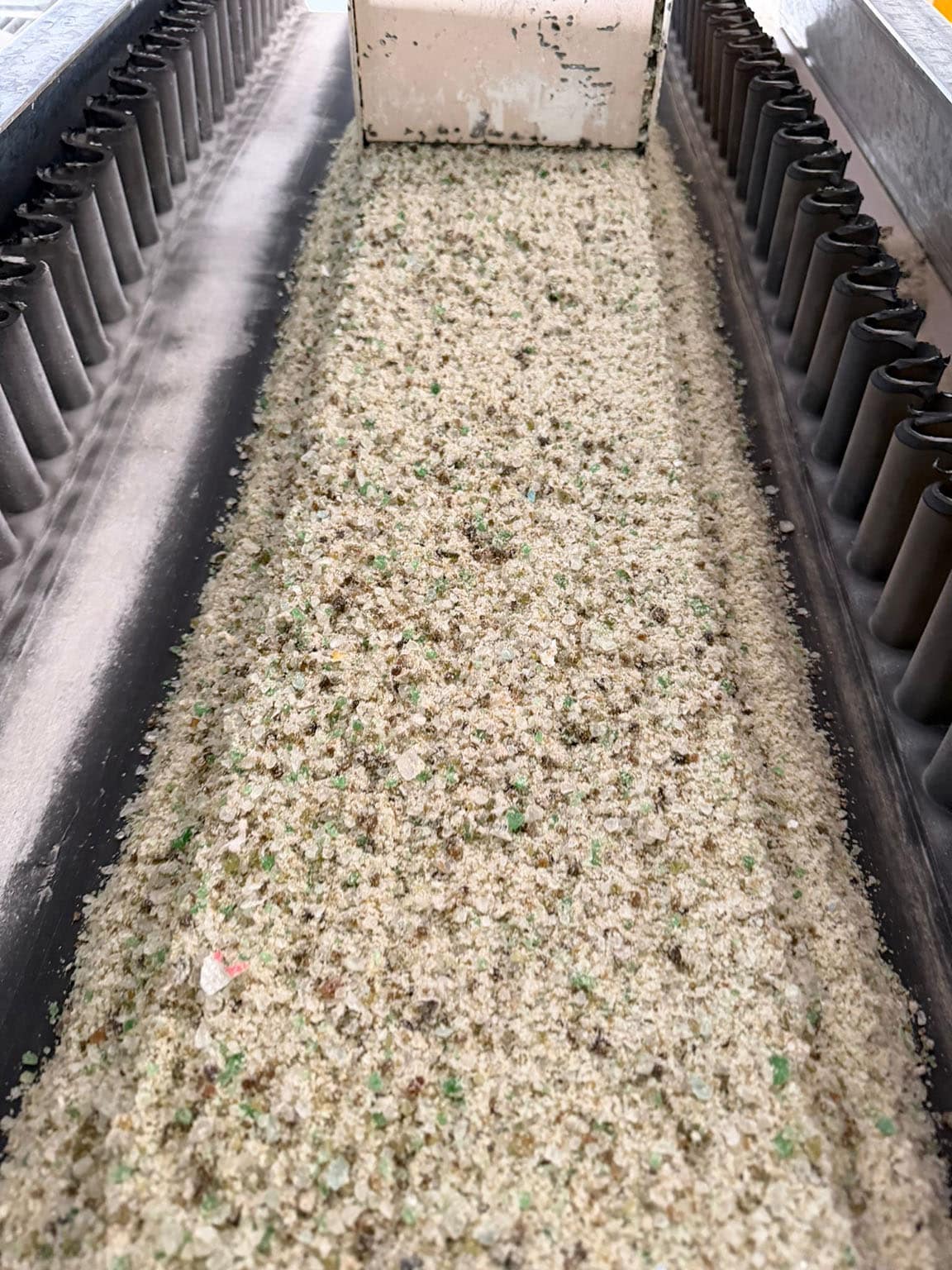
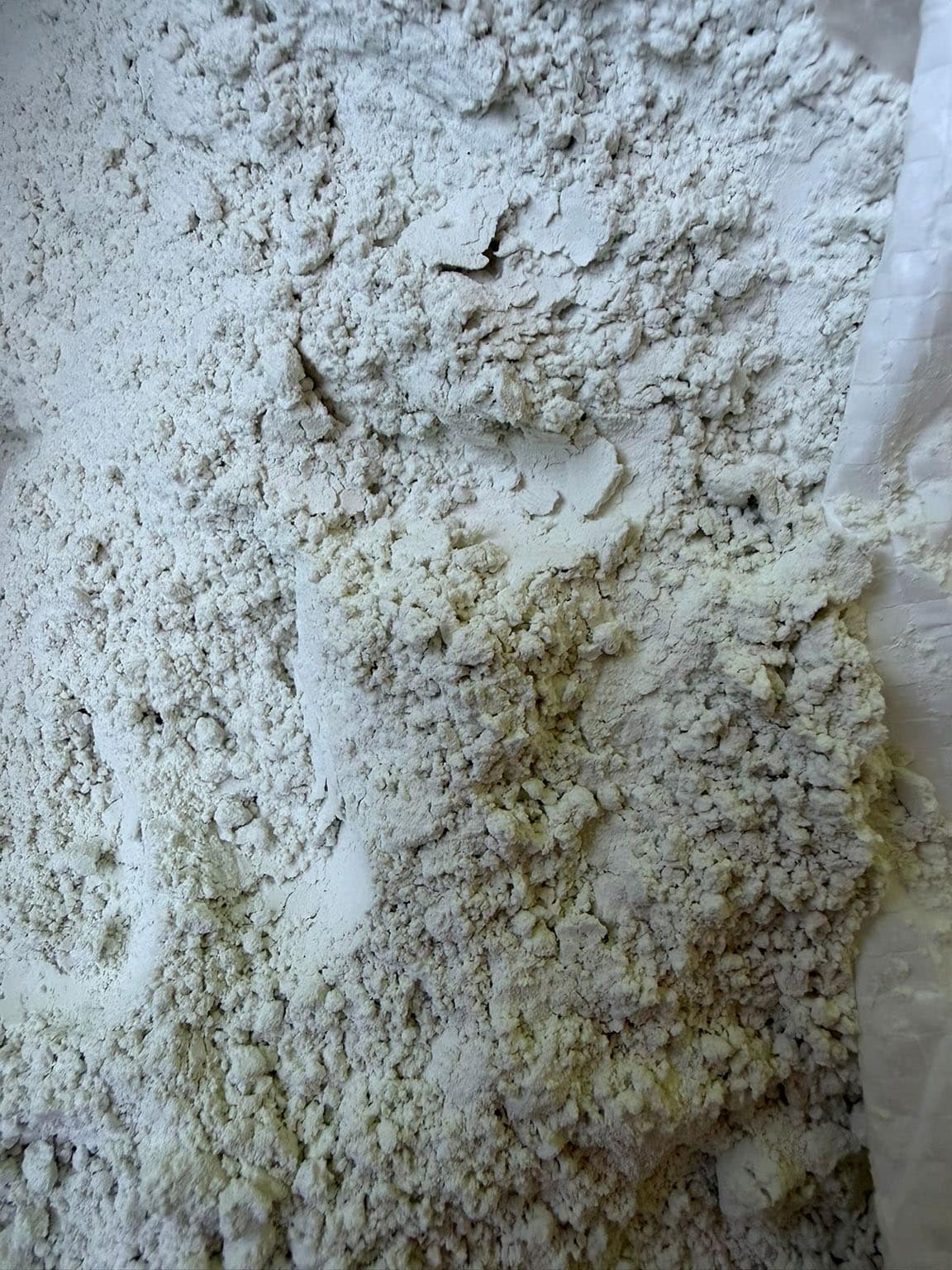
The production process from glass to MaxSil.
Photos: MaxSil.
Australian Rural & Regional News found out more from
David Archer, founder of MaxSil and agronomist, and
Oscar Ledlin, Co-founder of Sustainable Concrete Group
ARR.News: Turning glass into fertiliser sounds like a kind of magic, and putting broken down glass into soil more a disaster than a benefit. Can you explain for the layperson how glass can be made into something good for soil?
David Archer: Glass comprises Calcium, Sodium Carbonate (often used as a commercial water softener) and amorphous (“non-crystalline”) silicon. Don’t think empty stubbies lying in the soil!
By the time we process our product, it becomes a 5-micron (think finer than talcum powder) material that is uniquely formulated to provide several beneficial elements for plant life and in particular, plant available or “soluble” silicon, which increases nutrient uptake efficiency for the plant at a scale not provided by any other bio stimulant material. MaxSil is far finer than soil grains and is not visible to the naked eye in a soil matrix.
ARR.News: Is all glass a potential candidate for this process or only a particular sort? Can different types be mixed?
David Archer: Only soda lime glass is used. This comprises of post-consumer glass (bottles, etc.) and window glass. We don’t use laminated or specialty glass (such as boro-silicate glass).
ARR.News: Can Maxsil be used by itself a fertiliser or will a traditional fertiliser always be needed to go with it?
David Archer: MaxSil enhances the uptake of nutrients (including fertilisers) from the soil. It is not a “fertiliser” in the true sense but a very effective bio-stimulant that increases plant growth, yield and resistance to biotic and abiotic stressors.
ARR.News: Is there an optimum proportion of MaxSil to use or mix with other fertiliser or does that depend on the soil and conditions and crop etc?
David Archer: It depends on the crop and soil conditions, but generally an application rate of 50-100kg ha is sufficient. Higher rates may be required when soil regeneration is the aim (for example, saline or acid soils where crop growth is inhibited).
ARR.News: If MaxSil has the effect of enabling more existing phosphorus to be taken up by plants (?), does that mean that the soils will become depleted of phosphorus in due course and it will need to be added back? If so, will that be costly?
David Archer: MaxSil does have the effect of enhancing the uptake of phosphorus that is locked in the soil matrix, plus enhancing the uptake of this element for the plant as it is applied. Estimates are that over 900kg of phosphorus (per hectare) is bound to Iron or Aluminium in most land used for intensive cropping systems in Australia. MaxSil has a dual effect – it not only inhibits phosphorous being bound as it is applied into the soil matrix, but also releases some of the phosphorus that is already bound in the soil. It’s extremely unlikely that this will lead to a phosphorus deficit; it enhances uptake from two pathways (direct application and unlocking the soil reserves). In effect, it helps to ensure that less of the phosphorus applied ends up in the so-called “phosphorus bank”, which in itself is a misnomer, as P locked in the phosphorus bank is not available to the plant.
The use of MaxSil in most cases, where some of the P inputs are reduced along with a decrease in Nitrogen required, results in a cost saving, not an increase in costs.
ARR.News: Is MaxSil designed for particular types of soil (eg phosphorus rich) or is it generally beneficial?
David Archer: MaxSil (within reason) works across most soil types, including so-called “hostile” soils affected by salt or aluminium toxicity.
ARR.News: Can you give a few more details of the trial results and yields so far?
David Archer: MaxSil has been proven across a range of soil types (normal, salt and acid soils). In most cases, trials on broad-acre cereals, for example, have shown yield increases of over 15 per cent, and in some cases an increase in grain quality. Fruit and vegetable crops show 15-20 per cent increases in yield and quality, as do larger crops such as sugar cane and tree crops such as citrus and avocado.
ARR.News: Have you run the numbers on the big picture as to the potential of MaxSil to reduce the need for imported fertiliser in Australia? For instance, how much suitable glass might be available for conversion, and how much would be needed to significantly reduce the volume of imported fertiliser used?
Oscar Ledlin: We have; start with the raw material supply. New South Wales alone produces around 460,000 tonnes of used glass per year, and recyclers are currently receiving more glass than they know what to do with. Nationally, the figure is well over 1 million tonnes annually, and a substantial portion of that ends up in landfill or sitting in warehouses with no viable end market. That’s feedstock, and right now it’s largely a stranded asset. (For reference: Sustainabilitymatters)
On the demand side, in 2024, Australia consumed 8.7 million tonnes of fertiliser valued at $5.5 billion, with imports accounting for 7.9 million tonnes of that total, an increase of 38 per cent on 2023, while domestic production has declined to just 15 per cent of total consumption. More than half of Australia’s urea imports originate from the UAE, Qatar, and Saudi Arabia, countries directly in the frame amid current tensions in the Strait of Hormuz. (For reference: Beef Central; Clime)
To clarify, MaxSil doesn’t replace urea or potassium: it’s a silicon fertiliser that makes other nutrients work more efficiently. The meaningful comparison is phosphate, where our trials have shown growers can reduce phosphate inputs by up to 50 per cent with no yield penalty. Phosphate-based fertilisers, principally MAP and DAP, account for 18 per cent of Australian consumption, representing hundreds of millions of dollars in annual imports. If MaxSil can halve the phosphate requirement across even a fraction of Australia’s cropping area, the import substitution effect is material. We’re not claiming to solve the whole equation, but we’re a genuine and scalable piece of it, manufactured right here from waste that nobody else knows what to do with. (for reference: Beef Central)
ARR.News: Are there plans to source more glass and set up in other parts of Australia?
Oscar Ledlin: Yes, and the mobile nature of our technology is key to that.
Because our processing units can be deployed directly to feedstock, we’re not reliant on a single fixed facility. By the end of the 2026 calendar year, we expect to be operating across all major metro locations, as well as intermittently in regional areas where there are suitable stockpiles.
ARR.News: How many people does the company currently employ and how many are wanted or expected in the medium and longer term?
Oscar Ledlin: MaxSil currently employs 12 full-time staff across engineering, agronomy, chemistry, operations and warehouse functions.
Sustainable Concrete Group, MaxSil’s parent company, employs more than 300 full-time staff across its portfolio of majority-owned and controlled businesses.
ARR.News: What is the cost of MaxSil and as it compare to traditional fertilisers?
Oscar Ledlin: MaxSil isn’t a direct like-for-like replacement; it’s an efficiency input that reduces the amount of synthetic fertiliser required.
Based on current market conditions, applying our technology can reduce net fertiliser costs by around 40 per cent or more per hectare, driven by lower application rates and improved nutrient uptake.
As the price of urea continues to increase, the net cost benefit of MaxSil will further amplify.
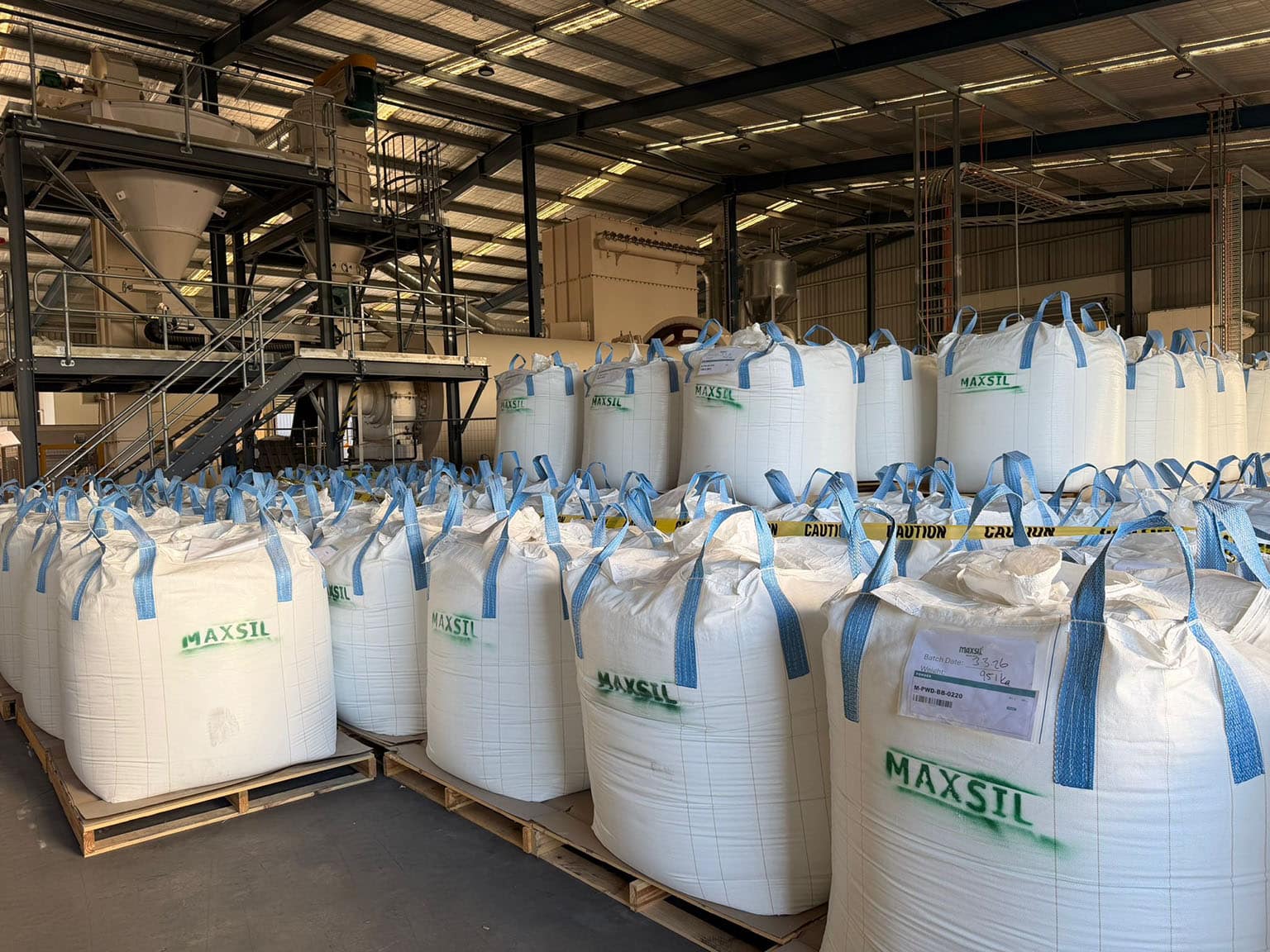
Photo: MaxSil.

