


This article relates to the ongoing debate on Australian Rural & Regional News: Open for Debate: Koalas.
When koalas were declared as Endangered north of Victoria, the expert guesstimate of numbers in NSW was 36,350, a very precise and very wrong number. Now, two and a half years after effective surveys commenced in NSW, the estimate is 274,000, eight times higher. This is a less precise and more accurate number, but probably an underestimate. In any case it shows that NSW koalas are not endangered. The guesstimated number for Victoria and South Australia – 215,824 – did not qualify them for listing as rare or endangered.
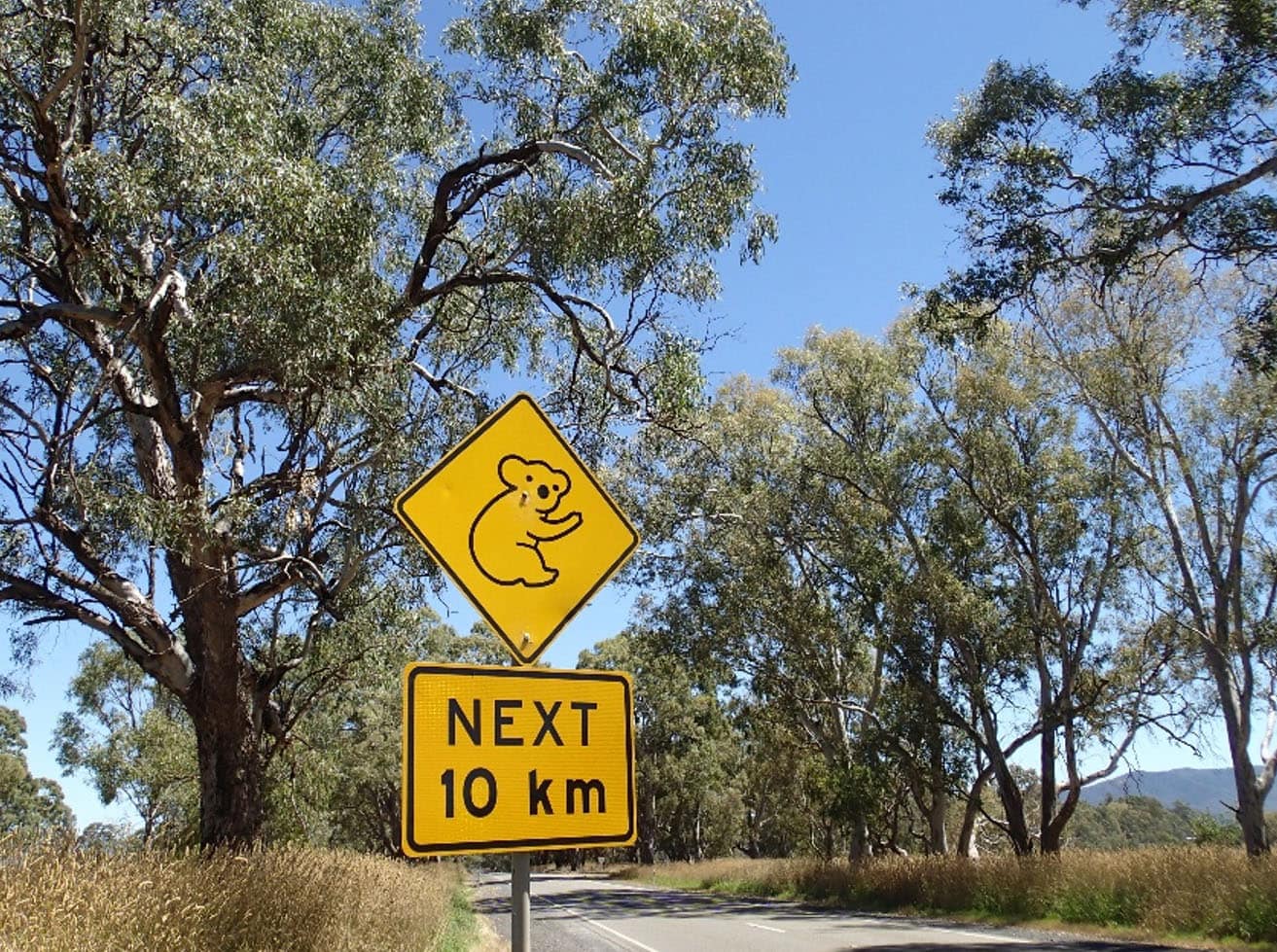
Photo: Vic Jurskis, 2016.
Minister Sharpe says there are many places in NSW “where koalas no longer exist”. There is no basis for this statement unless the baseline for 1788 is established for comparison. Koalas were sparsely distributed in dense forests then (at about 1 animal per hundred hectares). They did not occur in the open woodlands sought by explorers and settlers for development and now increasingly occupied by human populations.
The Minns Government has “invested” $8.5 million on koala care because koalas in dense aggregations suffer disease and koalas dispersing from dense aggregations suffer vehicle injuries and dog attacks. A few days ago I saw my first transportable electronic signboard warning of koalas in the Blue Mountains where ordinary road signs were previously deemed sufficient.
Two and a half years ago, through ARR.News, I posed these questions for Minister Sharpe:
- Did koalas decline in their north coast ‘stronghold’ through the Black Summer Drought and megafires?
- Which way is it? Are koalas generally declining or are they turning up everywhere when effective surveys are used?
- How many different areas were covered by the 1000 survey sites? How many areas had no koalas?
- If koalas are declining, why would you want to relocate them from areas where they are “problematic” to areas where they are thriving?
Koalas did not decline through Black Summer and they are turning up everywhere. The other two questions remain unanswered.
Vic Jurskis is the author of The great koala scam : green propaganda, junk science, government waste & cruelty to animals, Connor Court Publishing, 2020.
Related stories: NSW koala baseline survey to drive conservation action: Sharpe; Great Koala National Park; koala; Open for Debate – Koalas.


Of the thousand sites, roughly a third was on State Forest, a third on National Park and the third on private lands. You would’ve thought we would’ve tested our conservation strategy by seeing if there was variable responses by koalas to different management regimes, ie is locking them up in a national park better than leaving them in the state forest? But lo and behold, the environment department remains tenure blind and refuses to do the analysis. Guess we might have to do it ourselves.
Thanks Steve. I’d expect no difference. 35 years ago, there were 3 times as many koalas in regrowth and plantations as in unlogged forest, because they need soft young shoots. as lock it up and let it burn ‘management’ has expanded there are lots of soft young leaves in declining mature forests. the inevitable megafires also promote koalas. great for the species but not for the animals.
ah well there you go , bias from lo and behold a forestry worker, yes, one of my stomping ground is Eden…pull ya head Vic, plenty of independent research, especially through The Australian Koala Foundation mapping where koalas are and were…decimated through the fur industry between 1880 and 1930, 8 million sold for their pelt!…but ignorance is bliss.
Today however, as once selective logging despite native vegetation removal for pasture, agriculture, housing and the like, industrial scale logging especially introduced in the 70s via woodchips, again after numbers slowly building, decimated as habitat severely altered, destroyed so food sources reduced, creating disease such as chlamydia, a narrower gene pool having another devasting impact on populations’ over and under, and numbers in general.
What’s your point…are you begrudging the paltry 8.5 million, or picking a fight with a minister…agree, lots of BS from Coalition and Labor either to deflect from the urgency of protecting the iconic Blinky Bill, retain jobs in the timber/logging industry or just in the too hard basket as climate change is threatening all life on earth, so again CMF sector the most destructive.
Mega fires promote koalas…after many incinerated, I doubt that!
Being involved in the Forestry Industry especially around Eden, (Harris- Diashowa Chip Mill), Vic, I read your views as biased.
Plenty of independent research, especially through The Australian Koala Foundation mapping where koalas are and were…decimated through the fur industry between 1880 and 1930, 8 million sold for their pelt!…but ignorance is bliss. so originally millions now just a few hundred thousand.
Today however, (as once there was selective logging) and despite native vegetation removal for pasture, agriculture, housing and the like, industrial scale logging especially introduced in the 70s via woodchips, again after numbers slowly building, decimated as habitat severely altered, destroyed, food sources diminished, creating disease such as chlamydia, a narrower gene pool, having another devastating impact on populations; increasing and reducing, leaving pockets of healthy and unhealthy koalas, some needing relocation, (don’t agree with) while others struggling to form a colony.
What’s your point…are you begrudging the paltry 8.5 million, or picking a fight with a minister…agree, lots of BS from Coalition and Labor either to deflect from the urgency of protecting the iconic Blinky Bill, retain jobs in the timber/logging industry or just in the too hard basket as climate change is threatening all life on earth, the CMF sector being the most destructive, followed by agriculture.
‘Mega fires promote koalas’…after many incinerated, I doubt that!
Well managed diverse plantations for timber needs, leaving our native forests to flourish and play their role as carbon sinks, ecosystems, transpiration sinks, cooling sinks, and of course habitat for the birds, the bees, the flowers, the trees, our wonders of the world!
Thanks Dona. AKF is a bit of a joke, mapping koalas in 1788 when whitefellas didn’t even know they existed. Didn’t see one until 1803. Didn’t see em in numbers until 1830s -1840. Yes, they were in plagues by 1880 and suffering disease. Humane economic response was to shoot em and sell their skins. They continued to increase while they were being shot, cos more young survived to maturity. Federation drought killed off the dense aggregations. Koalas we tracked at Eden had chlamydia but not chlamydiosis cos they were at natural low densities. Two that had a choice of unlogged and ‘woodchipped’ coupes preferred the logged coupes. Koalas need soft young shoots to eat. so they like regrowth, plantations, retained trees and edge trees released from competition by logging. They also breed up quickly in new growth from megafires consequent to Lock It Up and Let It Burn ‘conservation’ policies. Pity so many of the supposedly rare critters get burnt in the process.