


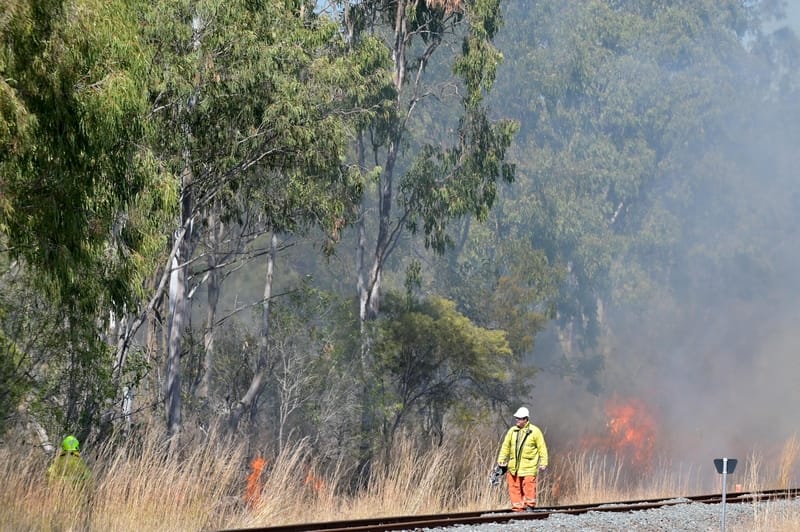
Whether it is floods in NSW and Queensland, or drought and bushfires in Victoria, or the evaporation of sparce government funding, or dealing with the never-ending stretched health resources. The plight of rural Australia is unforgiving. All regional communities face challenges which are quite unique to life outside urban communities. Against this backdrop, it is not technical brilliance or leadership charisma that defines impactful leadership, but rather the ability to persevere, adapt, and stand tall through adversity.
Grit builds a leader’s character and holds a community together
Grit, determination, and resilience are not abstract buzzwords, but life qualities that define a leader’s character and holds regional and rural families and communities together.
- Grit is the long-term commitment to goals despite setbacks.
- Determination is the drive that keeps you moving forward, even when motivation fades.
- Resilience is the capacity to recover from difficulties stronger than before
I am convinced that what separates successful leaders and non-successful leaders is pure perseverance
– Steve Jobs
These are not traits you’re either born with or without, but rather, they are skills that are acquired, and they can be developed. The regional landscape demands a resilient mindset. In every community you can witness leaders grappling with the emotional toll of supporting tight-knit communities dealing with the never-ending challenges of grief, loss, and ongoing uncertainty.
People do not follow titles. They follow authenticity and trust. Trust is not built in ease, but in difficulty. Regional communities have long memories. They remember who was there when times were tough, who stepped in, who was absent, and who folded under the pressure. Grit and determination send a powerful message: “I’m not giving up, and neither should you!” This attitude can become a cultural cornerstone for a township, fostering a shared belief that no matter what comes, the community will endure.
You just do it. You force yourself to get up and put one foot before the other. That’s how you become better
– Jennifer Aniston
In regional communities’ leadership is visible. Leaders are seen at the footy club, in the supermarket, at the school pick up, or volunteering to support the community. Leadership presence in tough times is noticed, remembered, and often then emulated by others. This visibility means that how a leader shows up in difficult times is just as important as what they say. A calm, composed, solution-orientated approach becomes a template for others to adopt. When leaders panic, blame, or worse disappear, it reverberates through the community. But when leaders show up, shoulder the burden, and keep moving forward, it creates ripples of steadiness, hope, and confidence. Leaders who embody these qualities create a stabilising presence that signals that whilst challenges may be inevitable, giving up is not an option.
There is a growing sentiment that today’s young people lack grit, determination, and resilience. Part of this perception comes from a world that has changed dramatically. Our youth have grown up in an environment designed for maximum comfort and minimal risk. Technology has made everything faster and easier. Entertainment is instant, answers arrive in seconds, and communication requires little emotional effort. As a result, the slower, hard-earned rewards of long-term perseverance can feel foreign. Add to this the heightened awareness of mental health, anxiety, and depression, leading to an avoidance of the triggers that cause these problems, means that young people are not accustomed to dealing with adversity, and hence are ill-equipped to deal with setbacks, and feelings of vulnerability.
Fall seven times, stand up eight
– Japanese Proverb
However, it is not all doom and gloom for our next generation. Today’s youth are far more emotionally expressive, attuned to injustice, and are more likely to seek help and support in times of personal difficulty. Their grit may not look like stoicism, it may look more like working through vulnerability, leading advocacy, and quiet persistence. Today’s youth are not incapable of grit; they just haven’t always had the chance to build and acquire it.
Grit and resilience can be acquired through the following:
- Embracing discomfort: Grit grows in challenge, not comfort. Leaders who take calculated risks, and who are willing to share where they have failed and what steps they took to recover, provide wonderful role models on how to gradually build a tolerance to discomfort. It is this tolerance that becomes a muscle to help you push through challenging times.
- Practice reflection: No learning can take place without critical reflection. Resilient leaders take the time to process setbacks. What could have been done differently? What lessons were learned? Reflection is the mechanism to help transform hardship into insight. Insight helps prevent making the same mistakes in the future, thus providing more proactive actions for next time.
- Focus on purpose: Determination is sustained by purpose. People with a clear “why” are more likely to persevere and provide leadership to others. Reminding yourself of the “bigger picture” helps carry people through when energy levels are low in difficult times.
- Build support networks: Even the strongest leaders need support. Mentors, peer groups, buddies, trusted friends, close family members, or even informal chats at the pub with fellow community members helps create a circle of encouragement and support. Grit does not mean going it alone, it means knowing when to reach out.
- Model self care: Often, one of the most important things a leader can do is rest. Take some time out. Burnout helps no-one. Modelling self-care, healthy eating, mental health awareness, rest, and downtime is not a weakness. It is sustainable leadership. The moment a leader loses their energy, focus, enthusiasm, and life balance, their leadership performance always falls away.
Finally, regional Australia does not need superheroes. It needs authentic, grounded, resilient leaders who rise each day with a spring in their step, grit in their gut, and hope in their voice. How they navigate and get over challenges becomes a shared lesson of leadership. It is this determination, modelled daily by our army of regional leaders, that becomes part of our unique regional Australia culture.
Leadership Lesson
Your influence as a leader is always greater than you know.
Your grit may become the reason a young farmer keeps going.
Your resilience may help fuel hope and be the trigger to motivate a small business owner to keep their doors open.
And your determination might be catalyst for the community to move forward
Facta Non Verba – Deeds Not Words

