Serena Kirby, Denmark Bulletin
Five drowning tragedies along WA’s southern coastline this summer have again highlighted the ever-present danger our coastline presents. Two people lost their lives in waters off Esperance, two at Conspicuous Cliffs near Walpole and one at Bremer Bay.
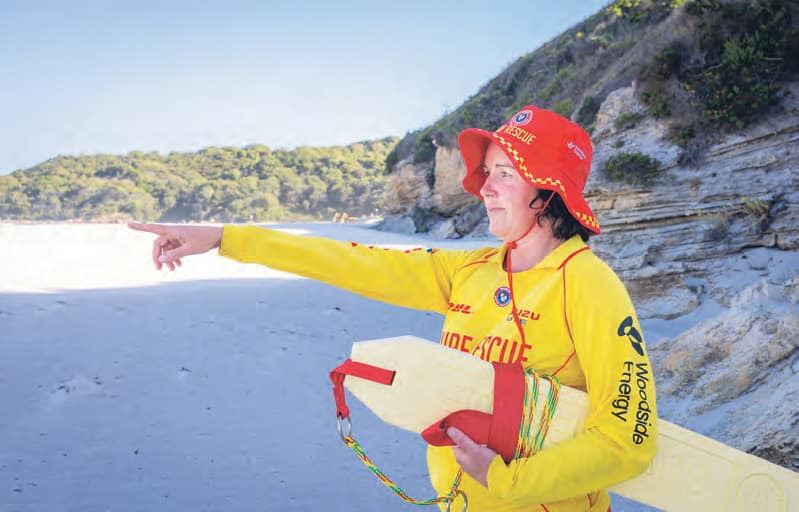
Denmark’s Surf Life Saving Club captain Robyn McMeikan said the club’s volunteer surf rescue teams – that patrol the beach on weekends and public holidays when the paid lifeguards were not on duty – had been as busy as ever over the school holidays.
More than 4000 people visited Ocean Beach over the holiday period with one serious rescue occurring when a surfer broke his femur after coming off his board on a sand bank.
The patrols also recorded 419 preventative actions and that number is set to rise as beach patrols continue until the end of March.
“Preventive actions are all about avoiding tragedies,” Robyn said.
“It may be making surfers aware of nearby swimmers, pointing out rips or encouraging people to swim between the flags.
“Rescues and first aid are important parts of our role but we also spend a lot of time talking to the beach goers and educating them as research shows only one in four people can properly identify a rip.”
Robyn said this summer’s Surf Life Saving Australia message had been, ‘Stop, Look and Stay Alive’ and that was something to remember all year round.
“When you get to the beach stop before entering the water, look at the conditions and look for any dangers or rips and swim between the flags if you see them,” she said.
“Don’t swim alone and if it’s unsafe – don’t swim.”
Robyn also wants to encourage more adults to join the club next season so they can become proficient in first aid and better equipped to act if they see someone in distress at the beach.
Family members, friends or bystanders often jumped in the water to help and ended up becoming another person to be rescued, or worse, they became another casualty.
Robyn said that being competent in the water, knowing how to identify a rip and knowing what to do when caught in one meant more people could become part of the solution instead of becoming part of the problem.

This article appeared in the Denmark Bulletin, 20 February 2025.