

Fire station
Ian Riley, Tarrangower Times
A well-known feature of Maldon is its distinctive stone gutters, correct?
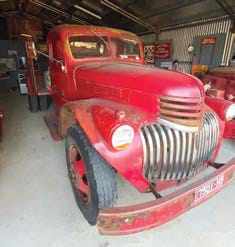
But what does this have to do with the fire station? Well, everything, as I learnt after speaking with Darryl Walker, an amazing guy who has been a volunteer firefighter for over 60 years. That’s around the time the Beatles came to Australia.
There have been some very clever and resourceful people in Maldon over the years with the ‘can do’ attitude that just gets stuff done.
So, the problem was to get water quickly to the site of a fire. A very scary, possibly life-threatening situation.
Our clever predecessors worked out a system whereby the water from the dam above the cricket oval could be directed to flow down the appropriate gutter to where the fire was. A temporary dam would be set up and the horse-drawn fire cart would pump the water out and put out the fire. The valves can still be seen today.
Yes, really!
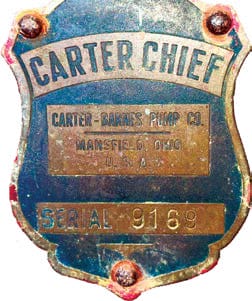
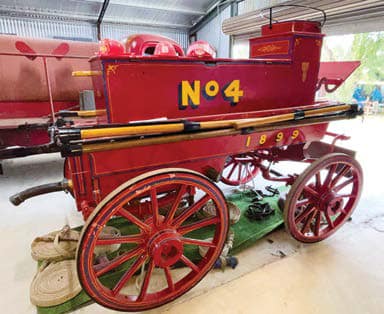
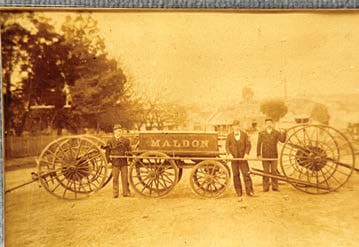
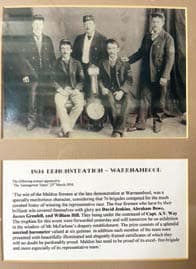
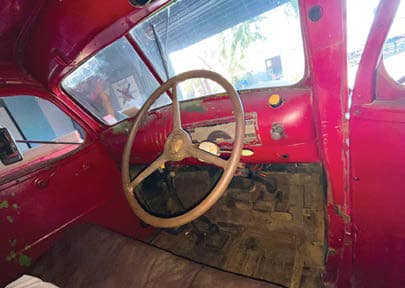
Name badge from an old water pump, Original horse drawn fire cart merryweather 1899 used until mid thirties, Original Maldon Pumper taken in Fountain Street with the Kangaroo Hotel in the background. Photos: Tarrangower Times
I asked around and no one seems to know of a precedent for this system. Someone correct me, please, if I’m wrong, but even if it was copied, it’s still a great idea.
The actual fire cart is pictured and sits proudly as the star exhibit in the Maldon Vintage Machinery & Museum Fire Station display and it still works!
We tend to take firefighters a bit for granted unless you’ve got one of those calendars, but I digress. The Maldon fieries are all volunteers and always have been. They are the folks who get called out at a minute’s notice to help you when you need it most and quite often risk their own lives in the process. I find that incredibly humbling.
Anyway, back at the museum, there is a wealth of information and examples of equipment, most of which would have remained a mystery to me without Darryl’s explanations.
There are basically two types of fire engines: tankers, which carry their own water and pumpers, which hook into a convenient water source (like the early gutter example), usually a hydrant, dam, or river, to get the water onto the fire.
That’s a really simple overview, but the reality now is a whole lot more complicated. All sorts of different extinguishers for different kinds of fires, first aid, rescue, the list goes on. If you’ve got an electric or hybrid vehicle it might be worthwhile asking about their very specific safety issues.
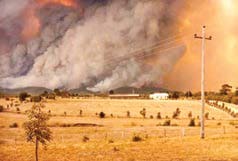
I asked Darryl if he had a standout memory from his career and without hesitation, he said, “Ash Wednesday”.
Ash Wednesday (16 February 1983) experienced over 100 fires sweeping across Victoria and South Australia, killing 75 people (including firefighters ) and causing widespread damage. High temperatures and intense winds. I remember actual burning embers falling in Balwyn and the sun being blocked out by the smoke. Anyone who was in Victoria on that day will never forget it. Darryl was called out and ended up in Macedon; he didn’t get home for five days.
The cold statistics tell the story: 29,500 hectares were burnt, seven lives lost and 628 buildings destroyed and that was only Macedon.
No mobile phones back then, no internet, just embers coming out of the black sky, 40 degree heat and howling winds.
This is why I feel humbled.
You don’t want to frighten your kids, but it’s a good idea to make them aware of the reality of our country and the selfless firefighters who help us feel safe.
A very interesting part of our Maldon Vintage Machinery & Museum.

This article appeared in the Tarrangower Times, 2 August 2024.

