

The Grafton Rowing Club was proud to host Rowfest, a celebration of the history, skills, sportsmanship, and aesthetics of building and rowing wooden boats last month.
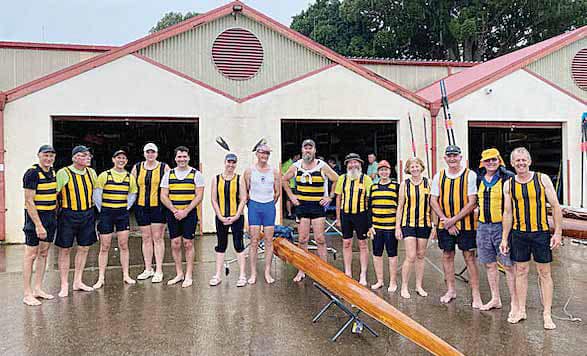
Until the 1970s, all rowing shells were made of timber.
Principally in Australian red cedar, but also silver ash, coachwood, and Klinki pine were used.
These species were light and strong but required care and maintenance. Reinforced plastic boats were more robust, and they required less care and were cheaper. Wooden shells are now a bit of a rarity, hence the need to look after what remains of them.
The people who built and knew how to maintain these boats are also becoming a rarity, and a way needs to be found to pass on their knowledge.
Rowfest is one way to help preserve the knowledge, skills, and history of wooden shells.
You don’t have to be a rower to appreciate the beautiful nature of wooden boats, and we were fortunate to have over 20 boats on display to admire.
Some date back 80 years and been lovingly restored.
The exhibition races at Rowfest were held for rowers to enjoy the sportsmanship of rowing these beautiful boats.
Rowfest was also a social occasion, with two successful dinners with guest speakers held during the event.
Rowfest was not just about the past.
A new wooden boat design was rowed, displayed, and discussed during the event.
There were also examples of other boats from the past such as a Viking Longboat replica and a Gladstone skiff.
The venue was the Clarence River at Grafton, arguably the best rowing river in Australia. We are spoilt for calm water, small tides, and little boat traffic to contend with.
Rowfest was put together entirely by volunteers from the Grafton Rowing Club.
We received no government money nor sponsorship.
Despite the weather on the Saturday deterring some public attendance, the event was a success, and it is hoped to be an ongoing annual or biannual event.
Editorial kindly contributed.
This article appeared in the Clarence Valley Independent, 19 June 2024.

