

Forest & Wood Communities Australia (FWCA), Media Release, 1 July 2026
Forest & Wood Communities Australia has called on the Australian Greens to support the proposed Senate disallowance of Labor’s Improved Native Forest Management carbon method ahead of the expected Senate vote on 18 August 2026, saying the vote will expose whether the party genuinely opposes carbon offsets or only opposes them when they deliver its preferred anti-forestry outcome.
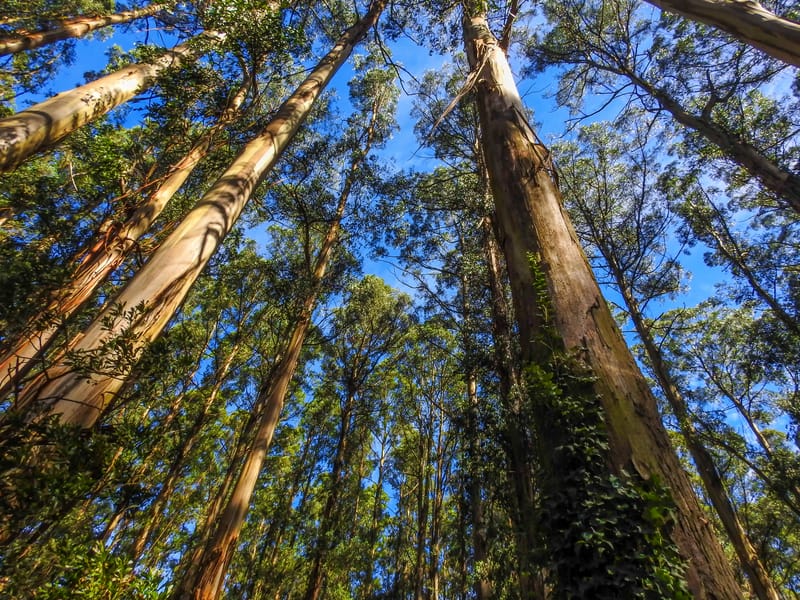
The Improved Native Forest Management method allows state governments to generate Australian Carbon Credit Units by ceasing planned timber harvesting in defined areas of multiple-use public native forests. It also requires reduced wood extraction across the broader project area and imposes a 100-year permanence obligation.
FWCA Chair and Director Steve Dobbyns said the method is not simply a conservation measure. It is a carbon-crediting mechanism that monetises the closure and restriction of sustainable native forestry.
“This disallowance motion is a test of principle,” Mr Dobbyns said.
“The Greens can vote to disallow this method, or they can admit they are prepared to support forest offsets when those offsets are used to shut down sustainable native forestry.
“They cannot condemn carbon credits as a licence for big polluters one day, then defend the same offset mechanism when it is used to bankroll their preferred political outcome.”
Mr Dobbyns said the INFM method raised serious concerns that FWCA and others had warned about from the beginning.
“The first issue is additionality,” he said.
“If governments have already made political commitments to close or reserve these forests, then the public is entitled to ask whether the carbon credits represent genuine new abatement or whether taxpayers and emitters are being asked to pay for a decision that was already politically intended.
“The second issue is leakage. Timber demand does not disappear when harvesting is stopped in one region. It shifts to private forests, interstate supply, imported timber, steel, concrete and other substitute materials. If that leakage is not fully and honestly accounted for, the claimed carbon benefit is little more than accounting theatre.
“The third issue is permanence. A 100-year carbon obligation is not a short-term policy adjustment, particularly when that century-long commitment is effectively being paid for through just 15 years of carbon credit payments. It is a century-long restriction on future forest management, timber supply, regional employment, housing materials and the capacity of future governments to respond to changing circumstances.”
FWCA said the method also has implications beyond the specific areas where harvesting formally ceases.
“This method is not limited to drawing a line around a park and walking away,” Mr Dobbyns said.
“It operates across whole forestry regions and requires reduced wood extraction across the broader project area. That means the economic and supply impacts can extend well beyond the immediate carbon protection areas, and risks creating a financial incentive for governments to constrain or discourage private native forestry activity in surrounding landscapes, particularly where increased private harvesting could undermine claimed abatement through leakage.
“That matters for sawmills, haulage contractors, harvest crews, timber workers, builders, manufacturers and regional towns that depend on a predictable supply of Australian hardwood.”
Mr Dobbyns said the Greens’ own public comments had already exposed the contradiction at the centre of the debate.
“The NSW Greens have criticised the idea of turning forests into carbon banks and offsets for climate polluters. On that point, we agree,” he said.
“So the question for the federal Greens is simple: will they vote according to that principle, or will they protect a method that does exactly what they claim to oppose?”
FWCA said the INFM debate should not be misrepresented as a choice between conservation and forestry.
“This is a choice between credible climate policy and political carbon accounting,” Mr Dobbyns said.
“Australia needs carbon methods that are transparent, scientifically robust, fully account for leakage, and support active, adaptive forest management for carbon storage, fire resilience, biodiversity, cultural values and long-term forest health.
“What we do not need is a carbon-crediting mechanism that shuts down one of the most heavily regulated timber industries in the world, increases pressure on imports and substitute materials, and then pretends the emissions consequences disappear.”
Mr Dobbyns said the method also undermines Australia’s broader sovereign capability in timber and housing supply.
“Australia is already under pressure to meet future timber demand,” he said.
“Reducing domestic hardwood supply for the next 100 years will not help build homes, support local manufacturing or reduce reliance on imported timber from countries that may not meet Australian environmental, labour or governance standards.
“You do not protect the global environment by closing well-regulated Australian production and outsourcing demand elsewhere.”
FWCA said the proposed disallowance is now an integrity test for every party in the Senate.
“If the Greens vote to disallow the method, they are standing by their stated opposition to forest offsets for polluters,” Mr Dobbyns said.
“If they vote to protect it, they are not opposing dirty offsets. They are simply choosing which regional communities, workers and industries should be sacrificed to create them.
“The Greens now have to choose: principle or politics.”