


Loadshift, Media Release, 9 March 2026
As diesel prices surge, petrol pumps are switched off across the country and fuel deliveries to independent distributors are suspended, Australia’s largest online freight marketplace, Loadshift, is urging truck drivers and transport companies to take one simple step to protect themselves: don’t drive empty.
An estimated one-third of trucks on Australian roads are running without cargo at any given time. In normal conditions, that’s a costly inefficiency. In the middle of a fuel crisis, it’s an extraordinary waste of a resource Australia is rapidly running out of.
“Every empty truck on the road right now is burning diesel the country doesn’t have to spare,” said Matt Barrie, Chief Executive of Loadshift. “We’ve 25 days of diesel reserves, 28,000 unfilled driver positions and a third of our trucks running empty. The maths doesn’t work. The simplest thing any driver can do right now is stop driving empty.”
The solution Loadshift is promoting is straightforward: after completing a job, instead of driving home with an empty trailer, drivers use Loadshift’s live freight marketplace to find and complete a paying job on the return leg.
“The overwhelming majority of our long-haul drivers already use the platform to secure backloads as standard practice. It’s not a nice-to-have anymore, it’s how smart operators run their business,” said Archie Johnson, Loadshift Business Development Representative. “For drivers, picking up a backload can significantly offset their fuel costs from a single journey. In some cases, a good return load can cover the entire cost of fuel for the trip home and then some.”
Diesel crisis hitting drivers hard
Diesel prices have risen sharply and are expected to continue climbing as the conflict in the Middle East shows little sign of abating. Energy Minister Chris Bowen confirmed the dwindling national supplies.
This morning, 2GB’s Ben Fordham reported that petrol pumps are being switched off in several parts of the country and fuel deliveries are being cut off to independent distributors, with industry insider Danny Kreutzer saying he has never seen conditions this bad.
The Australian Trucking Association says the market price for diesel has risen from $130 to almost $220 per barrel, with retail prices up almost 19 cents a litre in days. In remote areas, diesel has been reported as high as $3.99 a litre. One major fleet operator told Big Rigs the price hikes are costing her business an extra $15,000 a day in fuel alone.
For owner-operators and independent drivers, the impact is even more personal.
Neil Taylor, a long-haul driver from Dubbo who uses Loadshift to find freight jobs, saw diesel prices at his regular fuel stop jump 50 cents a litre overnight this week, from $1.79 to $2.29. A trip to Western Australia that normally costs him $5,000 in fuel is now looking closer to $7,500.
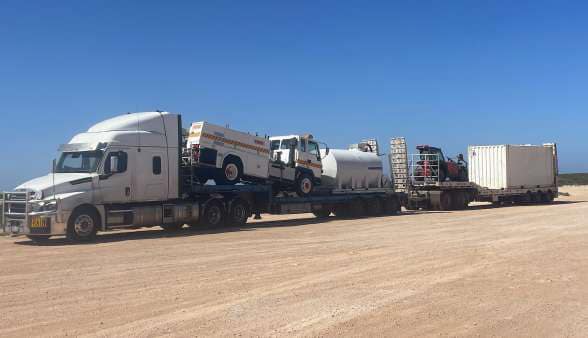
“It’s never been this bad,” Taylor said. “It was bad with COVID but this is something else.”
Taylor, who is currently shifting a 20-foot container, a fire truck and a water tank across the Nullarbor, says he’s choosing not to hike his rates in a competitive market. That means he’s absorbing the extra cost to maintain client relationships. Taylor always books return loads through Loadshift on long-haul trips, including his current east-to-west coast journey.
A crisis compounded by a driver shortage
The fuel crisis comes at a time when Australia’s trucking industry is already under severe pressure. According to the International Road Transport Union’s 2024 Global Truck Driver Shortage Report, Australia has over 28,000 unfilled truck driver positions, a figure projected to reach 78,000 by 2029. Nearly half of all Australian truck drivers are over 55, and one in five are expected to retire within three years. The National Road Transport Association has described the situation as a “ticking time bomb.”
With fewer drivers and growing freight demand, the industry cannot afford to have a third of its trucks burning diesel with nothing on the back.
“This isn’t just a fuel problem. It’s an efficiency problem that the fuel crisis has made impossible to ignore,” Johnson said. “We have a severe driver shortage, we have trucks running empty across the country, and now we have diesel that drivers can barely afford. Backloading isn’t a workaround, it’s the way the industry needs to operate.”
The practice also has flow-on benefits for all Australians.
“More drivers making this smart, simple move means fewer trucks on the road. That means less congestion and fewer carbon emissions,” Johnson said.
Loadshift says it has seen a roughly 25 per cent uptick in activity on its platform since hostilities in the Middle East escalated in recent weeks, with operators regularly hearing from users wary of what lies ahead.
“This is a time of real uncertainty and we feel for drivers like Neil who are being hit hardest,” Johnson said. “Whether it’s a quiet week or a crisis, Loadshift exists to help anyone in logistics work smarter, and right now, that matters more than ever.”


Keep up the good work!