Part 4: From Dapto to Dunoon – The Dorrough family story by Peter Dorrough
The full story is available on Trove at https://nla.gov.au/nla.obj-3253686100/view. Parts 1-3 of this story were in previous editions. Our thanks go to Peter for his contribution.
Peter Dorrough, Dunoon and District Gazette
Kangaloon
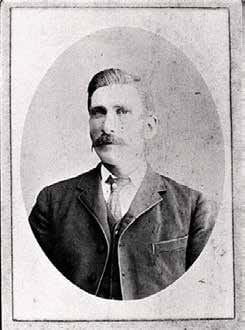
In the 1860’s both John and James Dorrough took up land grants on the plateau above Illawarra escarpment, and commenced, once again, land clearing, which was part of the condition of the grant. And again, dairying and timber milling was their main occupation, establishing a working timber mill on James’ property. The entrepreneurial spirit was strong, particularly in James, who sought to establish a co-op to send milk by rail to the Sydney market. John continued his building, whilst both brothers speculated in real estate in the nearby towns.
In 1866, Martha Jane suffered cataracts to her eyes and gradually her general health failed. This spurred some change and in 1867, Matthew leased the property “Kalmar” at Dapto, and took Martha to live with his son James, Mary Ann and children at Kangaloon.
During a cold winters evening in June 1869, some of the family including James and his father and mother set out to go to John’s nearby farm to attend the usual weekly prayer class meeting. On the way Martha Jane became suddenly very ill and “unconscious with thrombosis” and died before the next morning.
Martha is buried in a double grave site, alone, at the Kangaloon Pioneer Cemetery. Her husband Matthew sold their farm at Dapto and came to live permanently with his youngest son, James and family at Kangaloon.
During this time, the Kangaloon Public School was established, with James donating 2 acres of his farm “Willow Vale” for the school site, while John Dorrough built the school structure, which still stands today. The Kangaloon Methodist Church was also established, with the Dorrough families, amongst others contributing funds to its development.
Dunoon
In the 1870’s Australia, and more specifically New South Wales experienced a severe drought, not the first, and not to be the last. But they say timing is everything. The two Dorrough farms, along with others drew water from the creeks that fed the Wingecarribee Swamp, a large freshwater lagoon. The drought saw these water supplies diminish in reliability. At the same time word had spread in the colony of the plentiful supply of land, water and timber in the Clarence and Richmond River valleys in particular.
During the 1840’s at about the same time that the Dorrough’s had arrived in Port Jackson, cedar cutters arrived on the Richmond River, mostly from the Clarence and the other large rivers located to the south. The area did not open up for farming to any great extent until the passing of the Robertson Land Act in 1861.
During the 1860’s, settlers started to arrive from the south coast of NSW and from other areas to farm and they started to work in the Richmond Valley.
By the 1870’s, Lismore, situated about 22 miles from the Richmond River’s mouth, had since its gazettal as a town in 1856 become a busy and thriving township and in 1879 it was proclaimed a municipality.
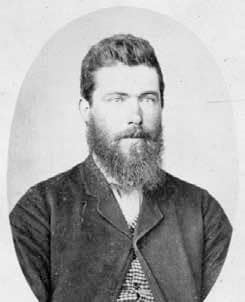
During the late 1870’s, the first settlers arrived at a locality now known as Dunoon. Duncan Currie had built a hut of sawn timber slabs and called it “Dunoon” after his birthplace in Scotland.
With burgeoning families who required their own land, the opportunities in the Southern Highlands looked limited. The other clan families of the Knights and the Arthurs where also looking to explore new opportunities.
John Dorrough, his son Matthew Dorrough and Robert Young Arthur (the second husband of John’s sister Elizabeth) travelled from Kangaloon (rail to Sydney) and then by ship the “Lismore” arriving at Lismore on 26 June 1881.
This was to scout out potential land grants in Dunoon, acquire lodging in Lismore and to determine a site for a sawmill.
What they found suited the Dorrough family business activities well. A pattern had been established early with old Matthew in Shellharbour, by land clearing for dairy farming, cattle breeding and milling the timber on the land for construction purposes, for both commercial and residential uses.
Ian Kirkland in his book, “Go North Young Man” outlines the various motivations of this internal migration of families, plus lists the families who moved from the Southern Highlands area of New South Wales to the Richmond River Valley during this period. And not surprisingly, most had Irish heritage, had lived in County Fermanagh, and for the most part were Protestant Irish. This is not surprising given the persecution Catholic Irish experienced, both at home but also in the English dominated and controlled colony of New South Wales. This was a mirror situation to the Irish Fermanagh families decision to immigrate in the 1840’s.
Land in and around Dunoon, could be obtained by John or his son Matthew, cedar trees felled and “bullocked” to Lismore, where it was proposed that James Dorrough would establish a commercial scale Sawmill.
Similarly, Robert Young Arthur had the view that sugar cane could be grown in the location, as it was proving a very successful crop in the Clarence River valley.
All in all, it was a grand plan.
With that plan in place, the Dorrough brothers liquidated their various real estate holdings in the Southern Highlands. John’s farm, “Rosedale”, was sold in October 1881, whilst James’ farm, “Willow Vale” was sold later in 1888. Other real estate holdings in Bowral, Mittagong and Moss Vale were also sold. The other kinfolk followed suit.
To be continued
This article appeared in Dunoon and District Gazette, August-September 2025.