


John O’Donnell, July 2025
There have been a number of hot and intense bushfires in Australia, including the Black Summer bushfires of 2019–20 which claimed 33 lives, destroyed over 3,000 buildings and scorched more than 24 million hectares across South East Australia. But far from being a freak disaster, it was a warning of worse to come and we have learned almost nothing since in relation to mitigation.
It is essential that all the impacts and costs of failed and failing fire regimes in SE Australia and associated intense bushfires are assessed to adequately understand the scale of bushfire impacts, social and safety impacts, environmental impacts and economic impacts. This report has assessed the impacts of large and intense bushfires across SE Australia.
Read the full report here: John O’Donnell, Assessment of the impacts of large, severe and intense bushfires across South East Australia
In too many cases, the scale of intense bushfires is forgotten by government, in some cases not understood or fully assessed and neither alternative fire mitigation approaches nor economic efficiency and accountability opportunities are considered.
Bushfire disaster impacts across SE Australia are outlined in 5 sections (Sections 2.1 to 2.5), social and safety bushfire impacts are outlined in 7 sections (Sections 3.1 to 3.7), environmental bushfire impacts are outlined in 15 sections (Sections 4.1 to 4.15) and economic bushfire impacts outlined in 5 sections (Sections 5.1 to 5.5).
The scale of the bushfire impacts is very large. The impacts across SE Australia are across 32 different impact areas, with intense and severe impacts for the majority of these.
The images below highlight the scale of the impacts. More photographic and other evidence is presented in the full assessment.
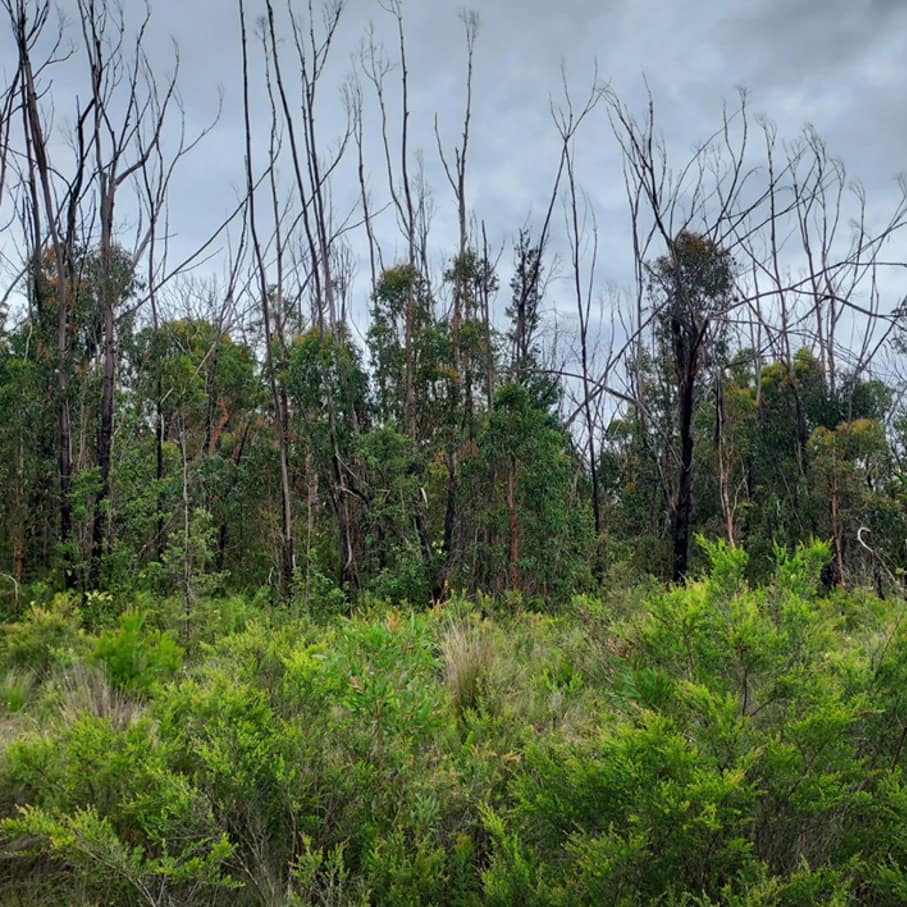
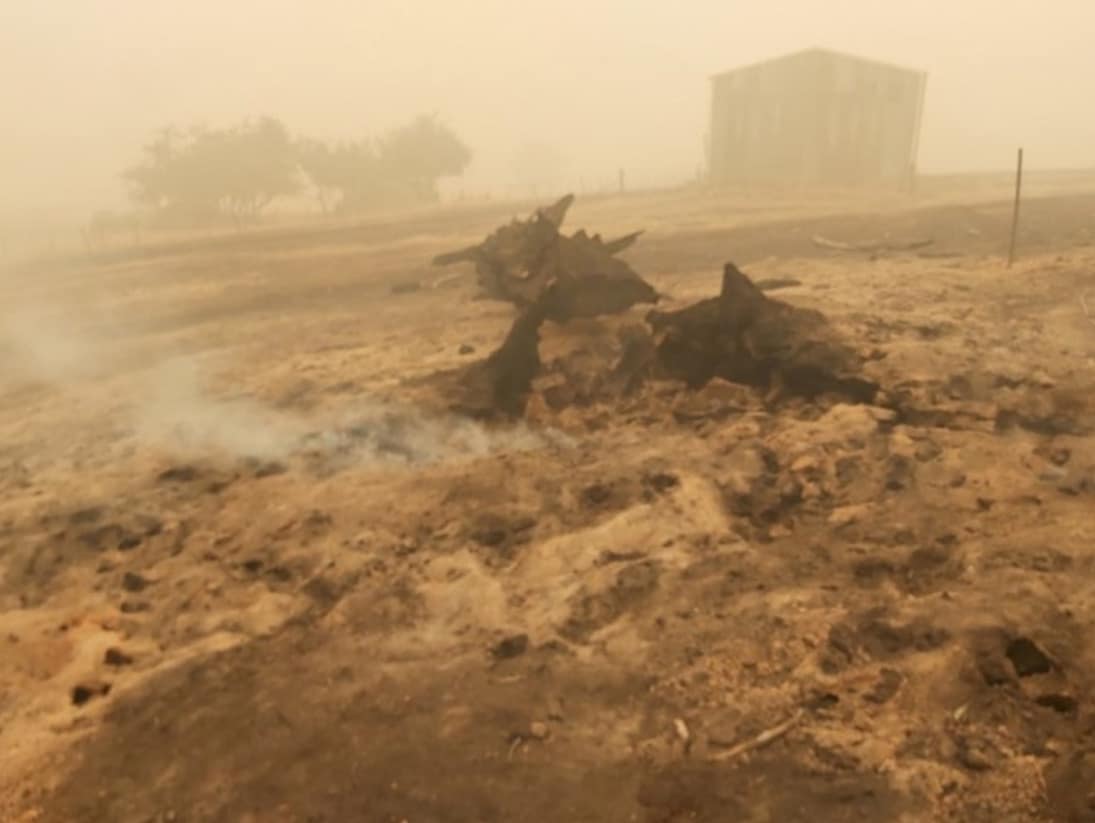
It is important that governments at all levels adequately address these impacts and utilise fire mitigation much better in terms of scale, distribution and funding. Despite the scale of devastation, governments and land managers have not seriously changed course. Prescribed burning remains rare. Bureaucracies remain locked into rigid, ecologically narrow fire regimes that ignore the fundamental drivers of landscape flammability. The result is that large-scale, intense bushfires are no longer exceptional. They are now systemic.
The retreat from active fuel management has created conditions for extreme bushfire behaviour: hotter, faster, longer duration bushfires. And fuel loads that span landscapes.
Across SE Australia, prescribed burning covers a pitiful fraction of the landscape. Unburnt fuel now stretches across very large contiguous areas. This contiguity allows bushfires to run unchecked for hundreds of kilometres. In 2019–20, the Gosper’s Mountain fire became the largest individual blaze in the world. Repeat megafires have torched the Grampians, the Little Desert, the Flinders Ranges, and Kosciuszko National Park — sometimes twice in under two decades.
The fuel is often not just thick. It is vertically connected. Dense understories and deadwood provide a ladder into the canopy. When fire hits these areas, it becomes a crown fire — intense, fast-moving, and lethal to firefighters, ecosystems, and infrastructure alike. And because previous high-intensity fires kill many mature trees and often replace grassy forests with shrubby forests, they make the next bushfire even worse. We are locked in a positive feedback loop.
Our fire response system is geared toward suppression, not prevention. But suppression fails under catastrophic conditions. Firefighters are being sent into landscapes with too much fuel, too little time, and little margin for error. Dead trees can fall without warning, escape routes can be blocked and smoke can reduce visibility to very short distances.
In 2019–20, nine firefighters died. But unless we act, the death toll in future bushfires could be much higher. Community safety is also eroding. Whole towns like Mallacoota were cut off. Air pollution from fires killed an estimated 400 people and put thousands more in hospital. These are not isolated events. They are baked into our current fire management mitigation approach.
The ecological toll is staggering. In many cases grassy forests are becoming shrubby forests. Obligate tree species such as Alpine ash forests, which require 15–20 years between fires to regenerate, are at risk from repeat bushfires. Hollow-bearing trees are being lost in large numbers in megafires.
A number of threatened species are pushed closer to extinction. Water catchments are compromised by erosion. Air quality deteriorates for months at a time. The carbon released from massive forest fires makes a mockery of our climate targets. Yet the policies that fuel this spiral remain untouched.
Conclusion
Fire shaped this continent. But in failing to manage it, we have turned it into a destroyer. Unless we reset our relationship with fire — from fear and suppression to knowledge and stewardship — Australia will keep burning. And each fire potentially will be worse than the last, depending on fuel loads, weather conditions, dryness and other factors.
We are not passive victims of climate. We are active contributors to disaster. And we can change it. It is time for governments at all levels to acknowledge this reality and commit to genuine, large-scale fire mitigation, in policy, in funding and on the ground.
Read the full report here: John O’Donnell, Assessment of the impacts of large, severe and intense bushfires across South East Australia
About John O’Donnell
John is a retired district forester and environmental manager for hydro-electric construction and road construction projects. His main interests are mild maintenance burning of forests, trying to change the culture of massive fuel loads in our forests setting up large bushfires, establishing healthy and safe landscapes, fire fighter safety, as well as town and city bushfire safety.
More from John O’Donnell

