

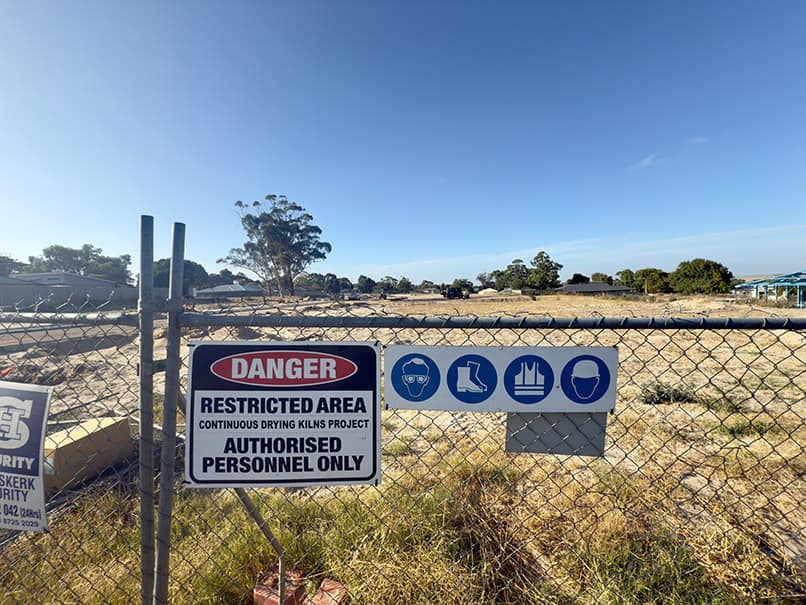
Consistent failures in housing strategy
Bureaucratic hurdles, red tape, market failures, declining investor confidence, and ineffective policies have all been cited as key factors behind the district’s ongoing housing crisis.
In this edition of Hard Talk, The [Naracoorte] News explores the severe housing shortage affecting regional towns like Naracoorte, Penola, and Bordertown.
This persistent shortfall is stalling economic growth, as businesses struggle to expand or maintain operations due to a lack of housing for potential employees.
Developers often encounter obstacles and are deterred by restrictive policies and convoluted regulations, forcing many to abandon their plans altogether.
With a federal election looming, and a state election 12 months away, we reached out to State Housing Minister Nick Champion, SA Shadow Housing Minister Michelle Lensink, Member for MacKillop Nick McBride, and Federal Member for Barker Tony Pasin for their possible solutions to the housing crisis.
We also reached out to the federal government and the federal opposition for their comments. However, no responses were received before the deadline for press.
The [Naracoorte] News asked:
- Do you think country towns like Naracoorte in the South East are facing a housing crisis?
- What do you think is causing this housing crisis?
- Has the government failed to address the housing shortage?
- In your view, what are the economic impacts on country towns because of limited housing?
- Do you have a plan to address this crisis? Please explain.
- Is immediate action needed at the policy level to address the housing shortage in country towns? Please explain what policy changes need to be made.
- Do you think social housing could be a solution to this crisis?
- What needs to be done to build more homes?
The responses
‘It should be called the housing supply crisis’: State minister for Housing, Nick Champion
Mr Champion believes the issue should be termed a “housing supply crisis,” emphasising that the core problem is the need for more homes.
He said Australia was in a housing crisis, and the nation’s regions, including towns like Naracoorte, were not immune.

“Regional areas face additional challenges compared to capital cities when it comes to housing supply, including limited access to infrastructure, higher costs of materials and transport, availability of trades, and developer capacity,” Mr Champion said.
He said the undersupply of housing in regional South Australia was not new, with some regions experiencing near-zero rental vacancies for many years.
“However, in recent times, partially as a result of the pandemic, the housing shortage has become much more acute and much more widespread,” Mr Champion said.
He believed the Malinauskas government had made housing a top priority and was pulling every lever available to address the issue.
“Since taking office in March 2022, the Labor government is progressively delivering more than 63,000 potential new housing opportunities for South Australians,” he said.
“This is being delivered through land releases, project delivery, planning code amendments, and development agreements. Construction is already underway to build houses across metropolitan Adelaide and regional SA.”
He said the government had abolished property value thresholds for both the stamp duty exemption and first home owner grant at a cost of $30 million over four years in the 2024-25 budget.
He explained this was designed to encourage more people to build new homes.
And while the minister admitted that the shortage of housing in regional SA was putting additional pressure on the economies of regional towns, he claimed the state had one of the strongest economies in the country, offering incredible job opportunities.
“…but we need more houses to accommodate those workers,” Mr Champion said.
“The acute shortage of housing in regional South Australia puts additional pressure on the economies of regional towns, particularly when businesses are unable to expand their operations due to a lack of housing for a growing workforce.
“The state government itself has experienced these pressures directly, as the shortage of housing has made it difficult to recruit and retain key service workers such as police, teachers, and healthcare professionals to work in the regions,” he said.
To address this crisis, Mr Champion said the government had released a Housing Road Map, which featured more than 100 initiatives designed to build more homes faster.
“In recognition of the unique challenges faced by regional areas, the government of South Australia established the Office for Regional Housing in February 2023,” he said.
“The office (Office for Regional Housing), which sits within Renewal SA, collaborates with local governments across South Australia, as well as developers, economic development agencies, and the business community, to address regional housing shortages.
“Since its establishment, the Office for Regional Housing has overseen two significant programs of work that have made notable contributions towards increasing housing supply.
“The office has established the Regional Key Worker Housing Scheme, which will encourage greater investment in rental housing for critical workers in regional areas,” he said.
Mr Champion also outlined a pilot program delivering 30 homes in regional centres, including Mount Gambier.
The houses would be occupied by essential workers, adding to the supply of new housing and enabling the deployment of additional teachers, healthcare workers, and law enforcement officers to the regions.
“The pilot (project) is well underway with eight homes already completed and occupied by key workers and the remaining 22 well under construction with all to be completed by quarter three this year,” he said.
“Following the delivery of the pilot program, there is scope for the scheme to be expanded to other regions and be made available to other organisations seeking to secure long-term access to new, fit-for-purpose housing for their workers.
“The first expansion of the scheme will support a new housing development in Bordertown, in partnership with the Tatiara District Council,” he said.
Additionally, Mr Champion said in 2024 the office (Office for Regional Housing) launched the $10 million Regional Housing Initiatives Program (RHIP).
“The program has already allocated more than six million dollars in investment to projects led by regional councils and developers, including projects in nearby Mount Gambier and Bordertown,” he said.
“The office (Office for Regional Housing) will seek to use this funding to enable a range of development and construction projects to proceed, delivering outcomes that will have meaningful impacts across the whole housing sector in regional SA—in small towns as well as major regional centre.”
Asked whether immediate policy changes relating to housing were needed to address the situation, Mr Champion said in recognition of the government’s efforts to address the housing crisis, the state’s housing policies had been ranked the best in the nation by a leading industry body.
“The Housing Industry Association Scoreboard benchmarks each state and territory according to ten critical housing supply policies and mechanisms that are advantageous to the promotion of housing supply, with SA topping the nation with a score of 9 out of 10,” he said.
Regarding social housing, the minister said this provided housing security for vulnerable and low-income households.
“For the first time in a generation, the Malinauskas Labor government is increasing the number of public houses in the state following decades of cuts and mandates to sell housing by former governments.
There are approximately 7500 Housing Trust homes across regional SA. The government, through SA Housing Trust, is building 172 new public homes, which include 22 new public homes in Mount Gambier,” he said.
“There is no quick fix to solve the housing crisis, so the government must continue to deliver housing opportunities for the short, medium, and long term.
“All tiers of government must continue to collaborate to ensure there’s a steady supply of development-ready land and then work with private industry to deliver the houses in a timely fashion.
“The state government is in the process of developing regional plans that will play an important role in guiding sustainable growth by identifying land use and long-term infrastructure over a 15- to 30-year period.
“They outline where new housing and employment areas will be located, how services will be delivered, and what infrastructure is needed while exploring different growth scenarios.
“Our state is currently realising a new level of economic opportunity. We have entered an era of potential prosperity, underpinned by nation-leading projects, but if people cannot find a place to call home, one that suits the needs of their family, one that allows them to enjoy all that our state has to offer, then none of it matters.
“This makes housing the most high-stakes game in town, and through our Housing Roadmap, we are making changes, introducing policies and funding considerable investments to increase the supply of homes,” he said.
Market failure, and lack of investor confidence: Member for MacKillop, Nick McBride
Mr McBride has blamed market failure and lack of investor confidence in building houses in the region as the reasons for the housing crisis.
“I think many years back, and even going back decades, there has been market failure and a lack of confidence in investment and in building houses in the region. There are better opportunities for investors to build houses in cities, and from South Australia’s perspective, Adelaide, because of the way the land and housing prices have appreciated in the cities,” Mr McBride said.

He explained that regional housing was perceived as a higher-risk, less lucrative investment, which had led to investors avoiding towns within MacKillop, like Naracoorte.
He said governments would like to address the housing shortage Australia-wide.
“I think that the analogy to think that the housing shortage is Australia-wide in cities is only since Covid, or Covid times, but I think the regions have been lacking a shortage of houses for more than two decades,” he said.
“We have evidence of this in the council minutes of the Tatiara Council and Bordertown, which go back to 2000, where the shortage of houses has been ongoing in Bordertown for over two decades.”
“I think the regions are suffering for a whole lot longer for different reasons but now have fallen under the same umbrella of housing shortage Australia-wide.”
Mr McBride said the shortage of houses affected everyone in the region and from different walks of life.
“For example, we hear about policemen not being able to get housing they see suitable for their families, so they don’t go to the region,” he said.
“We hear of school teachers and nurses and principals being really hard to find for our schools because if they find and get a principal, there is no housing available for that principal to move into and start work.
“We hear even in councils, it took the CEO of a local council 12 months to find the right house in the council area she was trying to move to.
“Then comes the other side of the spectrum, the trades, builders, specialists, and alike—when they want to move into regional towns and they need a house, there is none available.”
Mr McBride said regional towns missed out on the gambits of those experts, skills, and careers—people who could potentially move into our area, but there was no housing available.
“So, that instantly turns them off and turns them away,” he said.
“I think that with the regional housing shortage, one of the consequences of this is we miss out on economic activity, population growth, and the expertise and specialists.”
Mr McBride said he planned to respectfully approach the government about the housing crisis.
“My approach now is to be respectful in my approach, my dialogue, and my communication, but certainly communicate the shortfalls, the missed opportunities, and where it’s not working,” he said.
Mr McBride said he had conversed with Minister Champion, and the Labor government had come on board and rolled out money towards Bordertown and Tatiara, and the government had changed its tune on government housing.
“There hasn’t been any government housing for teachers, nurses, or policemen since the 1980s. They (the government) are turning that around and starting to build government houses in the region, including MacKillop,” he said.
“The other part of this is I want the government to participate in our regional towns, in the infrastructure that’s required for housing development.
“I am talking about roads, electricity, utilities, and alike to actually help our regional towns.”
Mr McBride said the government was not blind and oblivious to the housing shortage in Australia.
Additionally, he said no one wanted to see money rolled out to individual developers and investors that got rorted or wasted or gave a false sense of a market that has actually failed everywhere else.
Blame Labor: Federal member for Barker, Tony Pasin
Mr Pasin said that under the Labor government, residential building approvals have fallen to their lowest level in over a decade, while rents have risen almost as sharply.
“At the same time, Labor has brought one million more people to Australia in just two years,” he said.

Mr Pasin claimed that only 350,000 homes were constructed in that time, with red tape and union corruption adding to costs and delays.
If elected, he claimed the coalition’s plan was to boost housing supply and take pressure off demand by funding essential infrastructure like water, power, and sewerage at housing development sites.
He believed the plan would also fight inflation to take pressure off interest rates and rents, reduce migration to sensible levels that the housing supply could handle, and implement a two-year ban on foreign investors and temporary residents purchasing existing homes in Australia.
He further claimed that the coalition would support first home buyers and older women to overcome the prohibitive challenge of saving for a home deposit by allowing superannuation savings to be used to help build their deposit, address supply chain constraints and invest in skills development, and ensure an adequate number of skilled visas for those in the construction sector to support the capable local workforce.
“Cut red and green tape to allow builders to get on with the job of building more homes, including freezing further changes to the National Construction Code,” Mr Pasin said.
“Restore the Australian Building and Construction Commission to tackle union corruption that has contributed to driving up building costs by up to 30 per cent, and maintain the Home Guarantee Scheme, a former coalition government initiative to help first home buyers save for a deposit,” he added to his claims.
Mr Pasin said an elected coalition government would unlock up to 500,000 new homes by investing $5 billion to fund essential infrastructure like water, power, and sewerage at housing development sites.
He said this was an initiative he had discussed directly with Naracoorte Lucindale mayor, Patrick Ross.
“This initiative will be game-changing to get housing construction moving across the country, particularly in regional communities like Naracoorte, which have seen population growth and workforce shortages exceed residential housing construction,” Mr Pasin said.
“Addressing this issue is essential to unlocking economic growth, which is why an elected (Peter) Dutton coalition government will act immediately to fix the housing crisis.”
Market needs greater diversity of housing options: Shadow Housing minister, Michelle Lensink
Ms Lensink emphasised the need for greater diversity in South Australia’s housing market – a mix of traditional quarter-acre blocks and strategically designed higher-density dwellings to better accommodate the evolving needs of the population.
“Our market has traditionally been more affordable than other states, but the impact of migration post-Covid has pushed up prices and priced many people out of the market,” she said.

Ms Lensink claimed many regional areas were experiencing additional housing squeezes due to the higher cost of construction and issues such as more challenging lending criteria.
“This has an impact on the ability to cost-effectively build in our regions and limits the capacity to attract workers,” she said.
“The current government has made grand announcements about land releases in Adelaide, a Housing Roadmap, and a review into the public housing maintenance contracts, all so far without producing more housing for people in need.”
She said the opposition had called for accountability through the regular publishing of a Housing Roadmap report card, setting a state government target for the number of houses under the Albanese government’s Housing Accord (the federal target for SA is 17,000 houses per year over the five years 24/25, 25/26, 26/27, 27/28, and 28/29), developing a plan for the volume of construction materials that needed to be produced in SA, and adoption of their recently released policy on apprenticeships and trainees, “given Labor’s failed approach”.
Ms Lensink claimed a Liberal government would address the housing crisis by ensuring Renewal SA did not drive-up land prices by outbidding private developers, introducing a transparent decision-making framework for SA Water’s new infrastructure projects, seeking advice from the Auditor-General on Housing SA’s maintenance contracts, and enforcing the Marshall government’s public housing anti-social behaviour policies.
“More details about our plans will continue to be released well in the lead-up to the election,” she said.
This article appeared in the Naracoorte News.

