

Rural libraries make up 81 per cent of all public libraries in Ukraine.
In the near future, the number of these libraries may be reduced by 5 times.
Libraries have failed to become attractive and profitable in a market economy.
However, no one has tried to make them so.
Legacy of the past
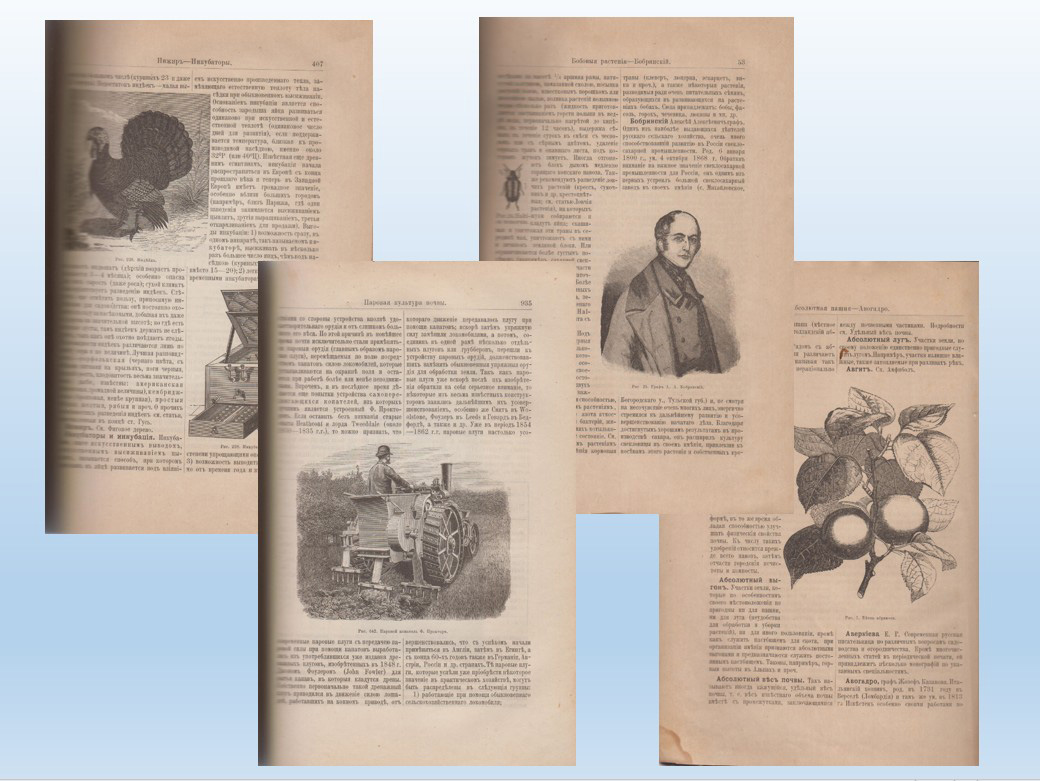
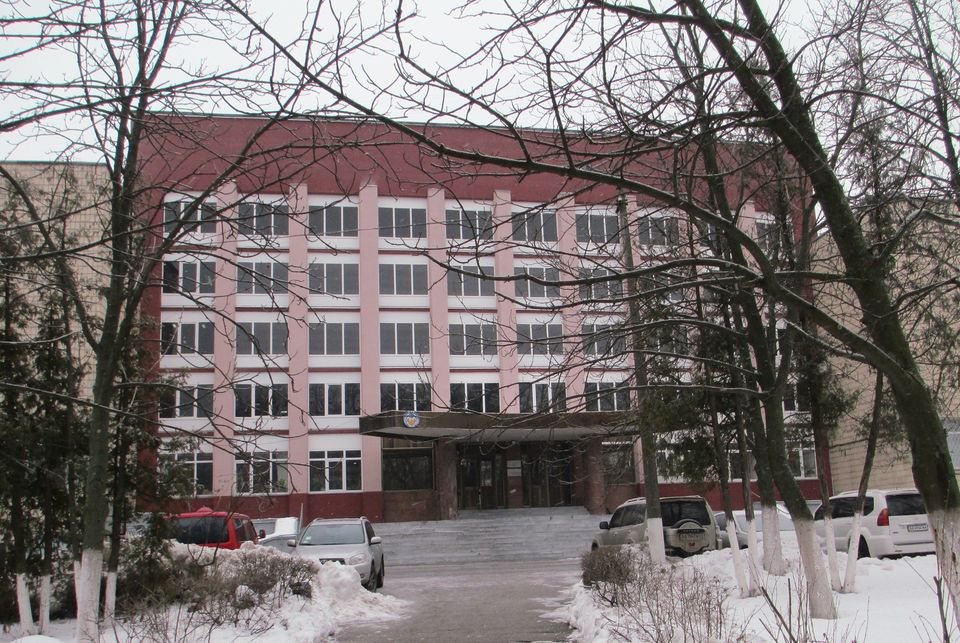
AAs of January 1, 2019, there were 15,662 public libraries operating in Ukraine. Of these, 81 per cent or 12,749 libraries operated in rural areas.1 The largest and most famous Ukrainian library in its category is the National Scientific Agricultural Library (NSAL) of the National Academy of Agricultural Sciences. This library ranks third in the world (after similar libraries in the USA and Russia) by the number of books and other information materials. The Ukrainian library has 1.1 million copies of printed publications on agricultural and forestry topics. These books come from 59 countries and are printed in 32 languages. The National Scientific Agricultural Library is recognised by the Ukrainian government as a national treasure.2
However, in recent years, the library industry in Ukraine has been going through the worst times. And therefore, most of the industry’s problems are problems of rural libraries. The outbreak of war with Russia became the final test for these libraries. Almost 550 of them were destroyed or damaged during the fighting.3 However, those libraries that have survived are struggling with many problems that began long before the war with Russia.
What is the essence of the problem?
The main problem of rural libraries is… modern officials and employees of rural libraries. In the current situation, rural libraries must survive on their own, and not work at the expense of budget funds as was previously the case. After all, government funding is insufficient. At the current level of government funding, it will take 100 years to completely update the collections of Ukrainian public libraries. By comparison, in economically developed countries, library collections are updated in 5-6 years.0 Officials cannot provide good funding for libraries.
Library staff cannot compensate for the lack of funds. These people cannot or do not want to make money. Because rural libraries have always been supported by budgets of various levels.
“The main sources of financing for libraries of state and municipal forms of ownership are funds from the state and local budgets, respectively.
Funds from state and local budgets are used to finance the development and implementation of library development programs, construction and reconstruction of library buildings, structures, premises, development of remote services using technical means of electronic communications, other forms of service for residents of remote areas and people with physical disabilities.
The amounts of expenses for replenishing library collections in the State Budget of Ukraine and local budgets are allocated as a separate line,” says Article 26 of the Law of Ukraine On Libraries and Librarianship.4
Not surprisingly, the public library is not a profitable business. Although the same Law of Ukraine on Libraries and Librarianship gives libraries the opportunity to earn additional income.
In particular, the law says: “Additional funding for libraries of state and municipal forms of ownership can be provided through:
- funds received from economic activities, provision of paid services;
- funds received for work (services) performed by order of enterprises, institutions, organizations and individuals;
- income from the rental of premises, structures, equipment;
- grants, charitable contributions, voluntary donations, monetary contributions, material assets received from individuals and legal entities, including foreign ones;
- funds received by libraries as interest on the balance of their own revenues received as fees for services provided by them in accordance with their main activities, charitable contributions and grants and placed in current accounts opened with public sector banks;
- other sources not prohibited by law.”
However, the state, having created legislative opportunities, did not encourage librarians to use these opportunities. However, the specialised education of a librarian does not include running a business. Without additional training, library staff are helpless in business. As a result, library staff did not show business initiatives. In most cases, they tried to avoid unnecessary problems and tried to support the library’s activities through ever-decreasing budget funding. This is a wrong decision that leads to loss of jobs for librarians themselves. Every year 200-300 libraries close in Ukraine.5
What is happening does not cause public protests. Why there is no reaction from voters becomes clear after a conversation with Oksana Radko, a resident of the village of Kotiv, Rivne region of Ukraine. Here is a short interview with her.
Is there a library in Kotiv?
Yes. This is a very good library.
Does your daughter go to the library?
My daughter Dasha studies at school. She was there once 2 years ago. The book she took then is still at home. The child has not read this book yet.
Why does this happen?
The education system has changed a lot. When I was young and went to school, we lived in libraries. The teachers made us memorise a lot of poems and then recite these poems. We also had to read a lot of classical literature. After reading, we discussed it in class and wrote essays about the books we read.
There was no Internet in those days. Therefore, all books could be found in the library. To do well in school, I had to constantly go to the library. This is not necessary now. Children are not forced to memorise poetry. And the study of literature has become different. There is also the Internet. Finding a book there and reading it is much easier and faster than going to the library. And reading books is no longer as popular as it used to be. Children love computer games, social networks, etc. Therefore, although I believe that libraries are useful, modern life gives young people the opportunity to live without libraries.
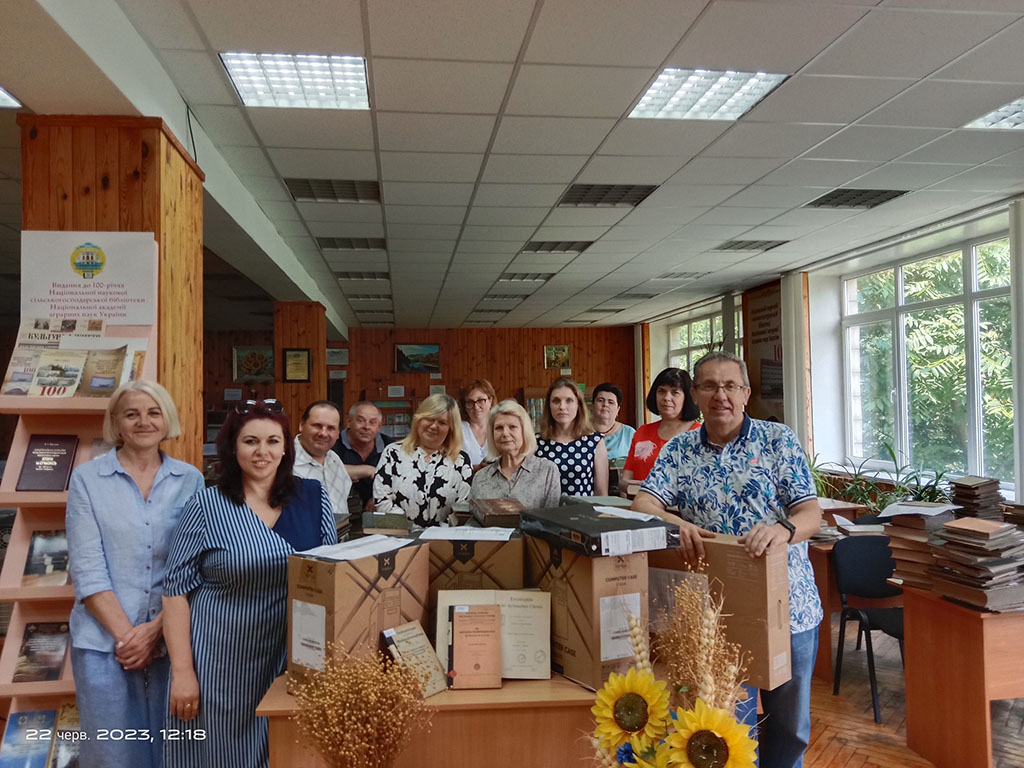

As we see, libraries have not been able to find their place in modern life. And their former useful potential has now been replaced by the Internet and other views on life. Therefore, older generations are nostalgic for libraries but admit that in their current form these institutions have lost their value.
It’s sad and offensive. The example of the village of Kotiv shows that even a good library may not be attractive to some readers. But this is because the readers have become different. The village of Kotiv officially has a population of 675 people. But the library has 10,824 books. Or almost 15 books for every village resident. This is a very good indicator for a rural library. The library serves 495 readers, of which 255 are children.14 That is, two-thirds of the village residents are library readers. This is also a good statistic.
But, how many of them, like Dasha, come to the library once every two years? In general, there are a lot of such readers in Ukraine. Because on a national scale, libraries are really losing popularity. Even before the war, less than a third of the country’s population used libraries annually. And the number of readers was declining by almost a quarter of a million a year. Thus, in 2018, 13,290.6 thousand users used the services of public libraries, which is 244.2 thousand less than in 2017.1
It is not surprising that people do not protest against the closure of libraries.
How libraries are trying to survive
Libraries that work can hardly be called libraries. These are more like extreme places for lovers of desperate adventures. So in 2018, 26 per cent of all libraries were not heated during the cold season. And 2 per cent of libraries were not electrified. In some regions of Ukraine, the proportion of unheated libraries reached 50 per cent. This was the case in the Zhitomir and Chernigov regions. Eight per cent of libraries in the Lugansk region and 5 per cent in the Odessa region operated without electricity.6 As of January 1, 2020, 25 per cent of all libraries were not heated during the cold season; 1.4 per cent of all libraries did not have electricity.5
That is, in two years the situation has not actually improved. This is the result not only of a budget deficit but also of the ineffective work of library staff. The guilt is mutual.
The situation continues to worsen, as budget funding is not only reduced, but also stopped for certain items of expenditure. For example, in 2018, 1,514 rural libraries did not receive new books, which was about 15 per cent of their total number. In 2024, no rural libraries will have new books paid for by the state budget because no money has been allocated for these purposes.7 Libraries are trying to solve the problem of replenishing funds from local budgets, as in the Odessa region8 or through large national charity events, as in Kyiv.9
However, it is obvious that local budgets and philanthropists cannot replace the state budget. Self-sufficiency of libraries is needed. Apart from the law mentioned above, the central Ukrainian authorities do not in any way stimulate the entrepreneurship of librarians. Statements of some officials that libraries should change and turn into information hubs and places of pleasant communication for local residents are the exception.10
However, at the local level, there are examples of practical support for the entrepreneurial spirit of librarians, and it gives excellent results. For example, the authorities of the Novovodolazhskaya territorial community in the Kharkov region regularly send residents for internships and training in Europe. There the experience of libraries was studied. As a result, Ukrainians created a new type of library in their village. In this institution, people can not only read a book, but also do master classes, watch films, and even leave their child under the supervision of a librarian. That is, the library performs the functions of a cinema, kindergarten and classroom.11 This is a competitive library that can survive even in conditions of shortage of government funding.
The verdict of modern times
It seems strange that the central authorities of Ukraine do not transform rural libraries as the local authorities in the Kharkov region did. After all, the European experience is not a secret or subject to copyright.
But the actions of the central Ukrainian authorities seem strange only at first glance. When studying the issue in depth, the logic of the officials becomes clear. The law gave librarians the opportunity to earn money. But they didn’t make money. This means the chance to save the libraries has been lost. Why try again? It is better to reduce the total number of rural libraries than to spend effort and money on their transformation. The most promising ones will be retained. These remaining libraries will be improved through the state budget. These libraries will be connected to the Internet. Computers will be installed there and many other useful innovations will be made.12
However, most libraries where employees have not learned how to earn money should close. There is no money in the budget to maintain these libraries. This is the logic of the Ukrainian authorities. According to interviews in the press, the number of libraries may be reduced by 5 times and reach only 3000.13 Taking into account the fact that 81 per cent of all libraries are rural libraries, the Ukrainian village will be dealt a severe blow!
This blow can be called the law of a market economy – the strongest survive! But for Ukrainian libraries this competition was not fair from the very beginning.
References
0. https://timeua.info/aktualnoe-segodnya/fondy-ukrainskih-bibliotek-mogut-ostatsya-bez-novyh-knig/
1. https://profy.nlu.org.ua/articles.php?lng=uk&pg=9225
2. https://zn.ua/UKRAINE/chem-provinilas-tretja-v-mire-ahrarnaja-biblioteka-pered-ukrainoj.html
3. https://zn.ua/CULTURE/544887-kulturnyj-front.html
4. https://urst.com.ua/ru/o_bibliotekah_i_bibliotechnom_dele/st-26
5. https://nv.ua/opinion/biblioteki-ukrainy-pochemu-bibliotek-stanovitsya-menshe-novosti-ukrainy-50177720.html
6. https://day.kyiv.ua/ru/blog/obschestvo/publichnye-biblioteki-ukrainy-v-cifrakh
7. https://life.liga.net/ru/poyasnennya/article/iz-bibliotek-izymayut-sovetskie-i-russkoyazychnye-knigi-chem-ih-zamenit-i-gde-vzyat-dengi
8. https://ru.bessarabiainform.com/2024/05/u-hromadi-bolhradskoho-rayonu-mistsevyy-byudzhet-vidkryvae-novi-horyzonty-dlya-silskyh-bibliotek/
9. https://ukraine.segodnya.ua/ukraine/v-kieve-zavershilsya-pervyy-etap-akcii-100-tysyach-knig-dlya-selskih-bibliotek-611569.html
10. https://www.rbc.ua/rus/news/kieve-prodolzhaetsya-adaptatsiya-bibliotek-1522918223.html
11. https://naglyad.org/ru/2021/10/18/kogda-v-ukraine-budut-sovremennye-biblioteki/
12. https://shkoly-biblioteki-poluchat-bystryj-internet-novosti-ukraina_n1652551
13. https://ru.interfax.com.ua/news/general/834172.html
14. https://uk.wikipedia.org/wiki/Котів_(РівненÑький_район)
