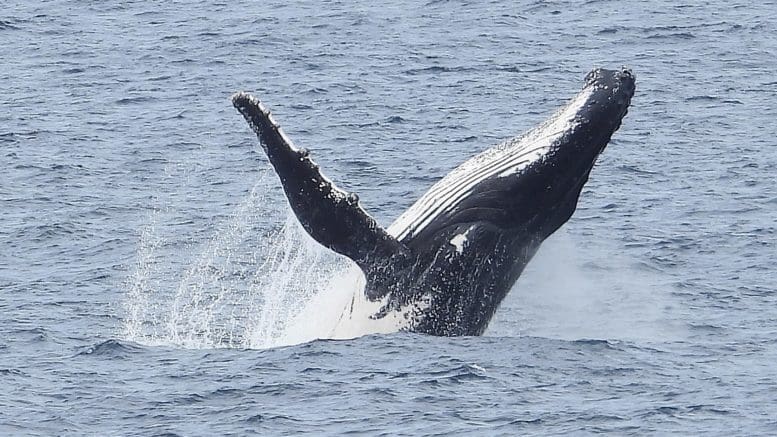
The first of the migrating humpback whales have been spotted off the Central Coast but the best is still to come, says Marine Mammal Specialist with Marine Wildlife Rescue Central Coast Ronny Ling.
“Around February, minimal changes happen in the Antarctic environment, which signal to whales to start making their 500km journey north, to mate and give birth,” Mr Ling said.
“The first whales to start travelling are the juvenile males, then the pregnant ones and the mothers with calves from the last few years.
“The big breeding males then leave and are the fastest travellers.
“The whales are heading north to the warmer waters of the Coral Sea, to places like The Whitsundays, Cairns, Hervey Bay and some of the islands.
“These animals make the same migration, along our east coast, every year.
“Baby whales have very thin blubber layers when they are born, so it’s important to be in the warmer water.
“Some of the females will mate, and in 12 months have their calves there as well.”
Mr Ling said while being further north was ideal for the whales to give birth, sometimes nature couldn’t wait.
“We are seeing more newborn calves off the Central Coast each year and usually start spotting them around mid-June,” he said.
“They are quite distinct to see, not just because of their small size, but their very light colouring, foetal folds, folded or curved fins and curious nature.
“We occasionally get to see other species of whales during the migration period, including minke whales, southern right whales, brydes whales, dolphins, seals and even orcas.”
Mr Ling said the best places to see whales are: Wybung Head; Norah Head and Soldiers Beach; Crackneck Lookout (Bateau Bay); Cromady Hill (Forresters Beach); The Skillion (Terrigal Haven); and Captain Cook Lookout (Copacabana).
“August is usually the time we start to see early whales making their way south again,” he said.
“The southern migration usually finishes around the end of November.
“On their return journey mothers will often bring their calves close to shore, and it’s a wonderful sight to see.
“So, get your whale watching gear ready and take your place to see the greatest show on Earth.”
If you see entangled, injured or stranded whales, dolphins or seals please call Marine Wildlife Rescue 0478 439 965 ASAP.
This article appeared in Coast Community News, 16 April 2026.