

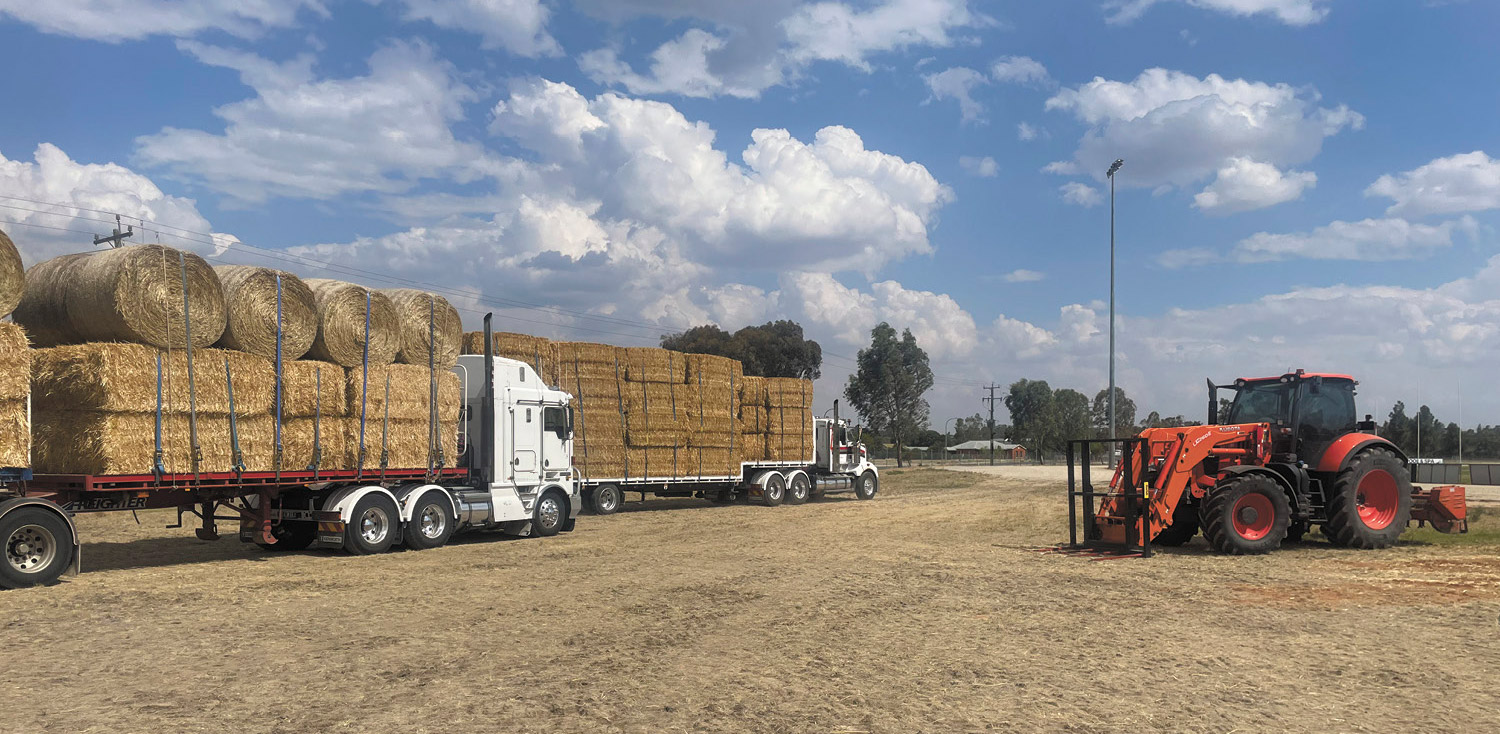
The generosity of locals has been on display over the past week as truckloads of hay have been donated, stockpiled and delivered to fire-affected regions within Victoria. Tim Coote, who has been coordinating the Barham stockpile and also collecting hay, said the generosity of some people is unreal.
“It’s been a pretty tough season around here with high water prices impacting fodder production, but we still have donations from all over,” said Tim.
“There’s been some from Leithcville, Cohuna, Wakool, Noorong, Mallan, all over. We’ve even had farmers buying hay to ship on to help people who have been affected.”
Hay destinations have been determined by the Victorian Farmers Federation, with many local trucks carting the fodder. Freight cost assistance has been available, and local donations towards additional fuel costs have helped reduce out-of-pocket expenses.
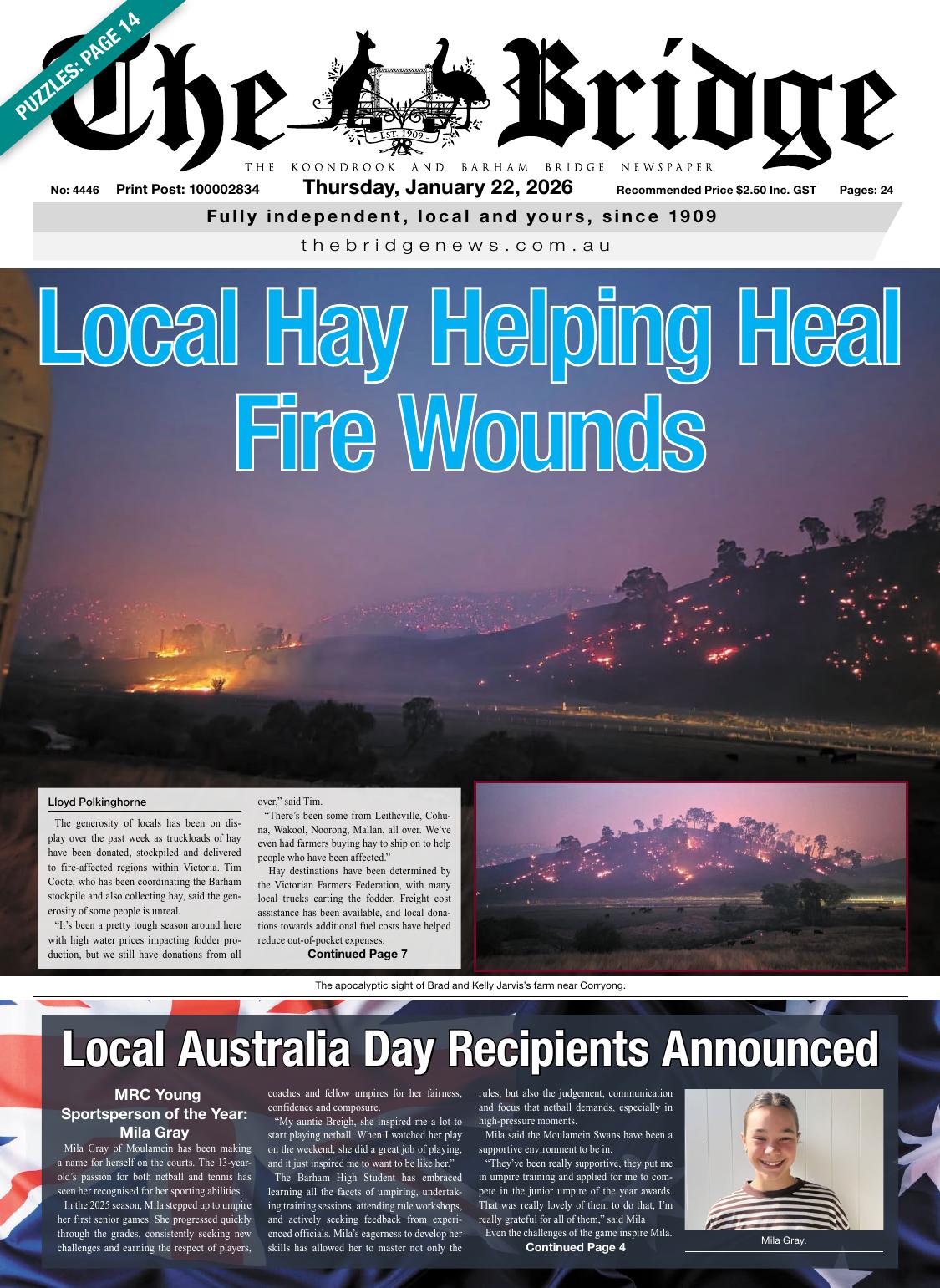
Buying hay to donate as a group Stephen Henty, Frank Kelly, Skeeta Verhey and Steven Thomas sourced hay from Moulamein’s Jeremy Morton. Mr Morton helped with a discounted rate, and the hay soon headed off to the fire-ravaged farm of Brad and Kelly Jarvis near Corryong.
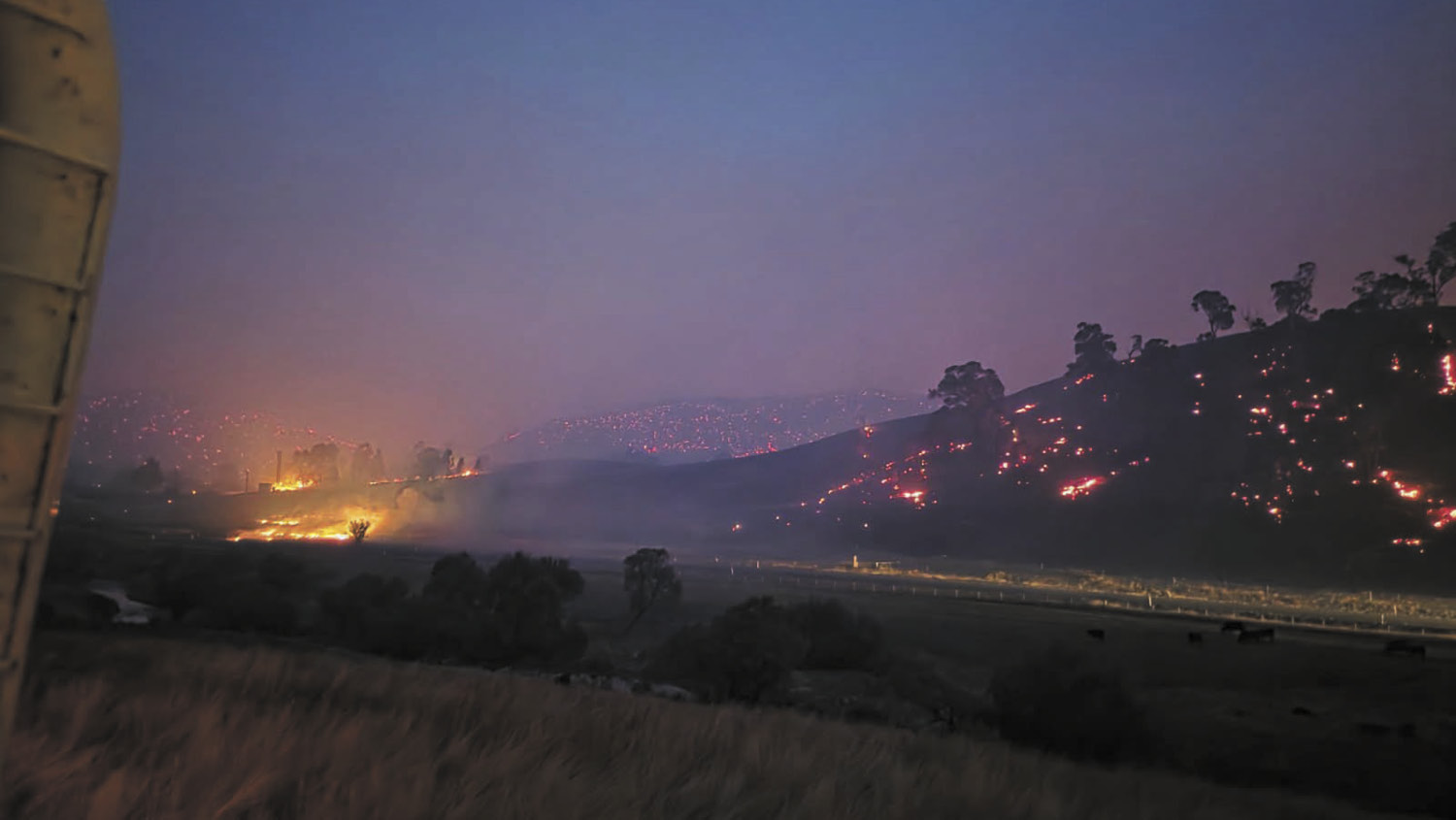
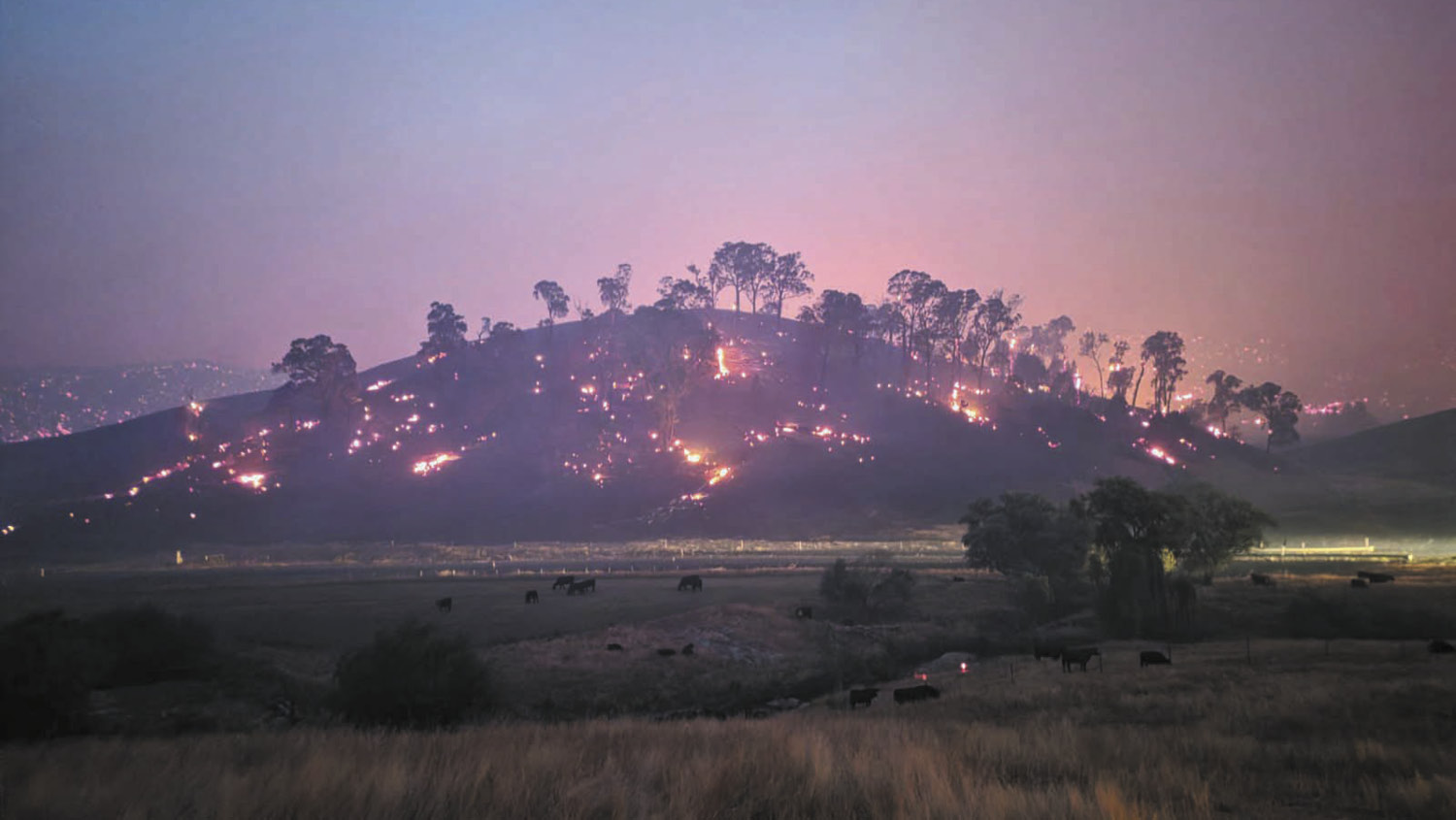
The rugged hills Brad’s farm faced down a ferocious bushfire that scorched his family property, but spared their home through sheer luck and grit. Speaking to The Bridge while he attempted to clear burnt fences, Brad counts himself lucky and thankful they had time to prepare.
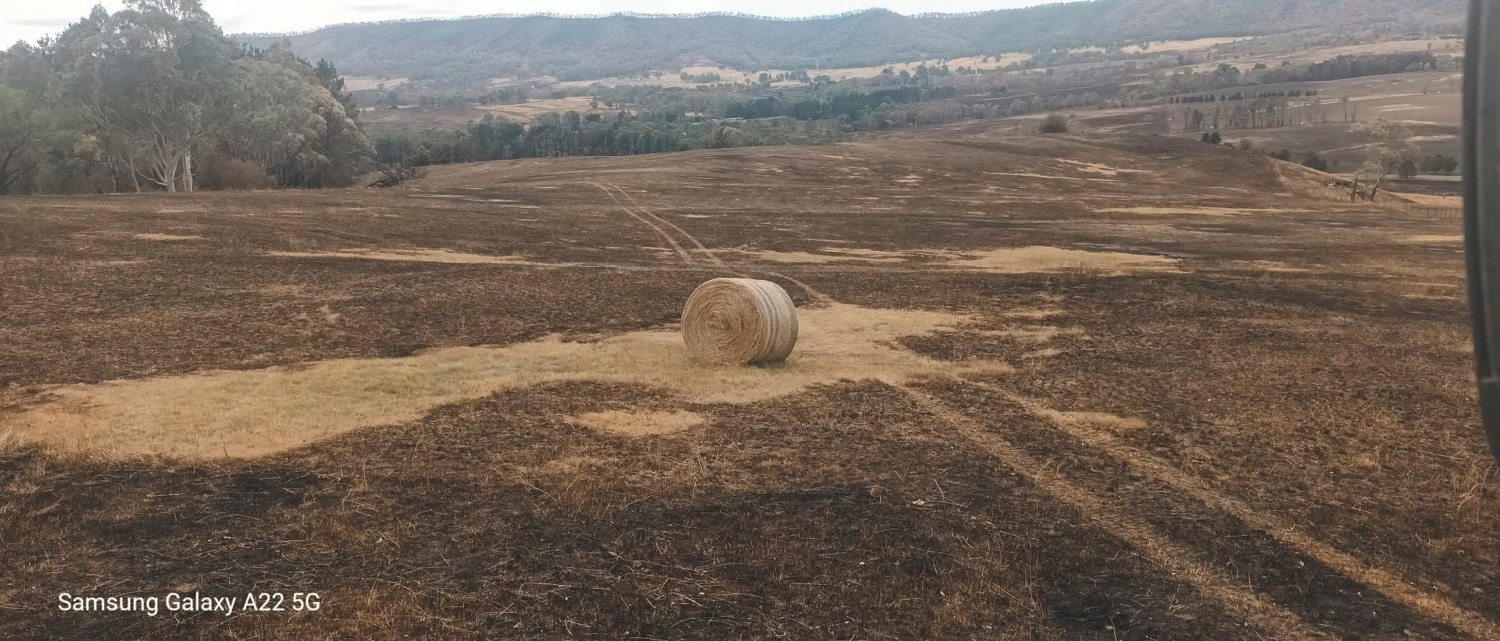
“We’ve got about 1650 acres that’s been burnt,” Brad said of his Angus cattle operation, home to 350 cows. Nestled in the 7km Valley, about 100km from Wodonga along the Murray Valley Highway, the farm had been in the family for generations. With fires raging nearby, Brad knew it would only be a matter of time. “We had a fair bit of warning time, which was good – about two or three days of prepping,” he explained. Drawing lessons from the devastating 2019-20 fires, where they lost 40 head on a separate block, Brad rounded up his stock near the house. “People that had all their stock sort of contained fairly close didn’t have too many losses,” he noted. But the wait was agony. “We’re running on empty by the time the fire got in – cut cats not sleeping, anxiety and all that.”
The inferno hit Friday afternoon around 4-5pm, roaring over the hill from the north after devouring 10,000 acres of pine plantations nearby. “The flames off it would have been 50 metres above the bloody treetops,” Brad recalled. “We thought, Holy hell, we’re not going to stop that.” The fire spotted 2km across the valley, igniting both sides of his property. “It burnt pretty hard through our bush – cooked all that,” he said, but miraculously, the house, sheds, and cattle hunkered in the middle escaped. “By stroke of luck, we sort of sat in the middle… If it landed sort of near the house, it would have taken out everything.” Brad, his wife Kelly, sons aged 17 and 16, plus mates and family, showed up unannounced and patrolled relentlessly. “We’re here to help you,” they said, joining the fray. “It was reassuring to have a few extras around.” They chased spot fires, wetting down buildings, while fire trucks had to retreat in the intensity. “Every man for himself, more or less,” Brad admitted. Losses stung, 85 farm of the farm charred, fences ruined, and 600 of 1000 hay bales gone – a bitter blow after what was one of their best hay cuts.
An old hut built during the Covid lockdown, a family favourite for sleepovers, went up in smoke. “That’ll be missed, that’s for sure,” Brad lamented.
The hay donations have restored some of Brad’s faith in humanity.
Even a stranger drove from Melbourne’s Reservoir to Port Welshpool, loaded two bales, and trekked to Brad’s farm. “I just felt I needed to do something,” the bloke said. “The generosity of others is overwhelming,” Brad reflected. “Takes things like this to see there’s a lot of good people around.”
The community is bonding with dinners at the local hall every night since, donated meals fostering mental health chats over beers. Power returned after 10 days to the area and Brad, along with his neighbours, purchased UHF radios after learning of the fragility of communications in the previous fire. “Everyone was on channel nine… You could hear what was going on around the valley,” Brad said.
No machinery or stock lost this time – just grass and fences, fixable with tools and mates. In this tightknit valley of 10 farms, about three houses burnt (two unoccupied). Brad laments, “Could be worse.”
This article appeared in The Koondrook and Barham Bridge Newspaper, 22 January 2026.
