

Jackie Jarvis was appointed Minister for Agriculture and Food in December 2022. She picked up responsibility for Fisheries in March 2025, giving her three budgets and one election to get her head around the DPIRD budget papers.
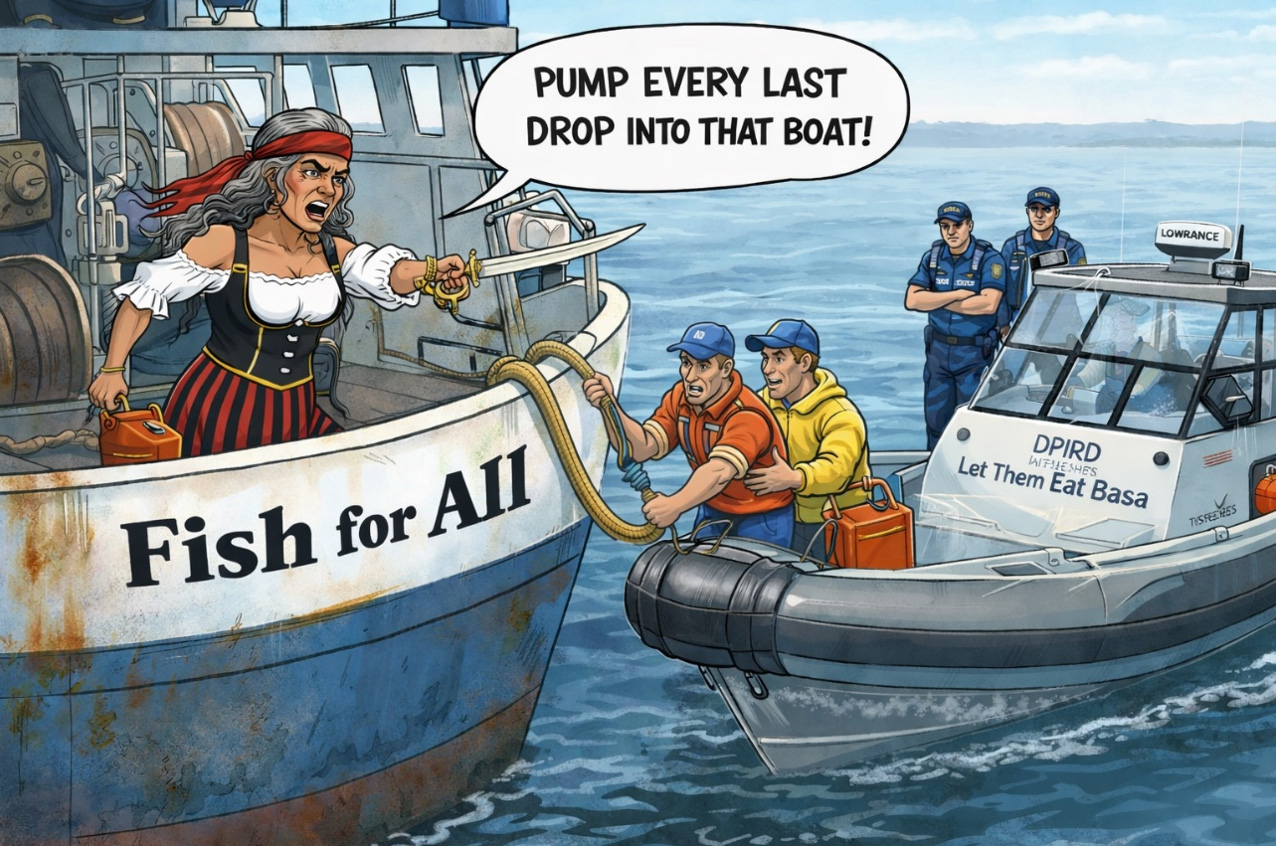
Now, long-suffering readers — along with the Minister’s office and the diversity crew scattered across DPIRD’s multiple Perth HQs — will know exactly where this is going.
Once again, I’ve gone back to the state budget to point out a glaring problem: the rhetoric simply does not match the money. But before we get to the numbers, let’s remind ourselves what a minister is actually supposed to do.
A minister’s job is to lead the department, secure the money, pass the law, and wear the responsibility — not outsource failure to officials. Or, as the great US President put it, “the buck stops here.”
This is not some radical proposition. As Harold Macmillan once observed, “A government’s priorities are revealed not by its speeches, but by its budgets.” Milton Friedman was even blunter: “If you want to know what a government really values, look at what it funds.”
Budgets, not brochures, tell the truth.
And when the money does not follow the minister’s stated priorities, responsibility cannot be shuffled off to “process”, “complexity”, or the department. As Paul Keating famously reminded his colleagues, “Leadership is about persuasion — not explanation.” If a minister cannot persuade the Premier, the Treasurer, Cabinet or the party room to back their portfolio with real funding, that failure sits squarely with the minister.
So let’s visit — once again — the budget numbers I’ve detailed many times before, and see how our Minister for Agriculture and Fisheries is travelling on her core statutory responsibilities: total departmental funding, biosecurity and sustainability for fisheries.
What the 2025–26 Budget Papers say
For the next three years (anything beyond that is la-la land — it’s an election year), the budget papers show:
Total Cost of Services
- 2025–26: $750m
- 2026–27: $612m
- 2027–28: $494m
Agriculture & Fisheries Resource Management
- 2025–26: $94m
- 2026–27: $86m
- 2027–28: $79m
Biosecurity
- 2025–26: $161m
- 2026–27: $140m
- 2027–28: $136m
These numbers make a mockery of anything the minister says about “prioritising biosecurity” or “protecting fish stocks”.
You cannot be taken seriously when your core responsibility is keeping the state safe from everything from foot-and-mouth disease to varroa mite, yet the biosecurity budget is being cut by around 20 per cent in real terms over three years. Fisheries management is being cut by a similar margin — all while the government is budgeting cash surpluses of $7–8 billion across the same period.
This failure — by this minister and the one before her — to convince Treasury of the importance of DPIRD’s statutory responsibilities is reflected in every budget since this Labor government came to power. Just look at the looming collapse in the Total Cost of Services, which includes regional development: from three-quarters of a billion dollars to under half a billion in just three years.
If nothing else, it is now abundantly clear that the regions are being milked to prop up the city, and the Minister for Agriculture and Regional Development is going along for the ride.
This is a rolling disaster for the once-proud former departments of Agriculture, Fisheries and Regional Development. And if, as Keating said, leadership is about persuasion, then the unavoidable conclusion is this: if the minister cannot persuade her own government to properly fund her department, all we are left with are excuses.
One final word on fisheries.
Once the unfunded fisheries adjustment payouts have to be made to buy out commercial operators — at vast expense — there will almost certainly be further cuts to fisheries compliance. That means fewer boots on the ground, less enforcement, and a simple reality: those with the biggest boats will fish away, because there will be no money to police the new bans over the next two years.
The West Coast demersal fishery is meant to reopen in September 2027. But with no money for proper compliance, and no funding to complete a credible stock assessment, what are the real chances of that reopening actually happening?
Unless, of course, that’s the point.
Ignore the problem until after the election. Keep the well-heeled recreational lobby happy. Let DPIRD staff and regional communities eat basa in the meantime.
That’s not fisheries management. It’s political management — and a budget credibility problem the minister owns.
