

Every second Thursday at 7am, Rob Dyson fires up his bus in the opal mining town of White Cliffs and embarks on what has become a lifeline for the remote far west NSW community.
The fortnightly service, which takes eight to 10 residents on a six-hour, 600-kilometre round trip to Broken Hill, has transformed daily life for the town’s 150 residents who previously struggled to access essential services beyond their local corner store and pub.
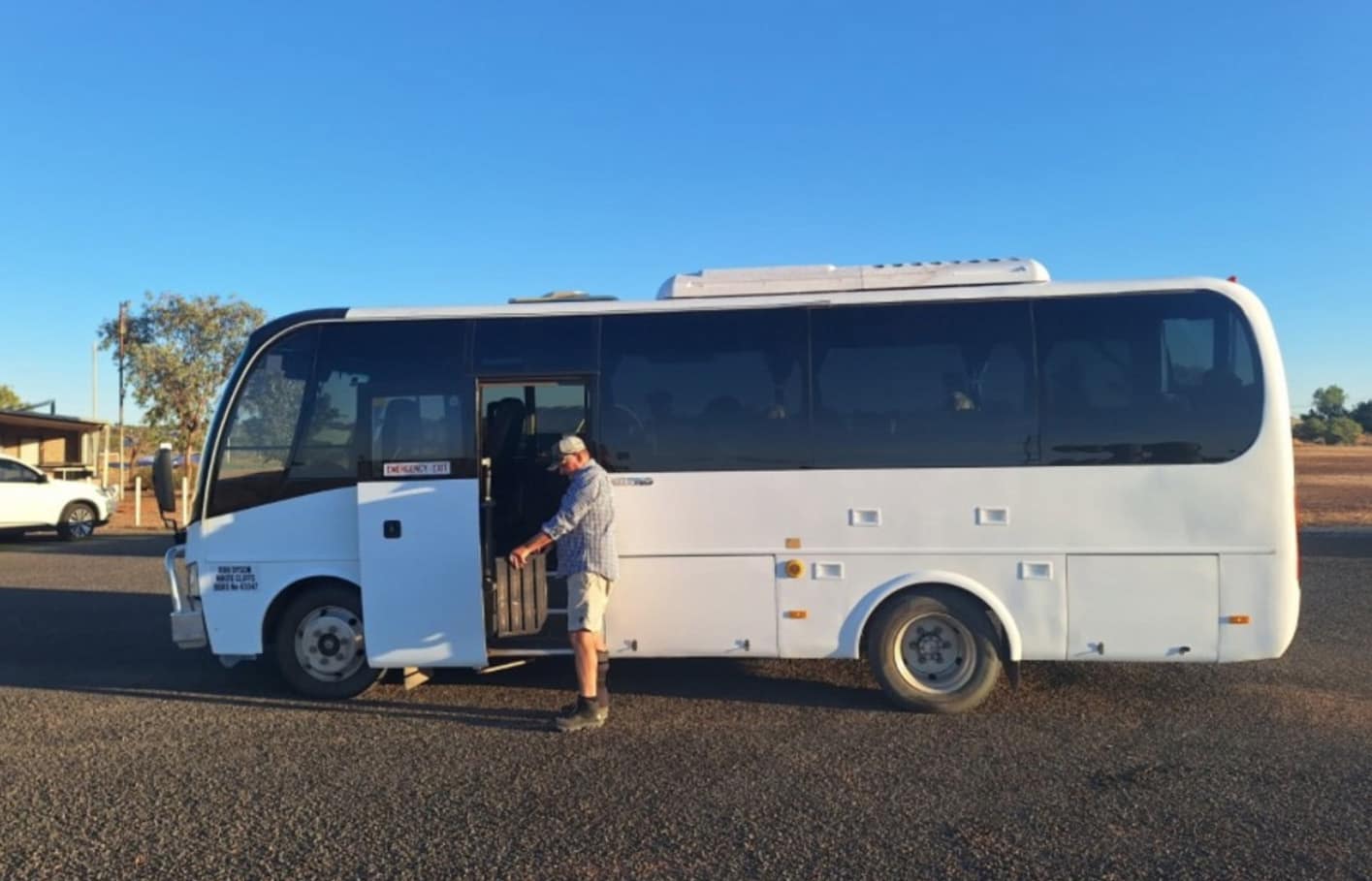
“I’m like the farm dog, you start up the ute and I jump on. He starts the bus and I’m on it. There are so many advantages,” said local artist Cree Marshall, who has been using the service since it began three and a half years ago.
Before the bus service, many older residents would simply go without essential items or face significant financial and physical strain to make the journey to Broken Hill for medical appointments, banking, and shopping beyond basic supplies.
Ms Marshall can now travel in comfort to collect art supplies and manage her banking, while other passengers use the four-hour stopover for everything from car repairs to social visits.
“I usually go to IGA, get some biscuits, iced coffee and go to the park, consume it and then I go to the flower shop and have a coffee there on the footpath,” said passenger Peter Indermuhle, describing his routine during the Broken Hill stopover.
Enid Black, who recently retired after 20 years as the town’s pool lifeguard, relies on the service for items unavailable locally.
“May pick up a script and gotta get spark plugs for the car and price a few other things and grab a bit of fresh fruit,” she said.
For Irmhild Bawker, the service has been transformational. Previously, she would make major shopping trips every six to eight weeks, and if something was forgotten, “tough luck.”
“I was happy before because we didn’t know anything else, but it used to be a big shopping trip for me maybe every six weeks to two months,” Ms Bawker said. “It’s really changed things for me.”
The service also supports community events, with four additional trips to Broken Hill each year for workshops and activities.
Mr Dyson, who has lived in White Cliffs for 15 years and driven buses for eight, finds deep satisfaction in the service’s impact.
“It’s really satisfying for me to be able to watch the people … and I just know that it’s made a difference,” he said. “People say that this service now is essential.”
The service, funded by Transport NSW, began as a two-year trial but has been extended until October this year following its success. Tickets cost just $10 for adults, $5 for children and $2.50 for pensioners for the round trip.
Building on the White Cliffs route’s success, Mr Dyson approached Transport NSW about establishing a similar service for Tibooburra to Broken Hill, via Milparinka and Packsaddle.
Transport NSW agreed to a two-year trial operating twice monthly, on a Friday and the following Monday. The new route launched on the first day of April school holidays, initially transporting schoolchildren from Broken Hill to Tibooburra.
Following a public consultation period that ended in February, the NSW Government is currently reviewing submissions about the White Cliffs service’s future.
Community members are urging authorities to make the service permanent, recognising its essential role in maintaining rural connectivity and independence.
“Not everyone has access to a car especially in the far west of the state,” noted one supporter, while others questioned why such an essential service should remain dependent on annual funding decisions.
For a community of just 150 people in one of NSW’s most remote locations, the fortnightly bus has become far more than transportation – it’s a lifeline that helps residents maintain their connection to essential services while preserving their ability to live independently in the Australian outback.
The success of both routes demonstrates how targeted public transport investment can have transformational impacts on rural communities, providing dignity, independence and quality of life for residents who might otherwise be forced to relocate to access basic services.
This article appeared on Back Country Bulletin on 1 June 2025.

