


Forest & Wood Communities Australia, Media Release, 16 March 2026
A fifth-generation family operation in Bulahdelah is absorbing a $7,800 weekly fuel surge to keep hardwood moving to Australia’s cities. Federal Parliament is now asking why.
Forest and Wood Communities Australia is warning that soaring regional fuel prices are threatening the hardwood supply chain that feeds building sites, mine shafts, vineyards, Australia’s first green steel facility and makes the pallets to move the food and fibre from the farms to the cities — and that without urgent relief, the families who run it cannot keep absorbing the cost.
“With 90 per cent of our population living on just 0.25 per cent of Australia’s land mass, regional communities are feeling the impact of surging fuel prices more acutely than their city cousins. The cost of fuel is up to a dollar higher in regional communities and they can’t just walk to the shops or catch a train.” — Steve Dobbyns BSc (Forestry), Chairman, Forest & Wood Communities Australia.
The alarm is coming from Bulahdelah, 235 kilometres north of Sydney, where Anthony Dorney and his brothers operate two hardwood sawmills — SA Relf and Newells Creek — as the fifth generation of a family that has been cutting timber in north-east New South Wales for over a century. Last week, Anthony pulled up to the bowser and paid $2.90 a litre. “It’s obscene,” he said.
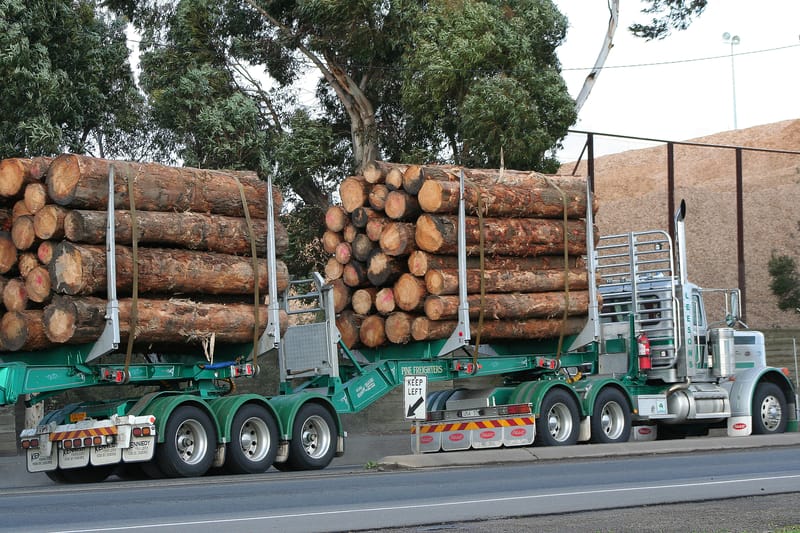
The numbers behind that word are hard to argue with. In a single week, daily fuel costs across the two operations have climbed by more than $7,800. Every tonne of Tallowwood, Ironbark and Blackbutt that leaves Bulahdelah does so on the back of a fuel-powered truck. The two mills employ more than ten per cent of the local town’s population and supply a large share of north-east NSW’s hardwood — running supply chains south to Sydney and the Central Coast, west to Canberra, and north to Brisbane. “It’s not a case of panic buying,” Dorney said. “It’s all due to a critical shortage at the bowser and growing rationing between customers.”
The crisis reached Federal Parliament last week
Alison Penfold, the Nationals member for Lyne, put the question directly to Climate Change and Energy Minister Chris Bowen: Under your watch, why are families like the Dorneys running out of fuel? Bowen acknowledged regional supply chains are under severe pressure and confirmed the ACCC has been directed to impose hard penalties against profiteering. “We recognise fully that, in regional areas in particular, there are shortages and that the supply chain is under huge pressure,” he said.
The Bowen response offered little comfort to a family whose trucks burn fuel before a single plank is cut. What makes the situation more acute is what sits alongside S.A. Relf’s sawmill: a Commonwealth-backed biofuels facility developed by BioCarbon — Australia’s first of its kind — which converts sawmill residues and native-forest by-products into GreenChar, a renewable carbon engineered to displace fossil coke in steelmaking.
Last month, the Australian Renewable Energy Agency committed $4.8 million to the project. Fuel-driven disruption to log supply does not just threaten the homes being built on the eastern seaboard. It starves the one facility in the country purpose-built to help remove coal from the steel industry.
“Local fuel distributors on the Mid North Coast are already paying more than $3.00/litre for diesel and we will see that reflected at the bowser as early as Monday morning.” — Steve Dobbyns BSc (Forestry), Chairman, Forest & Wood Communities Australia.
Forest & Wood Communities Australia is calling on the Federal Government to treat regional fuel supply as the essential services issue it is — not a market problem to be managed by the ACCC after the damage is done. The Dorney family will fill their trucks again tomorrow. At $2.90 a litre, that gets harder to justify every single day.
About Forest & Wood Communities Australia
Forest & Wood Communities Australia is the national voice of forestry families, workers and the communities built around Australia’s sustainable timber industry. FWCA represents the people within the industry — not industry itself. It is a professionally run organisation with a board of directors and an Advisory Council drawn from across the Australian forestry sector, giving forest workers a direct voice in government, regulatory bodies and the media on the issues that shape their lives and livelihoods.

