

To help celebrate the 60th anniversary of Maldon receiving the title of ‘Australia’s First Notable Town’, the Tarrangower Times and Maldon Heritage Network invites everyone to write a ‘Love Note’ to the town.
It’s a chance to reflect upon what makes Maldon special, whether that’s a memorable festival or best bushwalking route or a favourite coffee spot. To get the ball rolling, here is a letter written by State Member for Bendigo West Maree Edwards MP, as published in Maldon Muse, the informative newsletter of Maldon Museum and Archives Association (and reprinted here with permission). To subscribe to Maldon Muse, contact: secretary@maldonmuseum.com.au.
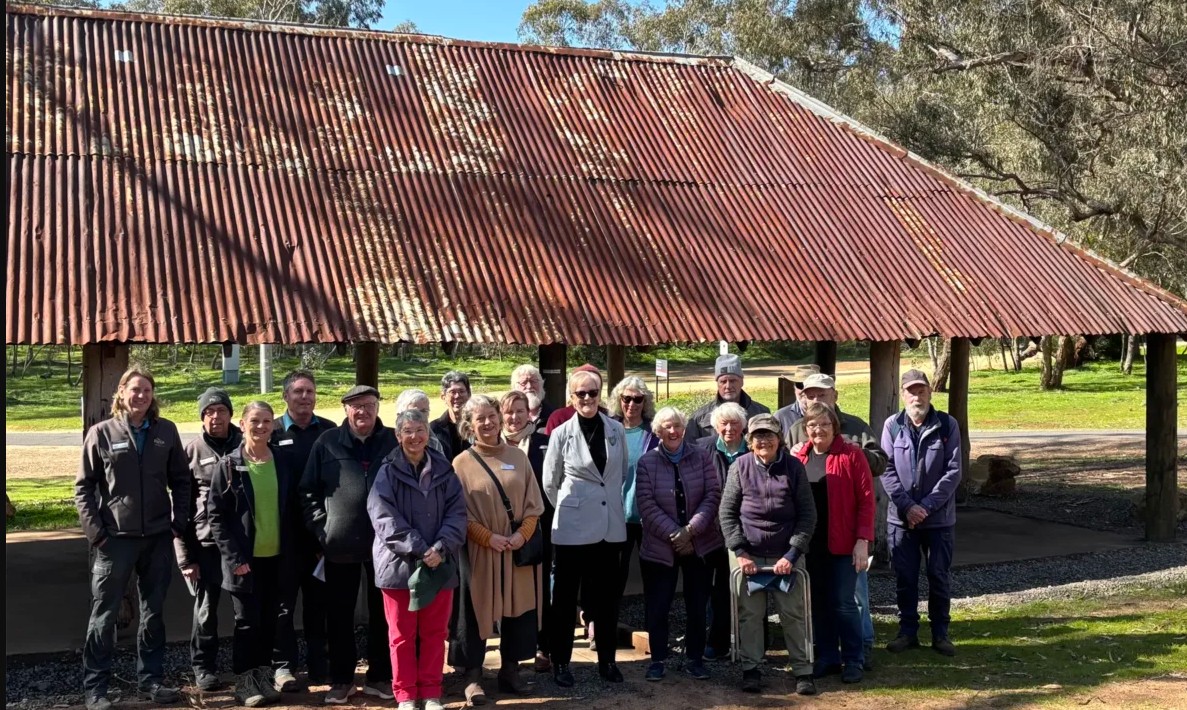
Your Love Note could be around 100 to 500 words, in whatever form or about anything you like, as long as it expresses love for Maldon. Write it down and share it with the world: why is Maldon notable? Send your note to editor@tarrangowertimes.com.au or drop it into Maldon newsagent.
What part of Maldon’s history intrigues me most
When people ask what draws me to Maldon’s past, I don’t start with the gold. I start with the people who kept this town alive after the rush ended — miners, shopkeepers, tradespeople, and families who refused to let Maldon fade into the long list of ghost towns scattered across the goldfields. Their grit shaped the place we know today, and the whole region stands taller because of it.
It’s the human stories that stay with me. Men striking quartz so hard it broke tools and tempers. Women keeping households, schools and shops running through good years and bad. Families who stayed when neighbouring settlements crumbled. Immigrants from China, Europe and America walking or riding from Melbourne and Geelong to reach the diggings, chasing possibility. Some stayed, choosing to build a life — and a community — on something far sturdier than luck alone. That kind of steadfastness has always spoken to me.
A century later came another turning point: the decision to protect what makes Maldon, Maldon. When the National Trust named Maldon Australia’s first “Notable Town” in 1966, it wasn’t about sentiment. It was a call to safeguard something of lasting value. In a few months we’ll mark 60 years since Professor Brian Lewis, Hilary Lewis and a group of architecture students walked these streets and saw what others had missed: that this place was worth backing. At a time when cities were bulldozing their own heritage in the name of progress — when Melbourne was losing irreplaceable architecture to Whelan the Wrecker — Maldon chose a different path. Preservation became an investment. And it paid off.
Heritage here is embedded. It’s written into the ground. Wander a few minutes from the cafés on Main Street and you’re in another world — quartz-reef scars, mullock heaps, boiler footings, engine-house ruins that once shook the earth. And still the Beehive Chimney stands guard: lightning-struck, patched, admired and entirely unbothered. It doesn’t need a plaque; it tells its own story. Locals will have seen the careful preservation work underway to ensure this iconic landmark stands tall, well into the future.
But Maldon’s history stretches far deeper than the diggings. More than 60 ancient Yellow and Grey Box eucalypts — many older than six centuries — stand within the town boundary. They’ve watched every rise and fall. And long before the rush, the Djarra people of the Dja Dja Wurrung, including the Liarga Balug clan, lived, gathered and cared for this landscape. Their story remains the first story.
Then there are the civic threads: the police camp, the government reserve, the Maldon Athenaeum Library, the Maldon Easter Fair running since 1877, the Vintage Machinery & Museum, Porcupine Village, and the Victorian Goldfields Railway drawing visitors into the heart of town. In the 1850s, a journey to Melbourne cost five pounds by horse and carriage and took all day. Today it costs no more than $11, return. Different era, same principle — connection shapes communities.
Visitors come because stepping into Maldon feels like stepping into another century — not because time stood still, but because this community chose to honour its past while building its future. As Trevor Budge AM once said, “Maldon preserved itself by refusing to rush”. In a world that often moves too quickly, that patience has served us well.
Walk down Main Street today and you can see that heritage here is not just sentimental, it is purposeful.
It signals identity, draws visitors, powers small business, sustains jobs, sparks creativity, and connects people to something bigger than themselves.
Pair that with Maldon’s rich history and the warmth of a community that greets newcomers like old friends, and you get a town that feels both grounded and alive, old and new. With the Goldfields region edging toward potential World Heritage listing in 2027–28, the world is finally recognising that this is one of the most complete and coherent goldfields regions on earth.
There’s a line tucked in an old council minute book that I come back to: “The town will hold, if its people hold.” And they did.
Gold may have put Maldon on the map — but it was people who built something worth keeping.
Yours faithfully,
The Hon Maree Edwards MP
Member for Bendigo West
Speaker – Legislative Assembly
This article appeared in Tarrangower Times, 6 February 2026.
