

The Hon. Penny Sharpe, Minister for Climate Change and the Environment (NSW), Media Release, 11 December 2025
The NSW Government has completed its first comprehensive statewide koala survey, providing the most accurate picture to date of where koalas live and how populations are distributed across the state.
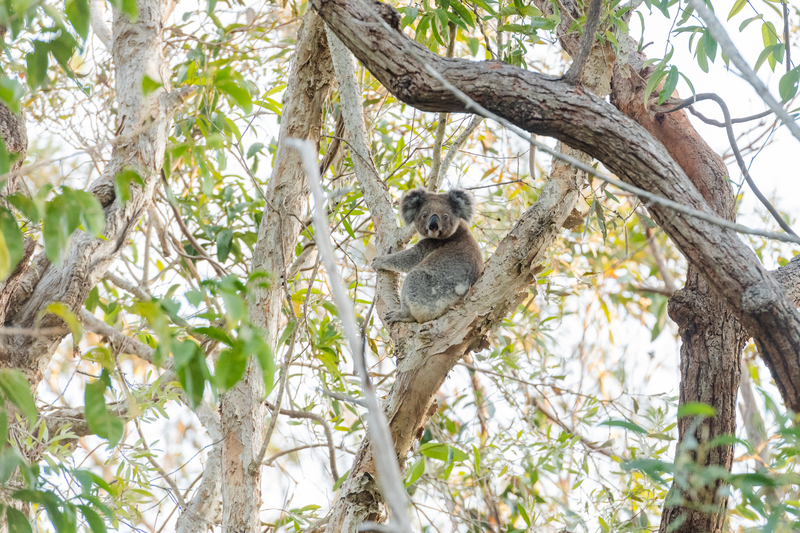
Using new tools such as heat-detecting drones and acoustic recorders, scientists surveyed more than 1,000 locations across national parks, state forests and private land.
The updated estimate of 274,000 koalas reflects improved technology and more extensive survey work.
Koalas in NSW remain endangered and there are many places in NSW where koalas no longer exist in the wild. Populations in NSW continue to face significant risks, including habitat loss and fragmentation, climate impacts, disease and vehicle strikes.
These threats are expected to intensify over coming decades, underscoring the importance of protecting key habitat and wildlife corridors.
This new baseline data comes as the Minns Government continues to prioritise koala conservation, including progressing the Great Koala National Park, which will protect habitat for more than 12,000 koalas, along with Greater Gliders and other threatened species.
Other koala conservation achievements include establishing the Warranmadhaa National Park along the Georges River in South-west Sydney. The NSW Government has also invested $8.5 million to support koala care and wildlife rehabilitators and establish a new koala care centre in the Macarthur region.
The NSW population estimate is in line with the recently released National Koala Monitoring Program, led by the Australian Government in partnership with the Commonwealth Scientific and Industrial Research Organisation (CSIRO). The results will contribute to the Australian Government’s National Koala Monitoring Program and help strengthen long-term monitoring across the country.
The monitoring of koalas in NSW and across Australia will continue to evolve as more comprehensive surveys and analyses are conducted by state and federal agencies.
Previous estimates of NSW’s koala populations were conducted through more traditional survey methods such as visual sightings and scat analysis.
The sheer scale of this survey and use of advanced techniques helped scientists detect more koalas, faster, and with greater accuracy than ever before.
Minister for Climate Change and the Environment, Penny Sharpe said:
“This survey gives us a clearer understanding of where koalas remain in NSW. It is an important tool to guide conservation decisions.
“The Minns Labor Government has a strong record on koala conservation, and this survey shows we have been making the right decisions to ensure their survival.
“Koalas are still endangered, and the threats they face are real. This work helps ensure we are targeting the right areas so that future generations can continue to see koalas in the wild.”
