

David O’Brien sits quietly in his Hay home, a small magnet clipped to his belt—a lifeline that could stop a seizure in its tracks.
David was born in Hay, one of twins, and the babies of the family. He has three sisters and two brothers surrounding him in a close-knit family.
David’s life took an unexpected turn at 14 when epilepsy arrived without warning.
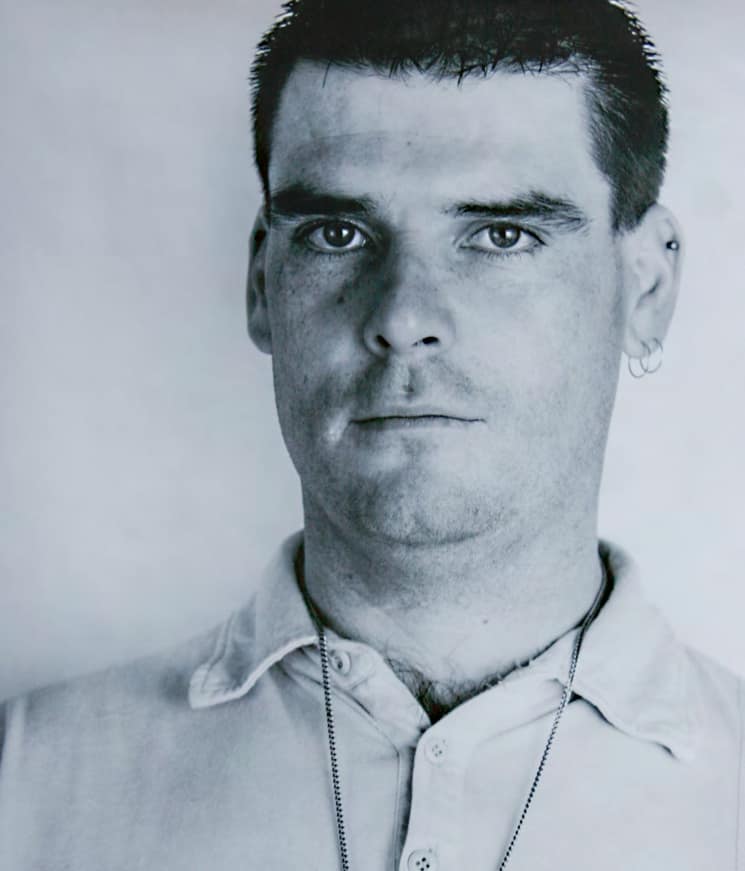
Just as he was navigating the already turbulent waters of teenage years and high school, this additional challenge emerged, reshaping everything he thought he knew about his future.
“I’m the unlucky one,” David says simply when talking about his twin brother Mark. “My twin brother hasn’t got any of these issues.”
It’s a statement delivered without self-pity, just matter-of-fact honesty from someone who’s learned to live with what life has handed him.
The seizures began when David was 14—an unusual timing, as he explains.
“There is a gene in the family, but I don’t have the gene.”
Other family members, including one of his sisters as a baby and several nieces and nephews, have experienced seizures too.
“But the nephews and nieces have the gene, so as soon as they were put on medication, their seizures were controlled.”
David finds himself in the more challenging 30 per cent of people with epilepsy where it’s intractable—meaning it can’t be controlled.
David doesn’t just have one type of seizure; he experiences roughly five different kinds: tonic-clonic seizures, absence seizures, complex partials, and motor seizures.
Before his current treatment, he was having around 30 seizures a month.
“I’m always waiting to see when the next seizure comes,” he explains.
“At the moment I’m actually doing well with this new trial—I’ve been seizure-free for 13 days.”
That trial represents number 43 in David’s long journey seeking control over his condition.
His epilepsy stems from left temporal epilepsy, located in the left part of the brain between the speech and vision areas.
“I’ve got a birthmark between the speech and vision area,” he explains—essentially a scar on the brain that his neurologist discovered.
Surgery could remove it, but the trade-off would be devastating.
“The doctor said I could have an operation to have it removed, but then I would either lose my speech or lose my vision.
“That would eliminate seizures, but it would bring a whole new set of problems.”
For David, the choice was clear.
“I decided I’d rather battle with the seizures.”
David’s approach to managing his epilepsy involves cutting-edge medical technology.
He has a vagus nerve stimulator implanted in his chest.
This device sends regular electrical pulses to his brain via the vagus nerve in his neck.
The stimulator, programmed to activate every minute, creates a subtle change you can hear in his voice when it kicks in, making it slightly deeper.
“I’ve got a magnet on my belt,” David explains, touching the small device.
“If a seizure happens, you grab the magnet and swipe it over the heart area, which sends a tune to the device to send an electric shock to the brain.
“It’s meant to reset or jump-start the brain.”
His second major intervention is even more sophisticated: a medication pump that delivers drugs directly to his brain.
“It’s on the right side near the stomach, and it goes all the way up to the head.
“I’ve got a bump on my head which is a port where medication goes straight through into the brain, and I don’t get the side effects of the medication.”
Those side effects were significant. The medication in his pump is Epilim, which previously would have made him dopey and caused significant weight gain.
“I wouldn’t have a clue where I am or what I’d be doing,” he recalls of his early treatment days.
Perhaps more challenging than the physical aspects of epilepsy are the social barriers David faces.
“People get scared of me because of it. It’s only because people fear what they don’t understand,” he says with the patience of someone who’s explained this many times.
He treasures the memory of his friend Angela, who passed away from cancer.
“She had epilepsy herself from brain tumours, so she understood and I always got along great with her. She knew what to do when we went walking.”
After Angela’s death, David found himself increasingly isolated until Jill Miller invited him to join her support group.
The isolation extends to lifestyle choices that many take for granted.
His twin Mark “goes out, drinks, has loads of friends” and is living in Sydney. “When he was at university, he even drank a bowl of rum one time and passed out.
“He does enough drinking for both of us because I gave up drinking when I found out from the foundation that alcohol was a trigger.”
David’s list of restrictions is extensive: no alcohol, no caffeine, no coffee or tea, not even Coke.
“I just drink water,” he says.
Heat is another trigger, which meant giving up his beloved dog.
“I couldn’t walk him. If I get too hot, that’s a trigger, especially walking around in summertime.”
Despite these challenges, David has found meaningful ways to contribute to his community and the broader epilepsy community.
He’s become an advocate and fundraiser, continuing work his mother started.
“I used to do raffles down the street each year when my mother was around,” he recalled.
“She would make a quilt each year to make money and donate it back to the foundation.”
Since his mother’s passing, his aunt, Margaret Dodson, has taken up the quilting tradition.
“I have a big raffle and send the quilt to the foundation for their raffle night where it gets auctioned off,” David said.
“I’ve also joined up as a monthly donor.”
David has also spoken at local schools about epilepsy awareness, working with Lisa Rath from the Epilepsy Foundation Victoria.
“There’s one in 100 people with epilepsy, so kids growing up with that awareness find it normal,” he explains, understanding the importance of education in breaking down fear and stigma.
After working with four different neurologists over the years, David has found his match in Dr Terry O’Brien, with whom he’s worked for over 25 years.
“He’s one of the leading neurologists in Australia,” David says, clearly grateful for the continuity and expertise.
Getting to Melbourne for appointments used to be an exhausting ordeal involving overnight stays in Deniliquin, buses, and multiple accommodations.
Now, through Angel Flight, the journey has become manageable.
“My mother used to say Angel Flight was for more important people, but when I was seeing Dr O’Brien, I looked into it and Jean Woods said I could actually use it,” he said.
His family, while sometimes overwhelming in their concern, remain loving and supportive.
“Every time I ring them, they immediately say, ‘Are you alright?’ which is irritating,” David admits with a smile.
“I’m not ringing to say I need help; I’m ringing to ask them something.”
The reality of David’s treatment regimen is sobering.
He’s currently on five different medications for epilepsy, with depression and anxiety as direct side effects.
Memory issues are another consequence he’s learned to navigate.
“Remembering things is a side effect of the medications,” he explains simply.
His vagus nerve stimulator, first implanted in 2004, required battery replacement in 2020, and he’ll need another replacement in 2030.
Every six weeks, he returns to have his medication pump refilled—”they put a needle into it”—a routine that’s become as regular as any other medical appointment.
For young people facing an epilepsy diagnosis, David’s advice is practical and born from experience.
“The best thing is to get in contact with an epilepsy foundation in the state they live in. Every state has one.
“When you go to your doctor, most of the time they don’t give you much information.
“As soon as you get onto the foundation, they’ll give you more support and tell you what you can do to help yourself.”
He also encourages people to advocate for themselves with their medical team.
“If people aren’t happy with their medication, they can go back to their doctor and speak about it, see if they can try a new medication if they don’t believe it’s working for them.
“Some of the trials I’ve been on have helped other people.”
David O’Brien’s story isn’t one of dramatic triumph over adversity—it’s something more valuable and real.
It’s about the quiet courage required to wake up each day knowing that a seizure might come, yet choosing to live fully anyway.
It’s about turning personal struggle into community service, and finding ways to connect despite the barriers which epilepsy can create.
“I’m trying not to let it overtake me,” he says.
“I let the days go by as they come, but it can be a struggle.”
In those simple words lies a profound truth about resilience—”it’s not about conquering your challenges once and for all, but about meeting them with grace each day they appear.
Through his advocacy work, his participation in clinical trials, and his willingness to share his story, David continues to contribute to a future where epilepsy might be better understood and more effectively treated.
His 43 trials haven’t just been about finding solutions for himself, they’ve been about paving the way for others who will walk this path after him.
In a community like Hay, where everyone knows everyone, David O’Brien’s courage in living openly with epilepsy has undoubtedly changed minds and opened hearts.
His story reminds us that strength isn’t about the absence of struggle—”it’s about how we choose to meet the struggles we’re given, one day at a time.
For information about epilepsy support and resources, contact the Epilepsy Foundation in your state.
To learn more about Angel Flight and how it assists people in rural areas accessing medical care, visit their website.

This article appeared in The Riverine Grazier, 25 June 2025.

