


La Trobe University, Media Release, 5 March 2025
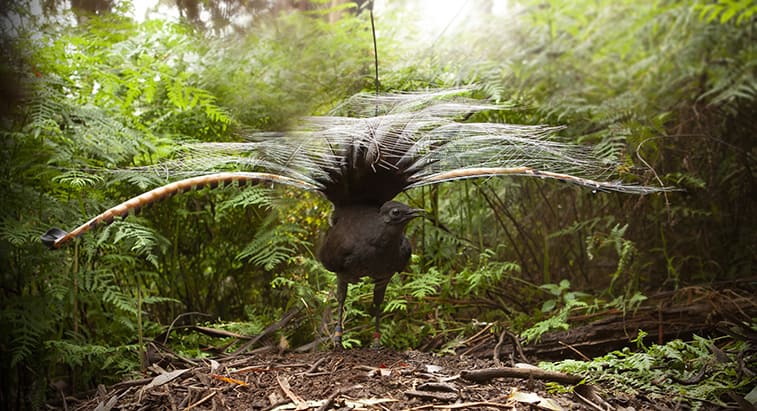
A beloved Australian bird best known for its stunning tail and powers of mimicry may have a cunning hidden talent.
New research has revealed the superb lyrebird to be a resourceful farmer, creating micro-habitats to host and fatten its prey before returning later to feast.
Scientists from La Trobe University observed the ground-dwelling birds working to create habitats suitable for their diet of worms, centipedes and spiders.
In a new paper published in the Journal of Animal Ecology, the researchers found that lyrebirds arranged litter and soil on the forest floor in ways that promote more prey.
They fenced lyrebirds out from small areas throughout the forest to create lyrebird-free environments. In some of these areas the researchers raked the leaf litter and soil to simulated lyrebird foraging. Where raking had been undertaken, there were more types and larger invertebrates than the areas without simulated lyrebird foraging.
Lead researcher Alex Maisey said this type of animal farming was rarely seen in nature.
“Lyrebirds set up the perfect home for their prey, creating conditions with more food resources and effectively fattening them up before eating them,” Dr Maisey said.
The superb lyrebird (Menura novaehollandiae) is mainly found in the moist eucalypt forests in south-eastern Australia.
Dr Maisey said lyrebirds, through foraging, heavily influenced the plants and animals that lived in Australia’s south-eastern forests.
In this project, lyrebirds were measured moving an average of 155 tonnes of litter and soil per hectare while farming invertebrates.
They also lower the intensity of bushfires by burying leaves and branches that fuel fires, thereby shaping whole ecosystems, Dr Maisey said.
“Lyrebirds are widespread and active across millions of hectares of forest. Their farming actions play an important role in maintaining forest biodiversity.”

