

You’ve seen them!
Parents walk a fine line between being their child’s biggest fan,
and their most trusted coach, without becoming the ugly parent.
A few months back I attended a junior football match, where a young relative was playing in their very first under 12 football final. It was a great opportunity for the kids to learn life skills such as teamwork, resilience, sportsmanship, healthy living, collaboration and communication. However, the game descended into a social and community embarrassment due to the behaviour of a few parents and one unhinged coach. Several times the umpire stopped the game and appealed to the parents to calm down and warned one coach if their language and name calling was not tempered and stopped, he would have no choice but to call the game off. It was ugly, unwanted, and uncalled for behaviour that should be called out and stopped.
I always had this feeling that I wasn’t good enough.
I had to keep proving myself to people outside the pool, especially my parents
– Michael Phelps (Swimming)
It seems that kids and sport bring out the best and the worst in adults. Very few children go on to become elite athletes and forge a career in sport. But it seems many parents and coaches do not get this message, so act and behave as if their child’s future life depends on their success on the field.
I felt I was never good enough for my parents, especially my dad.
It was always about the next match, the next title
– Jennifer Capriati (Tennis)
Junior country sport relies on the army of volunteer parents who coach, manage, supervise, and oversee children’s sport. Coaches are a powerful influence on a child’s confidence, self-esteem, and socialisation skills. The number one reason children play sports in their junior years is for fun and friendship. This is what draws them into a team or specific sport. But way too often they drop out due to their lived experiences with their coach or their parents.
It is hard to talk about these things.
I feel the pressure of my family, club, and media to perform every time I walk onto the pitch
– Mary Fowler (Soccer Matilda’s)
Sports participation matters to a child. Sport is a powerful platform for personal growth in childhood: Research proves sports builds skills in emotional regulation and temper control, teamwork and collaboration, acquiring resilience and persistence, goal setting disciplines, lifelong wellbeing habits, and social skills (communication, listening, reading non-verbal cues). But research also shows when adults inject their own emotions, frustrations, and ambitions these benefits can be lost.
Growing up in East Germany, it was both your parents and the State.
The pressure was clear, either perform or disappoint everyone
– Katarina Witt (Figure Skating)
In childhood, sport is a place for play and growth. But many parents turn kids’ sport into a stage for performance and approval by how they act and behave with their child. Research over the years has repeatedly highlighted why children drop out of sport. Indeed, when I did my Physical Education degree in the early 80’s I was part of some research that identified the following as the top reasons why children dropped out of sport. Sadly, nothing has changed, with the following still being the top reasons why kids drop out:
- It stops being fun;
- Too much pressure;
- Lack of play time – they were just a spectator watching on;
- Poor parenting experiences;
- Loss of autonomy – they were merely told what to do and where to be (without choice);
- Social changes – new interests as they got older;
- Injury and physical struggles;
- Unhinged coaches;
- No sense of belonging or being valued – they were not a star, so were ignored;
- Lost interest and motivation as a result of the above;
- Body and personal insecurities – were teased, made fun off, or fat shamed;
- They just did not fit into the team, incompatibility, or not welcomed (not part of the clique).
I was a child plagued with self-doubt.
Something I had to suppress, as a footballer you are not allowed to be vulnerable
– Kane Cornes (AFL)
So, what to do. I suggest that every junior club, no matter what sport, should adopt five guiding principles for all parents to adopt, and a code of conduct for all coaches. These should be clear, visible, and endorsed and enforced by club leaders at the start of every season, and when necessary, during the season where required.
Five guiding principles for parents:
1. Be a parent first and coach second.
“Your role as a parent is to provide the love, the food, the taxi service and the hugs”
– Jan Murray, mother of Andy Murray, Wimbledon Champion.
2. Focus on and applaud effort. Not outcomes.
“When parents focus on effort and enjoyment, kids stay longer in sport and perform better too”
– Dr Richard Keegan, University of Canberra.
3. Respect the coach – athlete relationship.
“The best players are usually the best listeners. This starts with parents letting their child own their own journey”
– Tony Roache, Davis Cup coach and tennis great.
4. Ditch the post-game debrief. Especially on the car ride home!
“Let kids fall in love with the game, before you burden them with your expectations, especially yours as a parent.”
– Darren Cahill, coach Alex Sinner.
5. Play the long game
“The most important thing a young person can learn from sport is how to become a better person. Sport is an important classroom for life”
– David Parkin, AFL great and educator.
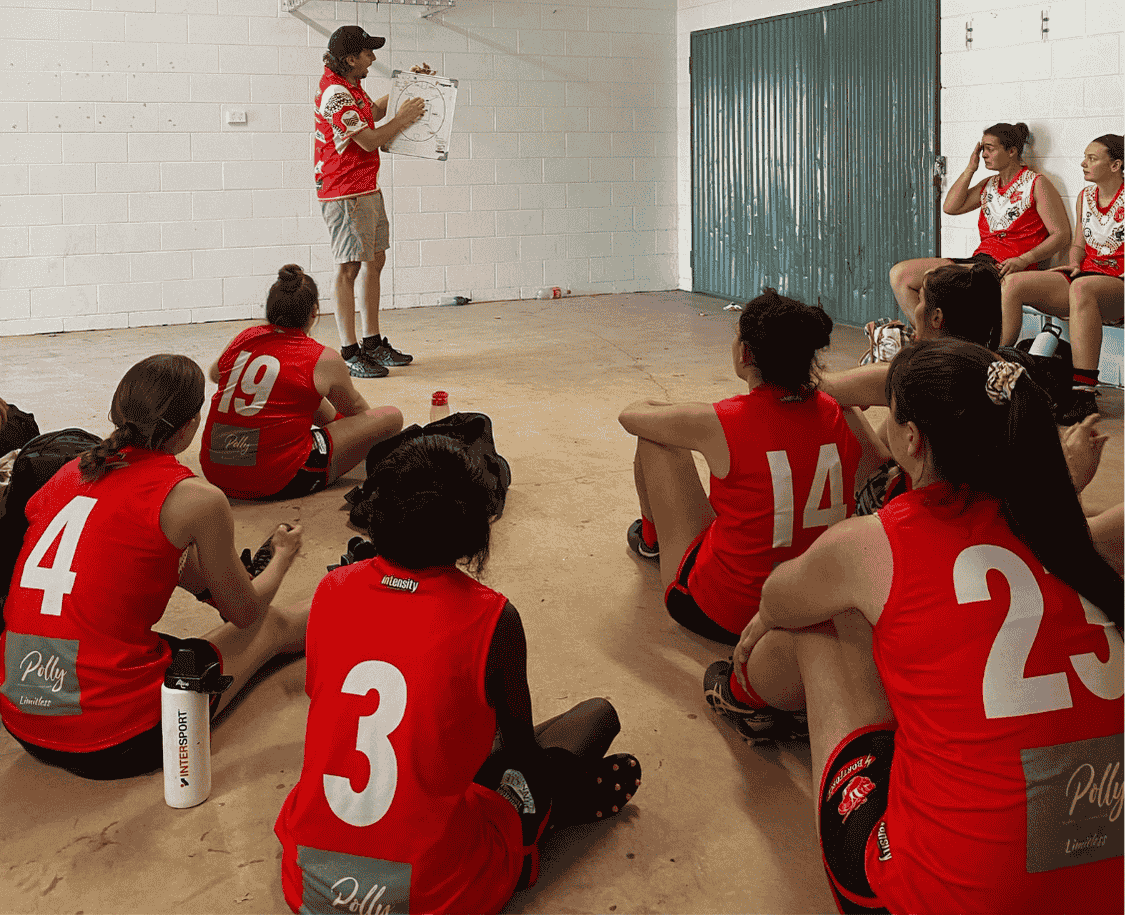
A coaching code of conduct should focus on the role of the coach (not how to act and behave – this should be a given). If you must ask the coach to stop screaming at players and abusing umpires, you have the wrong coach. The role of any junior coach can be broken into four C’s (Connection, Competence, Confidence, Character).
- Connection: Create a safe environment for kids, their friends, and their families to come together and connect. The safer and more enjoyable the connection, the more kids will want to come and participate.
- Competence: The role of a junior coach is to teach skills and teach the game. It is not about winning trophies, or grand finals. It is about teaching the game to kids.
- Confidence: Confidence builds by kids feeling they are a valued part of a team. A child’s self-esteem, resilience, and self-worth is built through socialisation and teamwork.
- Character: Win, lose, or draw, how a child navigates this and responds to setbacks, whilst practising gratitude in victory is what builds resilience and character. It is acquired through experience, not learnt in a classroom.
If you are a coach or president of a junior sporting club, firstly, thank you for your time, effort, and commitment. Can I respectfully suggest that your club’s number one measure of success should be the number of children who participate throughout the season, and do not drop out.
By creating a safe and supportive environment, you are creating a brilliant classroom for life for children. By adopting a set of guiding principles for parents and coaches, you are creating a powerful platform to help equip our children for life, and remind parents and coaches what their role is.
Leadership Lesson
Parents and coaches who cross the line on match day
will leave a lasting negative impact on their child.
Children will forget what you say to them,
but they will never forget how their lived sporting experiences made them feel.
Facta Non-Verba – Deeds Not Words