Sebastian Calderon, Murray Pioneer
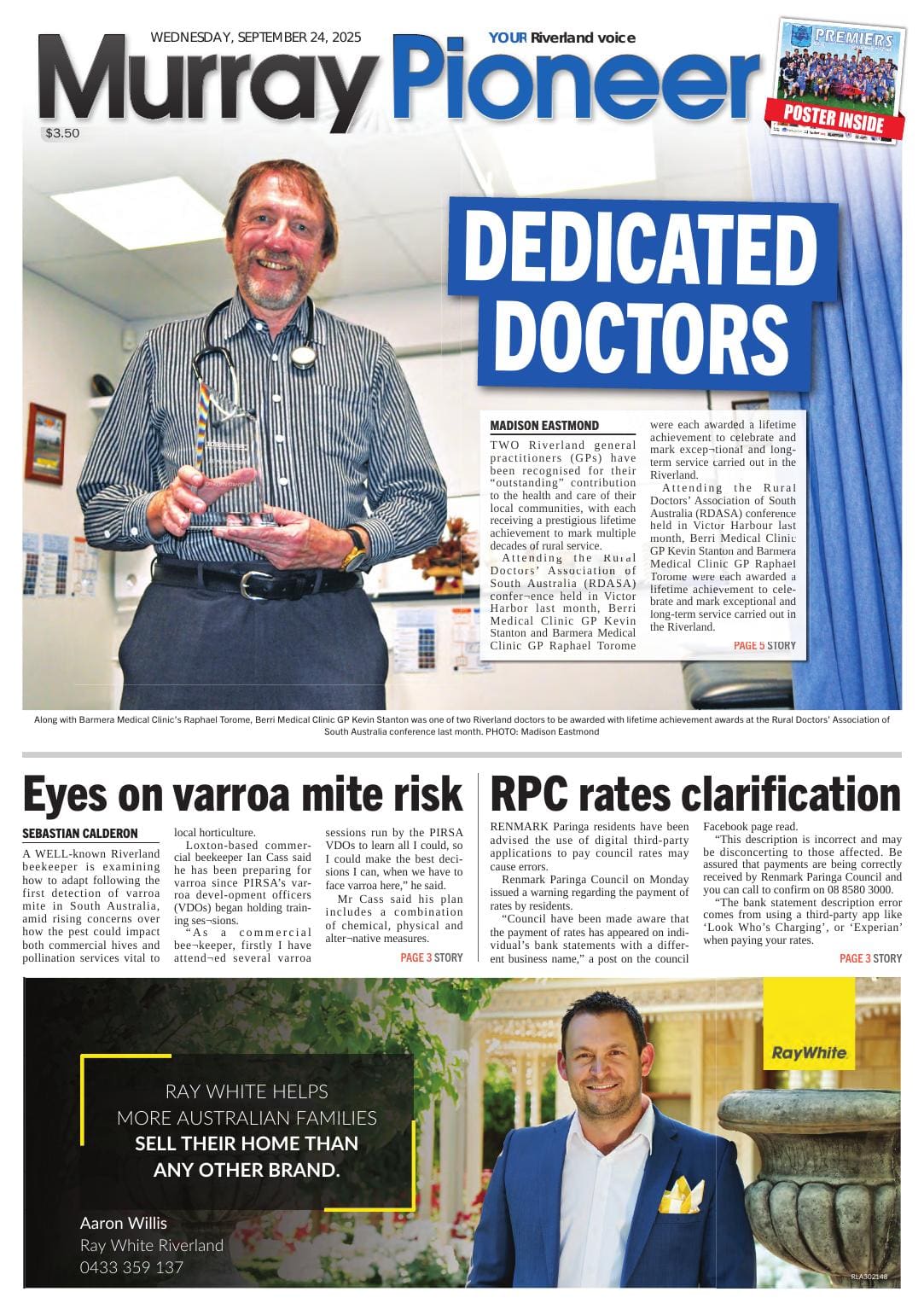
A well-known Riverland beekeeper is examining how to adapt following the first detection of varroa mite in South Australia, with concerns rising over how the pest could impact both commercial hives and pollination services vital to local horticulture.
Loxton-based commercial beekeeper Ian Cass said he has been preparing for varroa since PIRSA’s varroa development officers (VDO’s) began holding training sessions.
“As a commercial beekeeper, firstly I have attended several varroa sessions run by the PIRSA VDO’s to learn all I could, so I could, so I could make the best decisions I can, when we have to face varroa here,” he said.
Mr Cass said his plan includes a combination of chemical, physical and alternative measures.
“We are looking at all the different options as to how we can control Varroa in our hives, like the different chemical treatments, and an entire program to alternate the treatments in order to stop resistance from the varroa to the different chemicals,” he said.
“A complete program was created to fit in with the timing of honey flows and pollination services, as well as strengths of the hive over the year.
“Physical controls like vented bottom boards on our hives mean when the bees dislodge a varroa mite, they fall through the vents to the ground and die there, as they must have the host bee to live on. This is only a 10 to 20 per cent control.”
However, Mr Cass said lessons from overseas show some ideas are unsuitable to the Riverland’s conditions.
“One good example was a robber board idea used in New Zealand which controls bees with varroa from other hives entering our hives,” Mr Cass said.
“(This) sounded great until it was pointed out that our bees would not be able to cool their hives as they do with that idea, so it can’t be used in our very hot summers.”
Mr Cass said the greatest danger in the short term is when varroa spreads into wild bee populations.
“The biggest short-term risk will be when varroa gets into the wild bee populations, and we have been told to expect 90 to 95 per cent loss of those colonies,” he said.
“That also brings issues with those bees with high-mite loads trying to invade our hives when varroa has badly damaged their hive health. Another issue is our bees finding the wild bee colonies and robbing them, but that brings the risk of huge numbers of varroa entering our hives, and American foul brood and other diseases which can be in those unchecked hives.”
Mr Cass said more training and extension support is needed for local bee keepers.
“I believe there needs to be an extension of time that the VDOs are employed, and more sessions for all the beekeepers, who have missed the training so far,” he said.
“Many local beekeepers have attended the varroa sessions run by the VDOs and there is also a lot of talk between beekeepers, all looking at the alternatives as varroa is going to change beekeeping majorly and permanently. Any mistake can involve a serious loss of bees and large colony losses if we get this program wrong.”
Mr Cass said the cost of treatment programs is also a looming challenge.
“The other huge risk is the cost of the treatments, as it is looking like between $60 to $70 per year, per hive, for chemical treatments with no allowance for labour costs which will be considerably more as well,” he said.
Mr Cass also warned backyard beekeepers that managing hives would soon become far more complex.
“This will involve far more work than they have standardly done to their hives, including monitoring of varroa numbers using either alcohol or sugar shakes, treatments and removal of used treatment materials, the removal of honey supers in some treatments, and storage until they can be put back on after the treatment has finished,” he said.
“This is a lot of work and cost, but the returns will be far greater if you wish to continue growing fruit and vegetables at home.
This article appeared in Murray Pioneer, 24 September 2025.