

Business Council of Co-operatives and Mutuals (BCCM), Media Release, 21 March 2025
Business Council of Co-operatives and Mutuals (BCCM) CEO Melina Morrison said today the focus is now on the Government’s response to the ACCC report which acknowledged the need to provide better outcomes for consumers especially in regional and remote areas where the major supermarket operators are dominant.
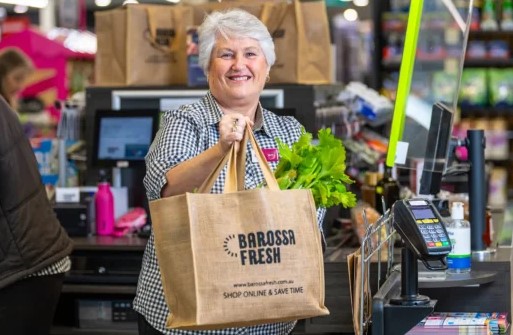
The BCCM welcomes the ACCC recommendation which calls on the Government to support better prices and competition for Australian shoppers especially in regional and remote areas through measures to incentivise more community owned and co-operative stores.
“With cost of living issues likely to be front and centre during the election campaign this ACCC report will put the spotlight on Canberra’s response and how it plans to make life just a bit easier for those who vote but don’t live in metropolitan areas,” she said.
“Consumers outside the big cities will continue to suffer when it comes to their shopping bill on food and groceries because of the clear oligopoly in the supermarket sector,” Ms Morrison said.
“The slow attrition of mum and dad stores, smaller supermarkets, independent stores and co-operative shops is also the result of policies failing to support different corporate structures like co-ops and mutuals. In many countries the secret to the flourishing of independent stores, co-op supermarkets and farmers’ markets is the fact that business policy settings enable these types of businesses to compete on a level playing field,” she said.
“The BCCM is the national peak body for Australia’s $43 billion co-ops and mutuals sector, representing businesses that range across retail, agriculture, banking, financial services and healthcare. There are currently at least 72 co-operatives active in grocery retailing with an estimated combined turnover of $500 million and 75,000 members. While not a large part of the overall market, most co-operatives operate in regional and remote markets where they are crucial in securing the supply of groceries for their members.
Ms Morrison said co-operatives are motivated to keep prices lower, increase choice on the shelf and treat suppliers ethically.
“In regional areas, where co-ops play a vital role in thinner, or less profitable markets, co-operatives are an excellent choice for retail, holding investment in the community, employing locally and facilitating shorter and more localised supply chains. This means the communities served by retail co-ops are better served in times of crisis when decisions are made close to home.
In its report, the ACCC noted that choices for consumers outside key cities are limited and recommended that community-owned stores receive greater support.
“In remote areas where choice is limited, community-owned stores (which may be run as co-operatives) are reported to offer better prices and quality than privately owned supermarkets. As such, supporting existing – and new – community-owned stores in remote areas that would otherwise be unserved or underserved may be an effective way to address some of the issues that result from lack of competition in those areas,” the report said.
“Consumers in remote Australia often have no choice of supermarket. While much of the Australian population lives in urban areas which are well served by large supermarkets, many Australians live in the regional and remote areas with one or no large supermarket.”
About the BCCM:
The BCCM is the national peak body for Australia’s $43 billion co-ops and mutuals sector, representing businesses that range across retail, agriculture, banking, financial services and healthcare. There are currently at least 72 co-operatives active in grocery retailing with an estimated combined turnover of $500 million and 75,000 members. While not a large part of the overall market, most co-operatives operate in regional and remote markets where they are crucial in securing the supply of groceries for their members.
Related story: ACCC recommends supermarket reforms to provide better outcomes for consumers and suppliers
