

Michelle Daw, Yorke Peninsula Country Times
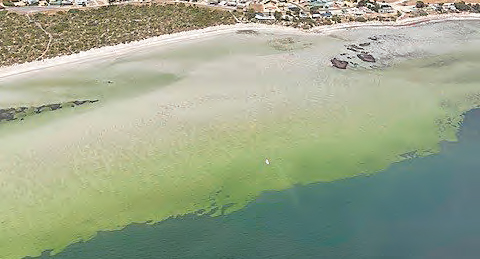
Environment Minister Lucy Hood has called a hastily arranged community forum at Corny Point this week, following growing criticism of the state government’s handling of the harmful algal bloom affecting southern Yorke Peninsula.
The forum will be held at 6pm tomorrow (Thursday, January 29) at Corny Point Memorial Hall, two days after it was announced yesterday afternoon (Tuesday, January 27).
Minister Hood will be joined by government representatives, including South Australian Research and Development Institute executive director Professor Mike Steer, whose team is leading the response to the bloom.
The forum will provide an opportunity for community members to ask questions and share feedback directly with government officials.
Public frustration escalated over the weekend following reported comments by Premier Peter Malinauskas, who stated the algal bloom was “non-existent in most of the state” — remarks that have drawn strong backlash from affected coastal communities.
Opposition spokesperson for primary industries and regional South Australia, Nicola Centofanti, and Liberal candidate for Narungga, Tania Stock, criticised the government for a lack of public updates and clear communication.
They said the situation had left coastal residents, fishers, tourism operators and families feeling ignored.
“Now is the worst possible moment for the government to disappear from this issue,” Ms Centofanti said.
“We are seeing renewed outbreaks of the harmful algal bloom stretching from Yorke Peninsula to Kangaroo Island, yet the government has stopped fronting up to explain what is happening and what is being done.”
Ms Centofanti said communities were losing confidence in the government’s handling of the crisis.
“People are being told there’s nothing to worry about, while on the ground they are seeing closed beaches, sick marine life and cancelled bookings,” she said.
Mrs Stock said coastal towns were paying the price for a failure of leadership and communication.
“Local families, business owners and visitors deserve honest, regular updates about what is in the water and whether it is safe,” she said.
Many affected businesses remained excluded from government support despite the bloom continuing to disrupt trade.
“Local business are still being shut out because the eligibility criteria are far too narrow,” Ms Stock said.
“They are losing income through no fault of their own, and they need help while this crisis continues.
“When public health, the environment and people’s livelihoods are on the line, transparency is not a courtesy — it is an obligation.”
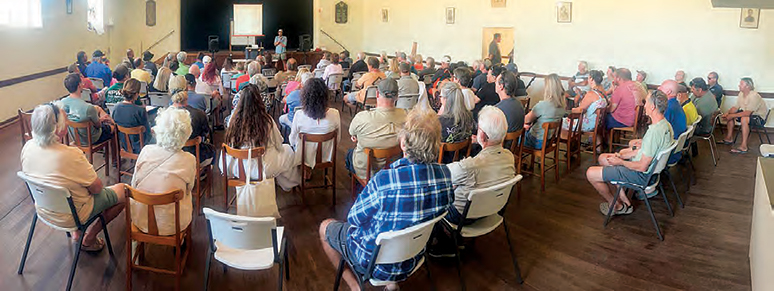
This week’s government forum will come exactly a week after a community-led forum on the HAB was held at the same venue in Corny Point, attended by about 80 residents increasingly concerned about the bloom’s effects.
It featured local citizen scientist Lochie Cameron, who presented results of recent testing of water samples in the area, which found disturbingly high levels of cells from various species of Karenia algae (see separate story).
Community forum organiser Ed Satanek, from the Formby Bay Environmental Action Group, emphasised the event had been quickly organised and government involvement had not been sought.
“There was a general consensus from the meeting that there has been a lack of engagement from the government and we welcome the state government’s decision to come down here this week,” Mr Satanek said.
Minister Hood said tomorrow’s forum would provide residents and businesses with the latest information on algal bloom conditions and testing results on Yorke Peninsula and other regions.
“It will also provide the community an update on the algal bloom response and recovery efforts, including support measures through the government’s $102.5 million Summer Plan.”
Ms Hood said the event would be the fourth HAB forum on YP, among more than 20 across SA.
“I’m looking forward to returning to Yorke Peninsula this week to hear from locals and share the latest information on our response and recovery efforts underway,” Ms Hood said.
“I’ve spoken with community groups and associations over the past few days and appreciate their insights into the current situation which remains dynamic.
“Having detected the hotspot and announced the results earlier this month, we have stepped up testing in the area and dispatched additional field officers to assist with the clean-up.”
Tomorrow’s forum at Corny Point is free but attendees need to register at bit.ly/corny-point-forum.
Concerning cell counts
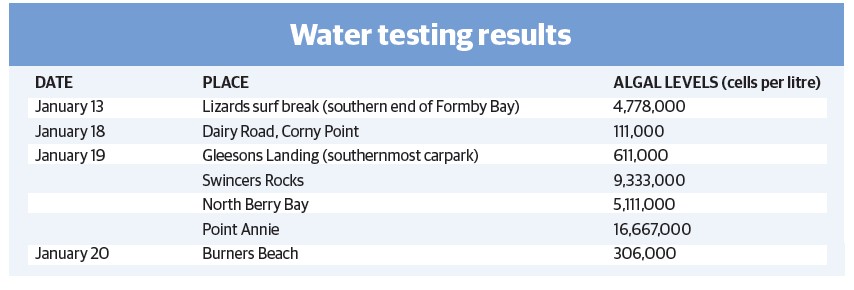
Local citizen scientist Lochie Cameron presented concerning results of local water testing to the Corny Point community forum on the harmful algal bloom, held Thursday, January 22.
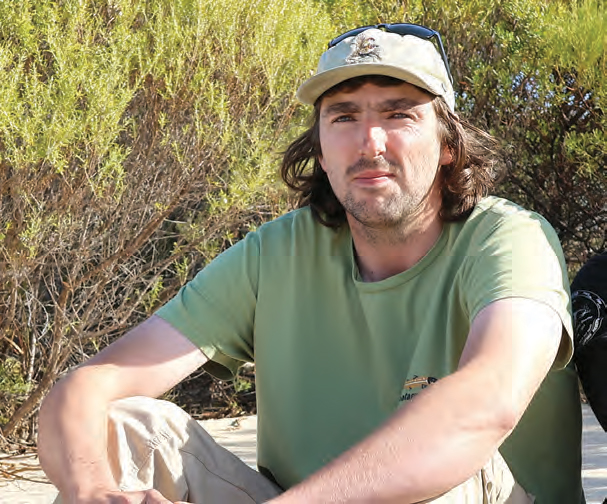
Mr Cameron has been trained in water testing and uses a microscope that Formby Bay Environmental Action Group bought in November.
“For interpretation of numbers, anything under 500,000 cells per litre is acceptable,” he said.
“Between 500,000 to 2 million is watch and act and anything over 2 million is (requires) immediate mitigation and will kill all fish and invertebrates in the area.”
He said regular water testing had been conducted from Foul Bay to Corny Point since November to record the number of cells from various Karenia species.
Community testers were located at Corny Point, Edithburgh and near Minlaton and samples were being accepted for testing from SYP species outside of Dhilba-Guuranda Innes National Park.
“Volunteer opportunities are always available for hands-on or support roles,” Mr Cameron said.
Bloom-related health risks
Calls for more information about the potential human health impacts of the harmful algal bloom were a key theme at last week’s community meeting in Corny Point.
About 80 people attended the meeting, organised by the Formby Bay Environmental Action Group, to discuss the bloom’s local effects.
FBEAG secretary Ed Satanek said attendees recognised little could be done to reduce the environmental impact of the bloom.
“We’re a bit dubious about the dismissal almost of the (human health) effects,” Mr Satanek said.
“The government needs to do more than just tell people to stay indoors.
“Who knows what the long-term harmful effects of the brevetoxins might be?
“They’re affecting marine mammals and we’re just land-based mammals.”
Mr Satanek said the meeting acknowledged a lack of understanding among health authorities about the bloom’s health impacts.
He said the gathering was prompted by growing concern in the community and was organised within two days to give locals a chance to “wrap their arms around each other”.
“We understand it’s not a permanent thing, so that gives us some solace, but it’s still distressing for the wildlife at the moment.”
Health advice on the algal bloom is available at tinyurl. com/3z37ecbs.

This article appeared in Yorke Peninsula Country Times, 28 January 2026.
See further stories in the issue.
